Current page:Home>Full text search
Full-text search
page no:425
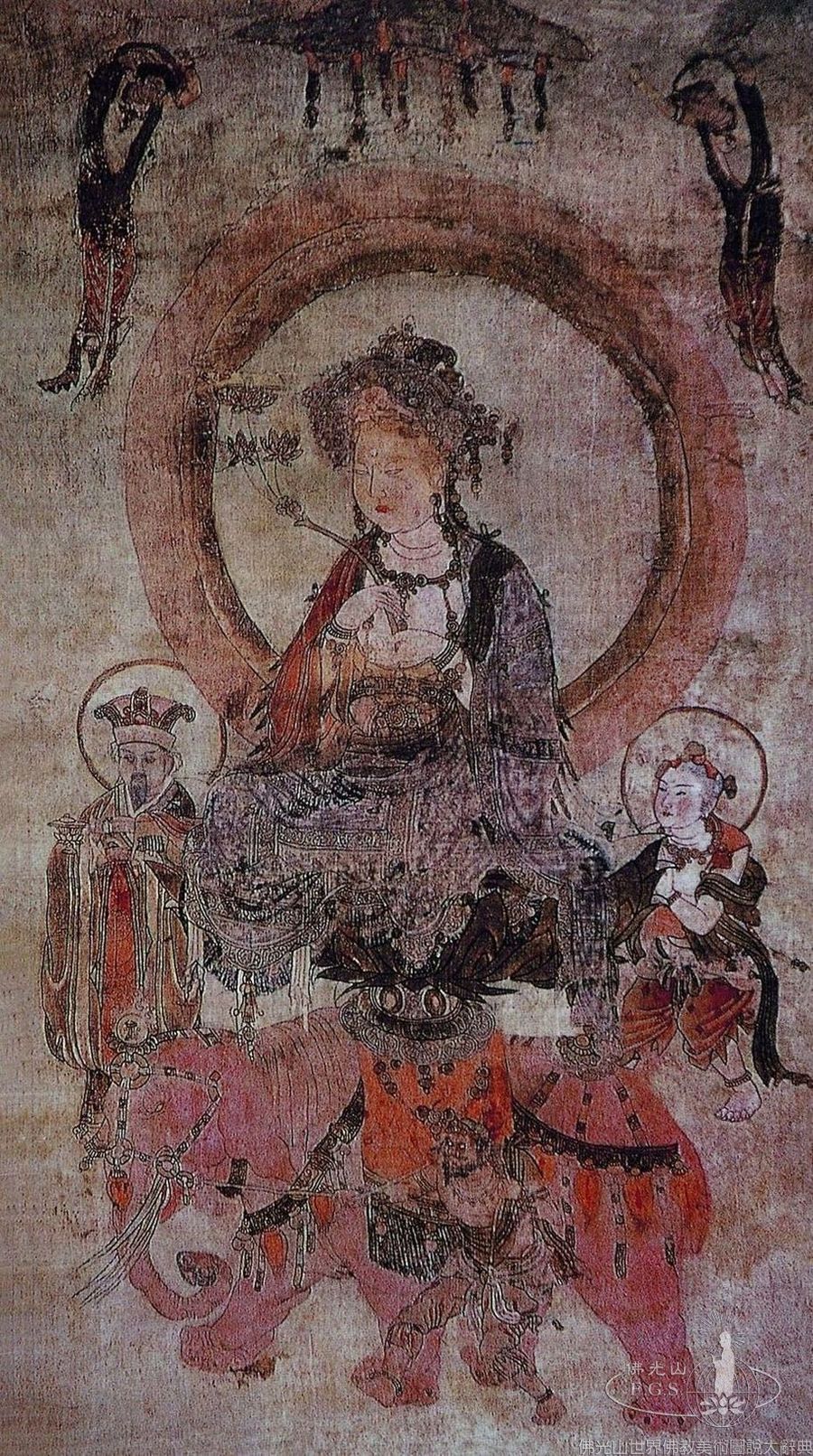 |
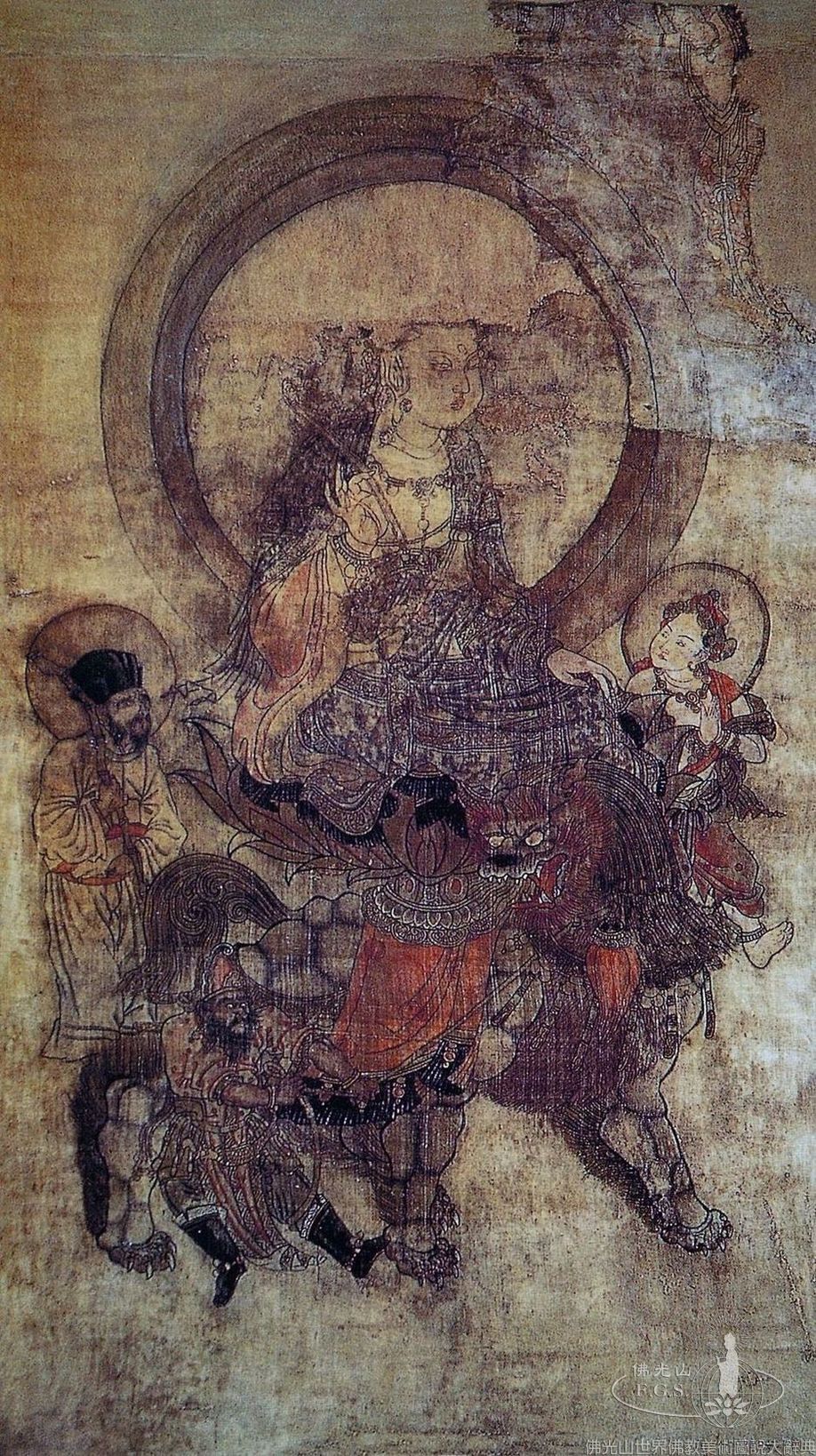
| Khara Khoto: Manjusri and Samantabhadra Bodhisattvas |
| |
 |
| |
|
Khara Khoto: Manjusri and Samantabhadra Bodhisattvas
CHINA, Inner Mongolia, Alxa; Western Xia period (1032–1227); Ink and color on silk; State Hermitage Museum, St. Petersburg, Russia |
These two paintings date from the 12th century. The top of the image of Manjusri is damaged, but the rest is well preserved. Manjusri has a round face with downcast eyes. The left hand is placed on the knee while the right hand holds a ruyi (wish-fulfilling talisman). The round mandorla is painted with two rings of color. Manjusri is seated on a lotus throne on the back of a fierce lion. The lion keeper, who is pulling the beast by a rope attached to its collar, has a long beard and wears a hat. On the left and right beside the Bodhisattva, there are two attendants. The old bearded attendant on the left wears a black hat and holds a walking stick. The young attendant on the right gazes at the Bodhisattva with his palms joined in reverence.
Samantabhadra Bodhisattva is seated on a lotus throne on the back of an elephant. The Bodhisattva wears an ornate headdress and ornaments. The hands hold a lotus flower that supports a sutra scroll. Above Samantabhadra, there is a canopy flanked by two apsaras. The elephant is adorned with string ornaments and is led by a bearded mahout. Samantabhadra, like Manjusri, has two attendants. The elder bearded attendant wears an officials hat and holds an incense burner. On the right, a young attendant gazes up at the Bodhisattva. The two paintings mirror each other, with Manjusri facing to the right and Samantabhadra facing to the left. |
|