Current page:Home>Full text search
Full-text search
page no:220
 |
| Phurpa |
| |
 |
| |
|
Phurpa
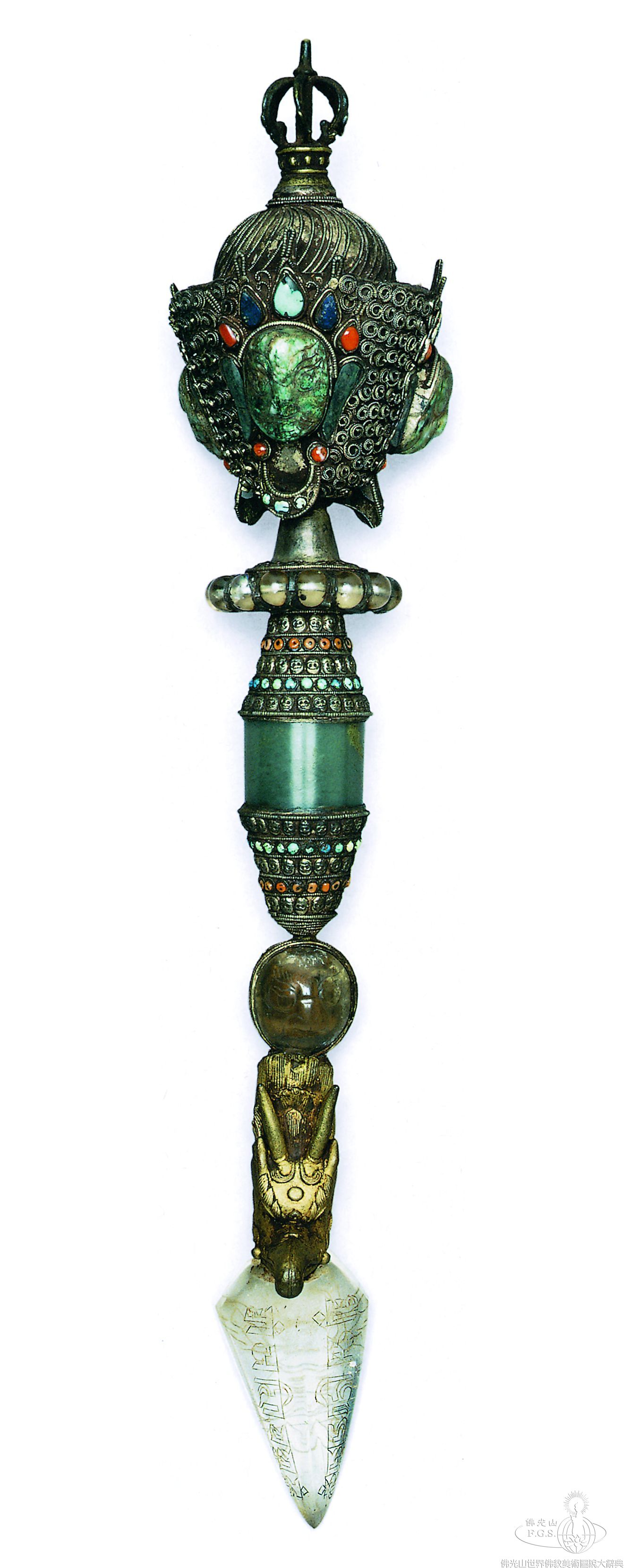
CHINA; Qing dynasty (1644–1911), dated 1662–1722; Gilt copper alloy and gemstone; H: 62 cm; Art Institute of Chicago, USA |
This early 18th century phurpa, or ritual peg, had many different uses, one of which was to define a sacred area. Wood and metal phurpas are commonly seen in the Himalayas, but this one is unique for its size and elaborate decoration.
The crown-like top is decorated with three masks carved on green gems with tiaras made from semi-precious stones. Between the masks are dense whorls and at the top is the prong of a vajra. The shaft in the middle of the phurpa is made from jade. Both ends have five metal rings alternately filled with metal skulls, opals, and turquoise stones. A metal makara joins the crystal blade to the end of the shaft, where there is a mask carved into an opal. The crystal blade has three sides, two of which are engraved with the Six-Syllable Mantra om mani padme hum" in Lantsa script |
|