Current page:Home>Full text search
Full-text search
page no:203
 |
| Buddha Pentad |
| |
|
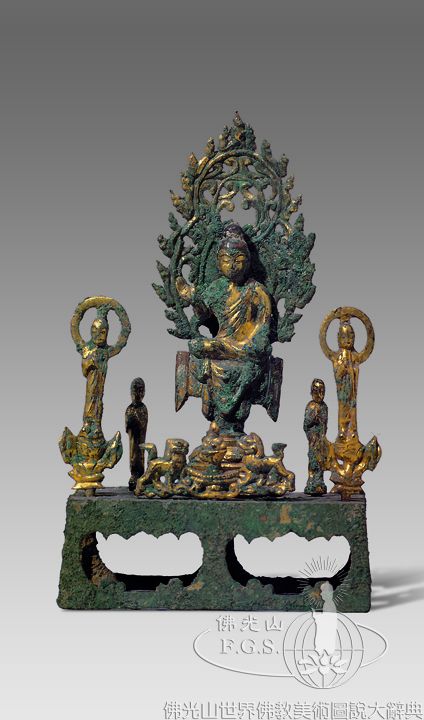
Buddha Pentad
CHINA; Tang dynasty (618–907); Gilt bronze; H: 16.5 cm; Shanghai Museum, China |
This pentad was created during the High Tang period (712-756). It consists of a Buddha, two disciples and two attendant Bodhisattvas. It looks as though it can be easily disassembled, and is therefore a form of portable shrine.
The Buddha is seated in the center on a Sumeru throne with the right hand forming the abhaya (fearlessness) mudra. The openwork mandorla is intricately fashioned with scrolling vines and flames along the edge. The Bodhisattvas stand on lotus pedestals on either edge of the base. They have slim figures and long robes. Their nimbuses consist of simple rings. The Bodhisattvas and the disciples perform the anjali (reverence) mudra. There is a mountain censer with a Dharma protecting lion standing guard on either side below the Buddha. |
|