Current page:Home>Full text search
Full-text search
page no:714
 |
| Mahabodhi Temple |
| |
|
Mahabodhi Temple
MYANMAR, Mandalay, Bagan |
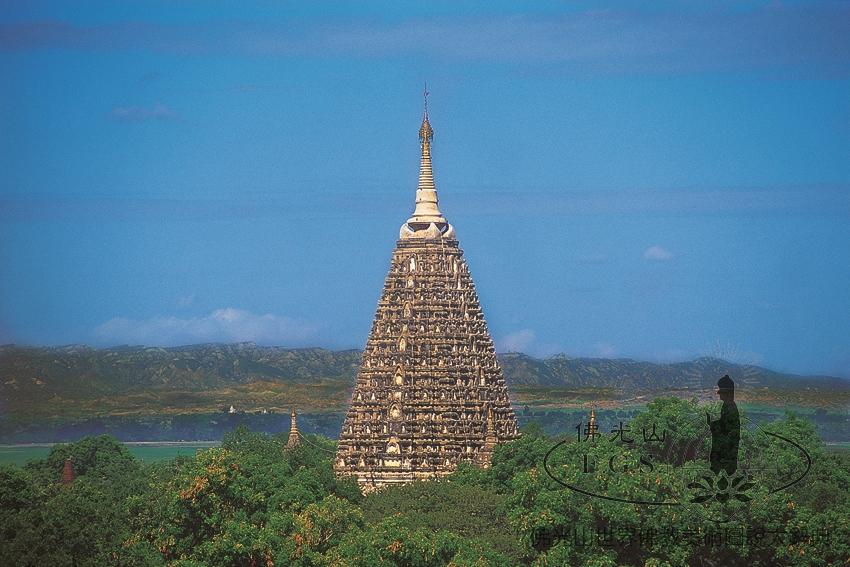
Mahabodhi means Great Enlightenment, and this temple is named after the Mahabodhi Temple in Bodhgaya, India, where the Buddha attained enlightenment. The temple was built by King Htilominlo (reigned 1210-1234).
The architectural style of the pagoda follows that of the Mahabodhi Temple in Bodhgaya. The building has a square base with multiple corners that rises up into a steep truncated pyramid, with numerous Buddha niches forming a honeycomb effect, which is uncommon in Myanmar. The spire consists of a bell-shaped body supported by leaves, followed by stacked rings, a canopy, and a finial. Inside there is a spacious main shrine used for paying respect to the Buddha and for making offerings, as well as a small shrine on the western side.
The people of Bagan have always had an affinity with Bodhgaya. According to the stele records, King Kyansittha (reigned 1084-1112) dispatched a group of officials on a pilgrimage to the Mahabodhi Temple in Bodhgaya. The group brought back seeds from the Bodhi tree under which the Buddha attained enlightenment and planted them in Bagan. |
|