 |
Wat Sri Chum: Bhojajaniya Jataka
|
| |
|
Wat Sri Chum: Bhojajaniya Jataka
THAILAND, Sukhothai; Sukhothai Kingdom (circa 1238–1438), circa late 13th century; Stone; 28 x 48 cm; Bangkok National Museum, Thailand
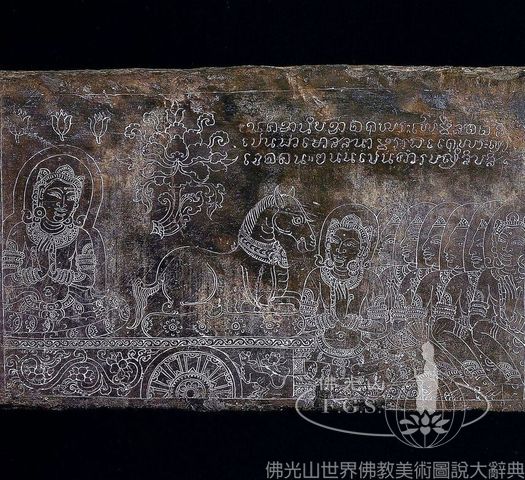
This is one of the 50 slabs engraved with images of the Jataka tales found at the top of the building of Wat Sri Chum. Based on an inscription, it dates from the 13th century during the Sukhothai Kingdom (circa 1238-1438). The Bhojajaniya Jataka, Pali Jataka No. 23, tells of the past lives of Ananda as the king of Benares, the Buddha as the royal steed, and Sariputra as a warrior. When seven other kings became jealous of the riches of Benares and surrounded the city, the king commanded the warrior to lead the army in a battle against his enemies. After helping the warrior capture six of the enemy kings, the steed was badly wounded. The warrior prepared to mount a different horse, but the steed insisted on continuing. After capturing the final king, the steed went before the king of Benares, asked that he show mercy to his enemies and rule benevolently, and then passed away.
In the center of the engraving, the steed lies on a cushion. On the left, a figure that appears to be the warrior sits in lotus position, joining his palms in reverence. Both rest on an elevated platform decorated with a wheel and scrolling patterns. The seated figure on the right who joins his palms and gazes towards the steed is thought to be the king. Six figures are arranged in an orderly row behind him. In the upper register, there are three lines of inscription on the right and floral motifs on the left.
The image is skillfully carved with fluid lines. All of the figures in the engraving have nimbuses and wear headdresses and ornaments. They resemble figures in Indian or Sri Lankan Buddhist art, suggesting that this work was possibly influenced by illustrated Buddhist manuscripts brought by monks from Sri Lanka to Thailand during the Sukhothai Kingdom. |