 |
Baima Temple Great Hero Hall: Eighteen Arhats
|
| |
 |
Baima Temple Great Hero Hall: Eighteen Arhats
|
| |
 |
Baima Temple Great Hero Hall: Eighteen Arhats
|
| |
 |
Baima Temple Great Hero Hall: Eighteen Arhats
|
| |
|
Baima Temple Great Hero Hall: Eighteen Arhats
CHINA, Henan, Luoyang; Yuan dynasty (1271–1368); Dry lacquer
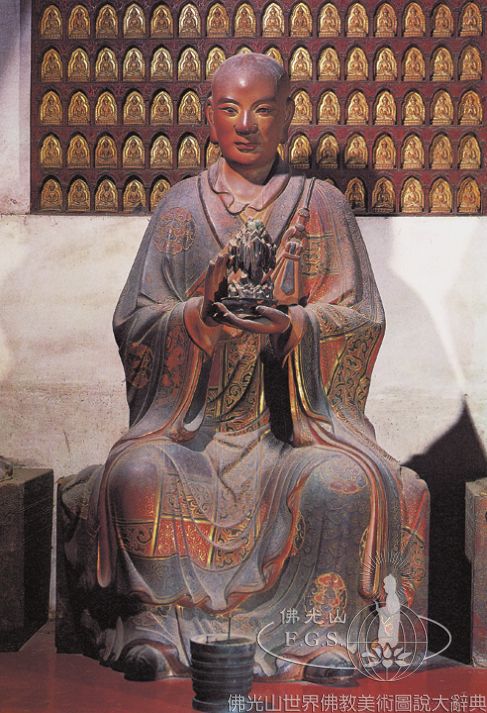
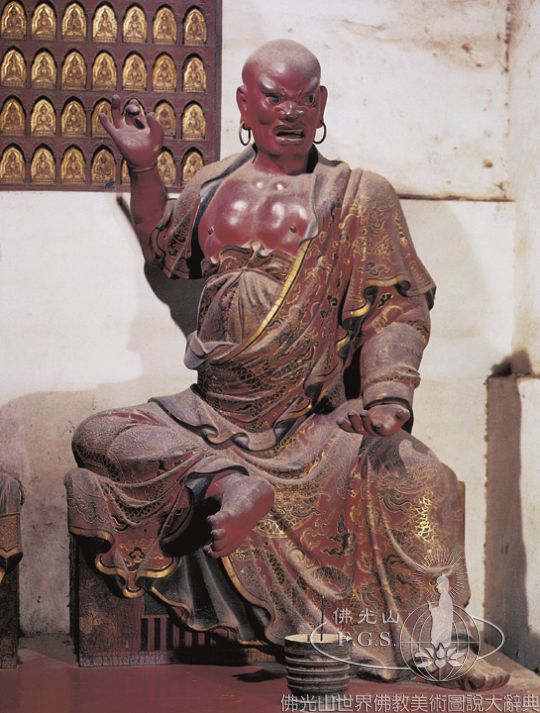
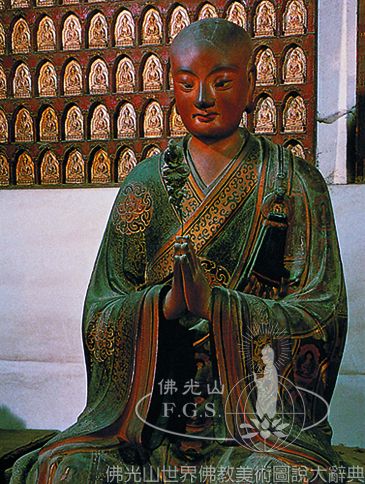
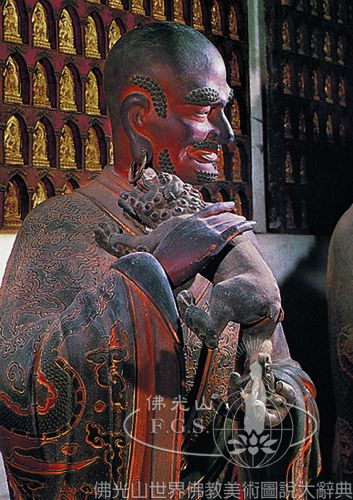
These eighteen brightly colored Arhats are the only set of perfectly preserved lacquer statues from the Yuan dynasty (1271-1368). They originated from the Danengren Temple, but were moved to the National Palace Museum in Beijing during the Ming dynasty (1368-1644). In 1973, they were moved to Baima Temple when King Norodom Sihanouk (reigned 1941-1955, 1993-2004) of Cambodia visited the temple. They can now be found lining the sides of the Great Hero Hall with the Dragon-Subduing Arhat in the lead on the east side and the Tiger-Taming Arhat leading the west side.
The style of these statues reflects the secularization of art during the Song dynasty (960-1279). The poses of the statues differ greatly, from sitting with legs crossed or legs pendent, to ankles crossed or a relaxed posture. Some have hands joined, while others hold a variety of objects such as a whisk, alms bowl, staff, or a pen. The patterns on the monastic robes are also quite diverse. Their expressions, which truly differentiate them, range from fierce-looking and rough features to benign and delicate.
The Arhats that are pictured show Kanaka Bharadvaja with eyes focused in concentration and palms joined in reverence; a cloud with a Buddha sitting on top of it rises from his fingertips. Vajraputra is the bearded figure with the baby lion cradled in his arms, and the Tiger-Taming Arhat wears earrings and snarls fiercely as he turns to one side with one arm and one leg raised. Lastly, there is Nandimitra depicted as a young man holding a model of Mount Gandhamadana in his hands. |