 |
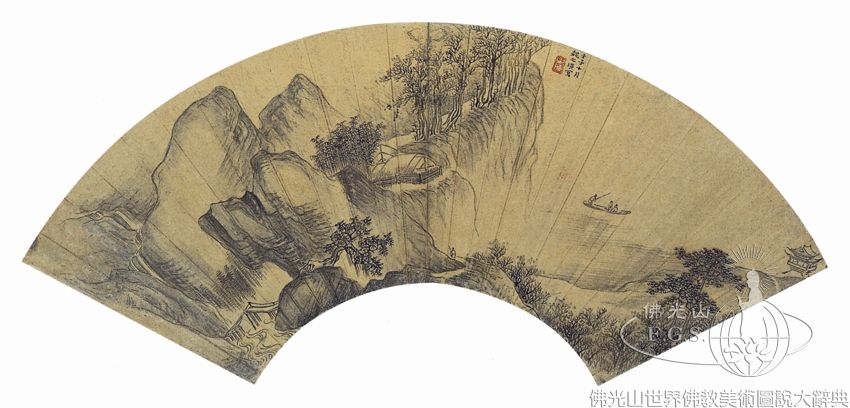
Wei Zhihuang (1568-circa 1647)
|
| |
|
Wei Zhihuang (1568-circa 1647)
CHINA, Jiangsu, Nanjing; Ming to Qing dynasty (1368–1911)
Wei Zhihuang, also known as Kaoshu, was a calligrapher and painter from Shangyuan (present day Nanjing, Jiangsu). Born to a poor family, he made a living by selling his paintings, which he modeled after works of the Song dynasty (960-1279). Wei painted without sketching a draft, and in his later years, he used thick ink and a withered brush to give a bold and strong appearance to his works. He also painted flowers in light ink that produced a fresh, elegant, and natural scene. Wei's calligraphy style was modeled after that seen in the Daoist Yellow Court Classic, with a strict structure and flowing spirit.
Wei frequently painted images of the Buddha. Each month, he would paint a portrait of Avalokitesvara Bodhisattva and offer it to various temples. His extant paintings, Landscape and Mountain and Stream, are kept at the Palace Museum in Beijing; Spring River Flowing Fragrance is kept at the National Palace Museum in Taipei, Taiwan; and A Thousand Rocks Contesting Beauty is kept at the Shanghai Museum. |