 |
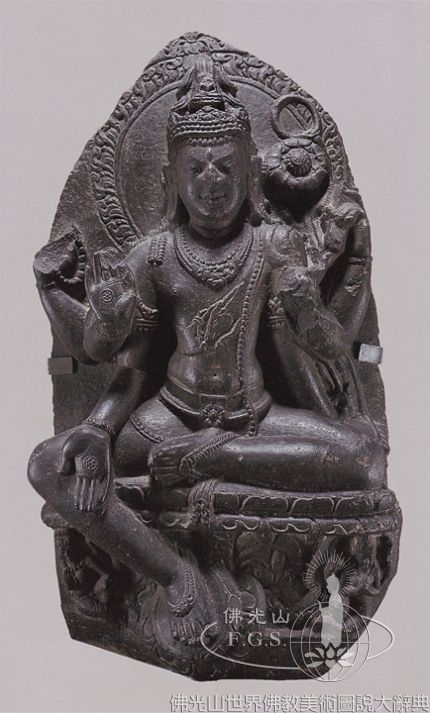
Kurkihar: Amoghapasa Avalokitesvara
|
| |
|
Kurkihar: Amoghapasa Avalokitesvara
INDIA, Bihar, Kurkihar; Pala period (circa 8th–12th century), circa 9th century; Stone; H: 92 cm; Indian Museum, Kolkata, India
This heavily jeweled Bodhisattva was discovered in Kurkihar and is depicted with six arms. The hair is piled into a high topknot and secured with a headdress that features the image of a meditating Amitabha Buddha. The figure also wears a sacred thread and an antelope skin which is carved in low relief across the chest. Some of the arms are severely damaged but of those on the right, the one near the thigh makes the varada (wish-granting) mudra, the one raised at chest level probably forms the abhaya (fearlessness) mudra, while behind it the third arm holds prayer beads. On the left, the lowest-positioned arm holds a lotus, the one at chest level a noose, and the third a sutra case. The Bodhisattva sits on a double lotus throne, with the right leg supported by a lotus. Based on these attributes, the statue is identified as Amoghapasa Avalokitesvara.
The upper section of the mandorla is damaged but the nimbus remains, its edges decorated with a floral pattern. There are two female figures beneath the throne; the one on the left is a two-armed Tara while the one on the right is the four-armed Bhrkuti. |