 |
Mogao Cave 17: Thousand-Armed, Thousand-Eyed Avalokitesvara
|
| |
 |
Mogao Cave 17: Thousand-Armed, Thousand-Eyed Avalokitesvara
|
| |
|
Mogao Cave 17: Thousand-Armed, Thousand-Eyed Avalokitesvara
CHINA, Gansu, Dunhuang; Tang dynasty (618–907); Ink and color on silk; 226 x 167 cm; British Museum, London, United Kingdom
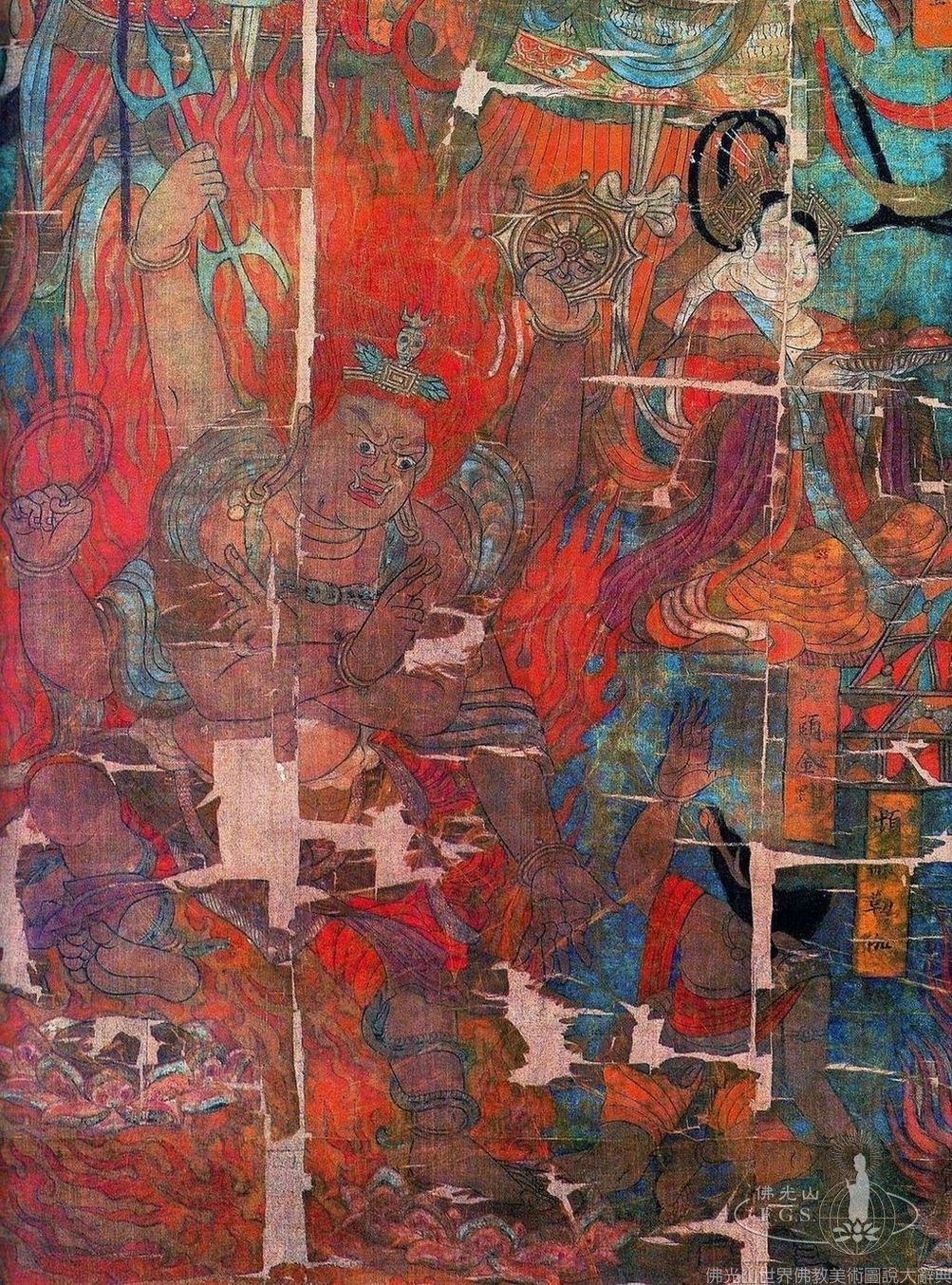
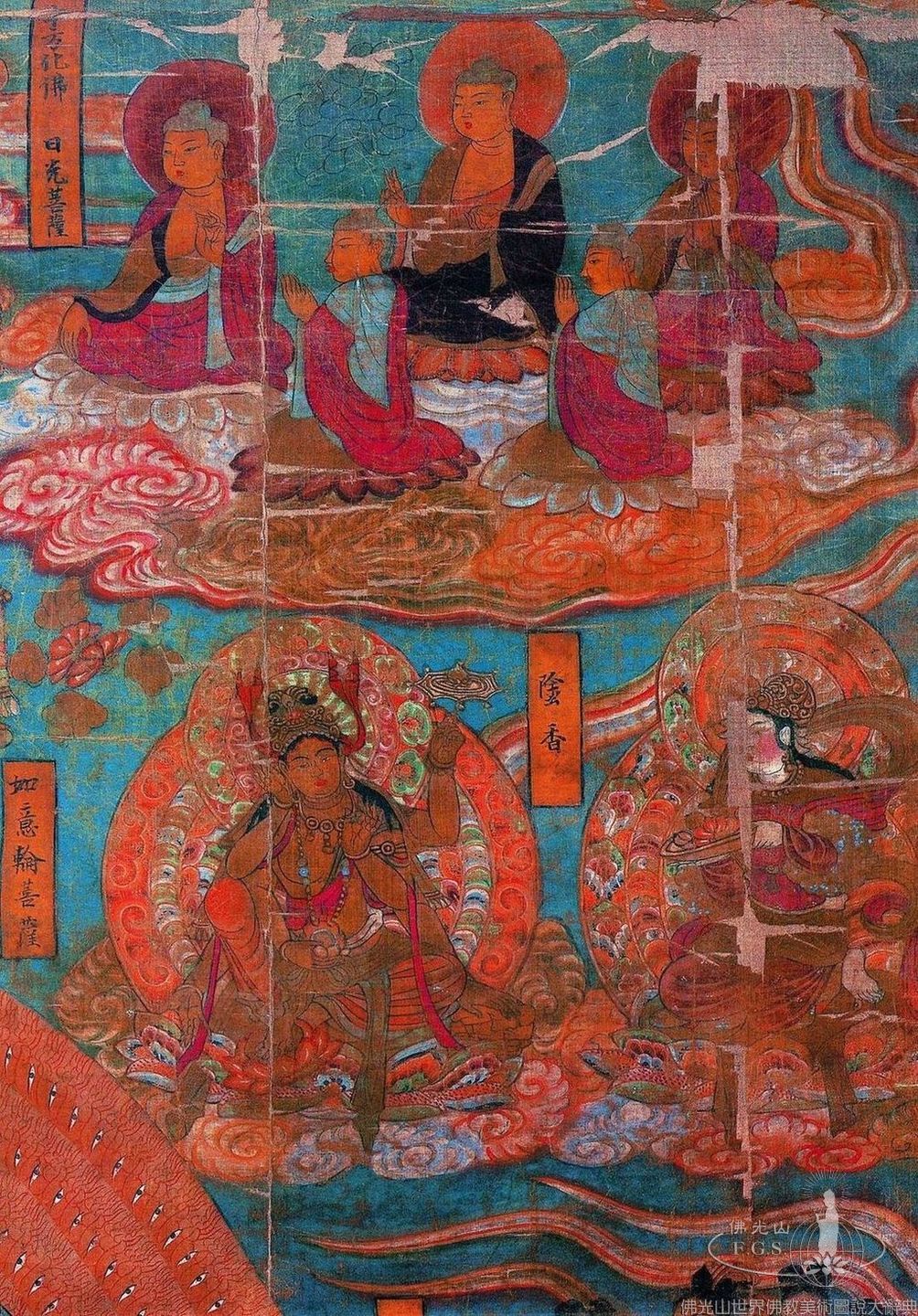
This painting, discovered in Mogao Cave 17 in Dunhuang, is representative of the style that developed during the Tibetan occupation of Dunhuang (781-847). Thousand-Armed, Thousand-Eyed Avalokitesvara Bodhisattva sits in full lotus position on a lotus throne. The eleven heads are arranged in four rows; the head of a Buddha is at the top. The hands, each with an eye painted on the palm, form a circular aureole around the Bodhisattva. They form mudras or hold objects including a sun disc, moon disc, Buddha image, wish-fulfilling jewel, monk's staff, and vase.
At the top of the picture, the Buddhas of the Ten Directions sit on clouds beside a canopy. Along the left side areBodhisattvas and Dharma protectors including Candaprabha Bodhisattva, Amoghapasa Avalokitesvara, Brahma, Mahakala, the Peacock King, and Mahadevi. On the right side, Suryaprabha Bodhisattva, Sakra, Mahesvara, the Garuda King, and Vasu are shown. All of the figures are identified by inscriptions within cartouches.
Beside Avalokitesvara's lotus throne, small hungry ghosts raise their hands, seeking relief from the compassionate Bodhisattva. Two naga kings stand in a pond below the throne. Although most of the lower register has torn away, faint images of Trailokyavijaya and Ganesa are visible in the corners. |