 |
Wongaksa Temple Ten-Tier Pagoda
|
| |
|
Wongaksa Temple Ten-Tier Pagoda
SOUTH KOREA, Seoul
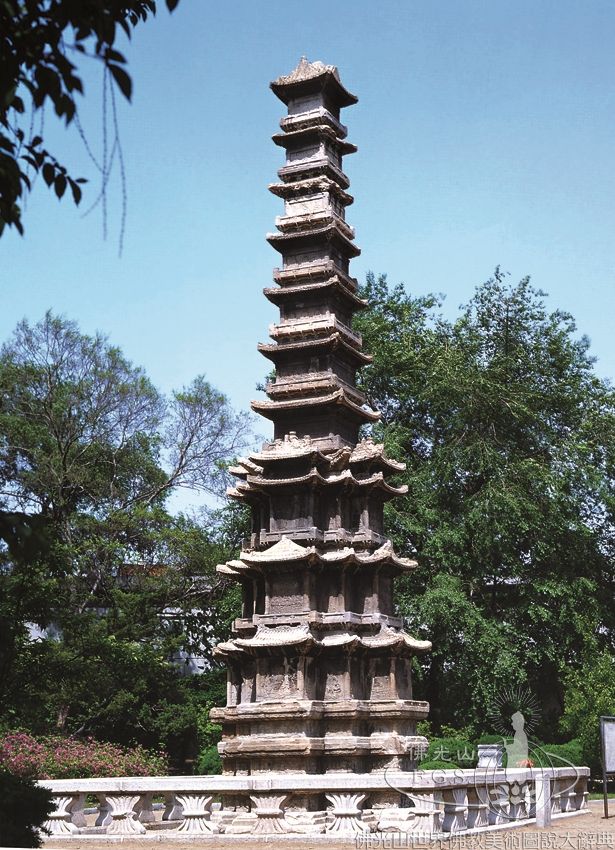
The pagoda is located within Pagoda Park, on the site of Wongaksa (Perfect Enlightenment Temple), which no longer exists. The pagoda was built in 1467 during the Joseon dynasty. Initially Wongaksa Temple was protected during the suppression of Buddhism in Korea, but in 1504 it passed into secular use and was never used as a temple again. The pagoda was listed as National Treasure No. 2 in 1962.
The 12 m high pagoda is made of marble, which is unusual as most Korean stone pagodas are made of granite. It stands on a three-layer square base with multiple corners and a regular cruciform layout. The first three tiers of the pagoda body are multiple-cornered with a regular cruciform layout, while the remaining tiers are cuboid. Each tier of the body has a flat base and a balustrade. Except for the third tier, which has double eaves, the other tiers contain single eaves. The first three tiers and the southern side of the fourth tier are carved with the Assemblies of the Thirteen Buddhas, a depiction which provides useful information for understanding Buddhism in Korea during the time of the pagoda’s construction. The spire is partly damaged. This pagoda is modeled on Gyeongcheonsa Temple Ten-Tier Pagoda, which was erected in 1348. It is an outstanding example of Joseon Buddhist architecture. |