 |
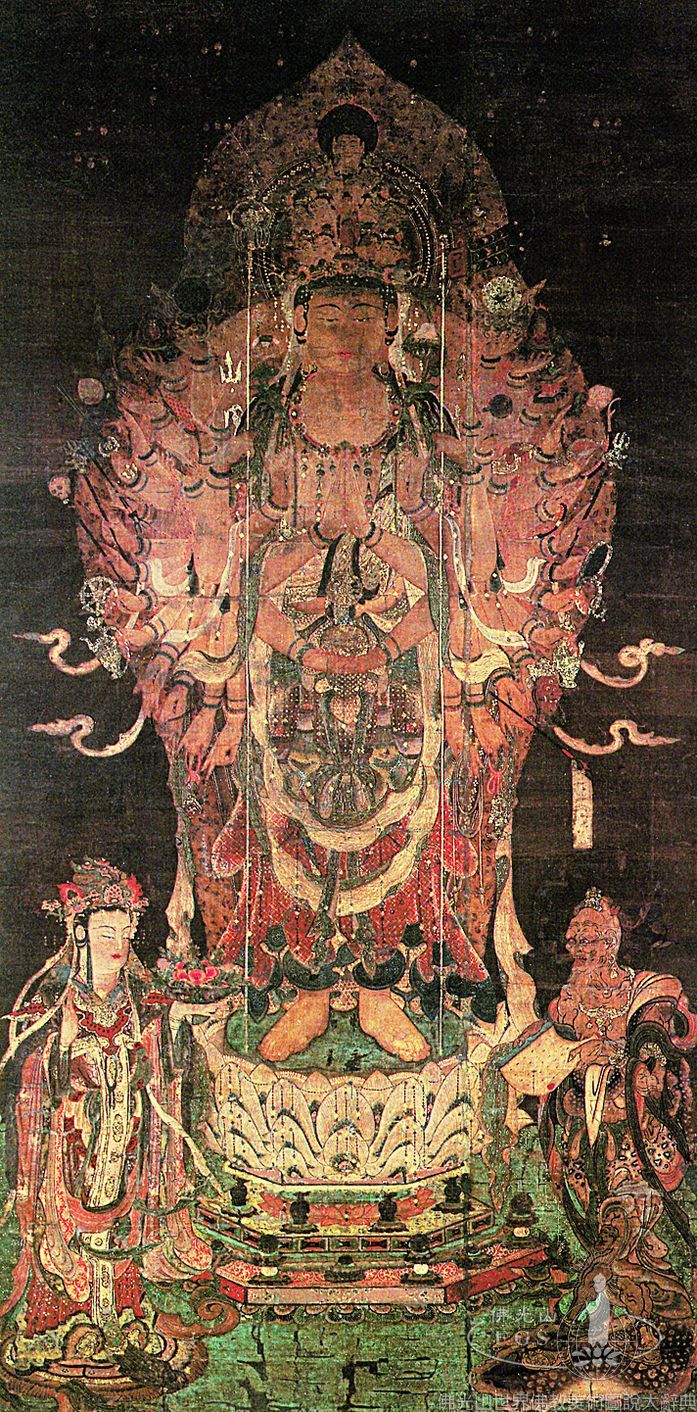
Thousand-Armed, Thousand-Eyed Avalokitesvara
|
| |
|
Thousand-Armed, Thousand-Eyed Avalokitesvara
JAPAN; Heian period (794–1185); Ink and color on silk; 138.2 x 69.1 cm; Tokyo National Museum, Japan
Dating from the 12th century, this is the oldest surviving Japanese painting of Thousand-Armed, Thousand-Eyed Avalokitesvara. It was listed as a National Treasure in 1955. The portrayal of the Bodhisattva is based on a description in the Great Compassion Dharani Sutra. Avalokitesvara wears a delicately patterned garment and stands on a layered lotus pedestal. The Bodhisattva has eleven heads, each with narrowed eyes and a calm expression. The hands fan out around the body, forming mudras or holding objects. Vasu, an attendant of Avalokitesvara who resides at the foot of Mount Potalaka, is on the right beside the lotus pedestal. He stands on a deerskin and holds a sutra scroll. His wrinkled face and gnarled limbs bring to mind Song dynasty (960-1279) depictions of the Arhats. The elegant Mahadevi, an incarnation of Avalokitesvara, is depicted on the left, carrying an offering bowl filled with flowers. Gold foil is applied to the patterning on the nimbus and the clothing of the central figure. It is also used to highlight some of the objects held in the hands. |