 |
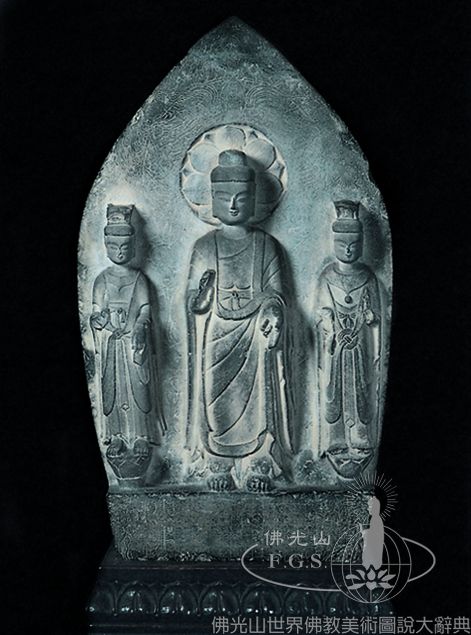
Xinxiang: Buddha Triad
|
| |
|
Xinxiang: Buddha Triad
CHINA, Henan, Xinxiang; Eastern Wei dynasty (534–550); Commissioned by Fazun, Faxiang, and Situ Yongsun; Stone; H: 126 cm; Tokyo National Museum, Japan
The triad was discovered in Xinxiang city, China and is listed as an Important Cultural Property of Japan. The Buddha 's nose and the tip of the mandorla were repaired at a later date.
The triad consists of a Buddha flanked by two Bodhisattvas standing on a stepped base. The Buddha 's right hand is in the abhaya (fearlessness) mudra. The monastic robe he wears covers both shoulders and is opened at the front. The two Bodhisattvas stand on elevated lotus pedestals and wear headdresses. Their stoles drape down their body and cross at the waist.
The front of the mandorla is covered with incised images of Buddhas, apsaras, Bodhi trees, flowers and flames with only the lotus nimbus in bas-relief. Inscriptions are found on the stepped base, mandorla, and the back of the sculpture. They list 75 names of donors, including monks Fazun and Faxiang, and lay devotee Situ Yongsun.
The three figures were created in the Northern Wei style (386–534) but the clothing and images on the mandorla are more simplified. The slight emphasis on their physic herald the start of the Eastern Wei (534–550) style. |