 |
Wheel of Rebirth
|
| |
|
Wheel of Rebirth
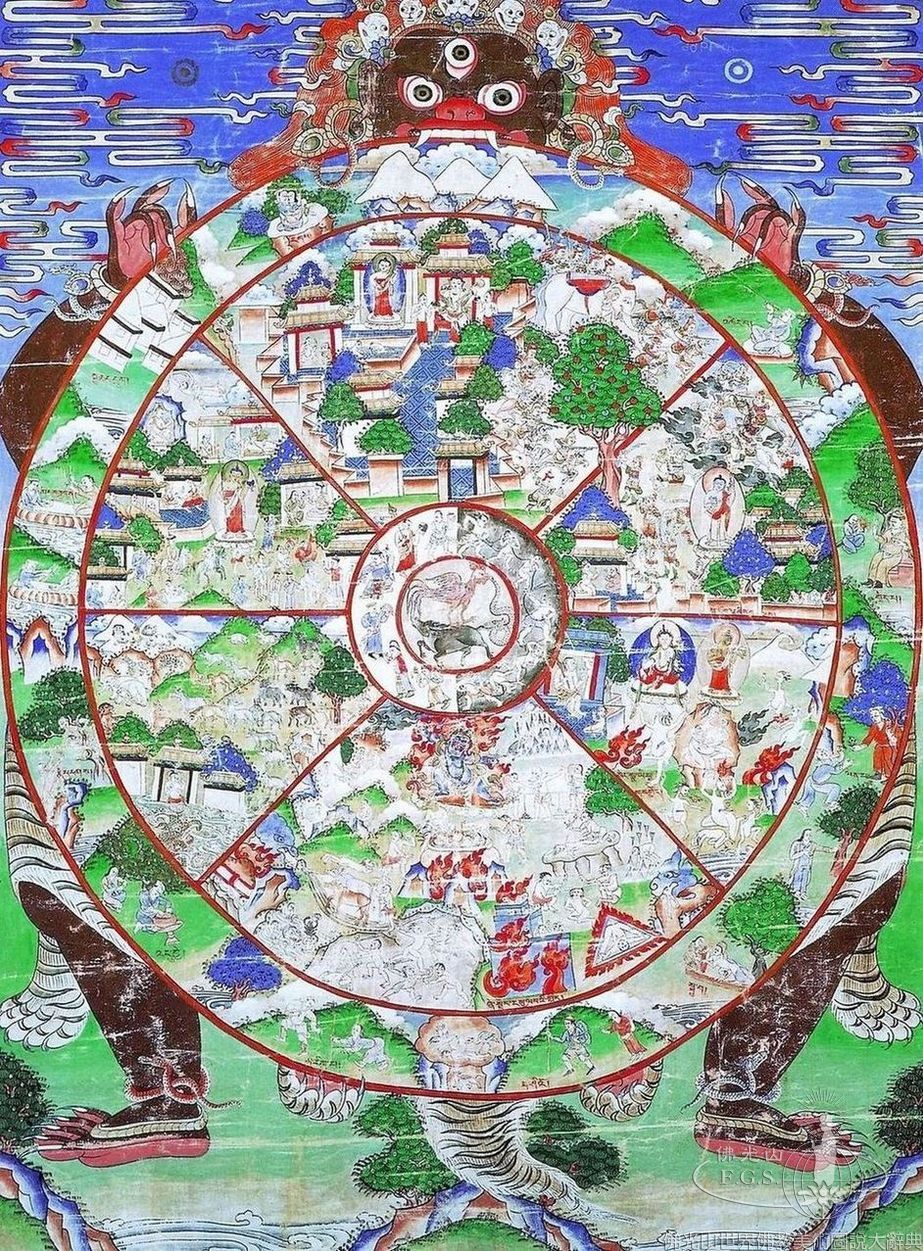
CHINA; Qing dynasty (1644–1911); Ink and color on cotton; 94 x 70.5 cm; Victoria and Albert Museum, London, United Kingdom
This 19th century Tibetan thangka features the Wheel of Rebirth, a vivid representation of the six realms that beings are born into according to their karma. Yama, the lord of death, grasps the top of the wheel with his fangs and claws. He has three wide eyes and wears a crown of skulls.
The wheel is composed of a small circle and three concentric rings. A chicken, a snake, and a pig are painted in the center. These represent the three poisons; greed, hatred, and ignorance, the causes that keep beings trapped in the cycle of rebirth. The first ring is divided into two halves: a white half representing the heavenly realms, and a black half representing the hells. Small figures symbolize the ceaseless movement through different states of existence.
The large second ring is divided into six sections representing the six realms. At the top, heavenly beings are shown living in paradise, enjoying the fruits of their good actions but falling back into the lower realms when their merit has been exhausted. Moving in a clockwise direction, the realm of the asuras is shown next. These beings, consumed by pride and anger, are constantly at war. In the realm of the hungry ghosts, shown on the lower right, beings who were filled with greed and craving in their previous life are born with enormous appetites that they cannot satisfy. The hell realm is at the bottom of the wheel. Here, beings full of hatred who harmed others in their previous life undergo horrendous torments. On the lower left is the animal realm, where beings are reborn due to ignorance and are overwhelmed by the senses. The human realm, depicted above, is a place of both happiness and suffering, providing the most conductive conditions to spiritual development. A Buddha is depicted in the heaven, human, asura, and hungry ghost realms. Each holds a different Dharma instrument, symbolizing the variety of expedient means used to guide sentient beings according to their level of development.
In the outermost ring, 12 scenes are painted within a natural landscape. Images depict within the 12 scenes include a blind woman, a potter, a monkey, a boat, an empty house, a couple, a man with an arrow in his eye, a banquet, a wealthy man, a pregnant woman, a newborn baby, and a corpse. These images symbolize the 12 links of dependent origination and explain the causal relationship between birth and death. |