 |
Vajradhara
|
| |
|
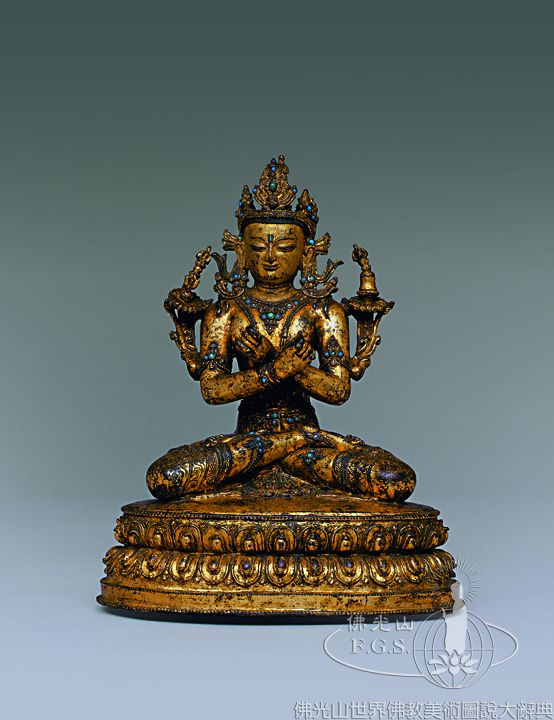
Vajradhara
BHUTAN / NEPAL; 15th century; Gilt copper alloy; H: 17 cm; National Museum of Bhutan, Paro
Experts believe this figure is of Newar origin judging from the casting and gilding techniques, as well as the jewelry and the youthful features. Nepalese artists working in Bhutan probably created the sculpture or it was made in Nepal.
The Bodhisattva has bluish hair that is tied in a topknot. A few strands of hair drape naturally down the shoulders. The five-leaf crown is embedded with semi-precious stones, including turquoise, malachite, garnets, and obsidian. Hanging from the crown are four curling strips. The Bodhisattva 's torso is adorned with a necklace and armlets inlaid with turquoise. Two lotus stalks rise to the shoulders from the armlets, and the flowers support a vajra and a bell. These are the attributes of Vajradhara. The hem of the lower garment is engraved onto the legs, where different layers can be clearly differentiated. A layer of the garment projects from beneath the figure seated in the full lotus position. The lotus throne has been carved in the conventional design with double layers of petals that upturn slightly, bracketed by beaded patterns. The hands form the vajrahumkara (embracing wisdom) mudra, while holding a bell and vajra towards the chest. |