 |
Gong Stand
|
| |
|
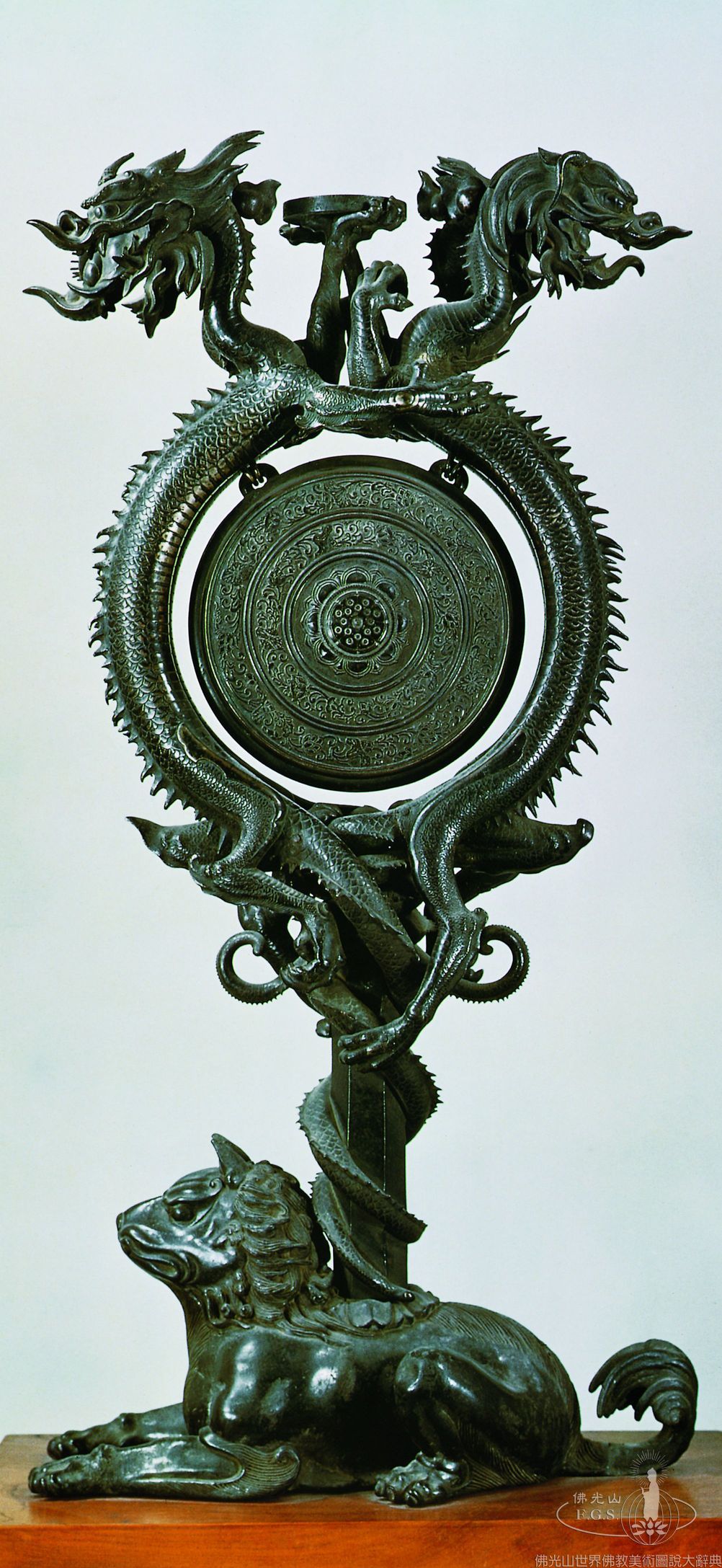
Gong Stand
CHINA; Tang dynasty (618–907); Bronze; H: 94 cm; Kofukuji Temple, Nara, Japan
This ritual gong stand was created in Huayuan (present day Yaoxian, Shanxi), China during the Tang dynasty (618-907) and was taken to Kofukuji Temple in Nara, Japan. The gong was renamed as Huayuan Gong, after the place where it was made, during the Kamakura period (1185-1333). It was listed as a National Treasure of Japan in 1952.
The stand was created using the lost-wax method and then welded together. The base is in the form of a lion supporting a hexagonal pillar. Two dragons coil up and outward from the pillar to the top of the stand. The dragons' heads face out, and their claws hold a round disc. The bodies form a circle with a gong suspended at the center.
According to records, there was once a revolving seated Bodhisattva on the disc and an image of Brahma holding the striker at the side; however, they are both missing. |