 |
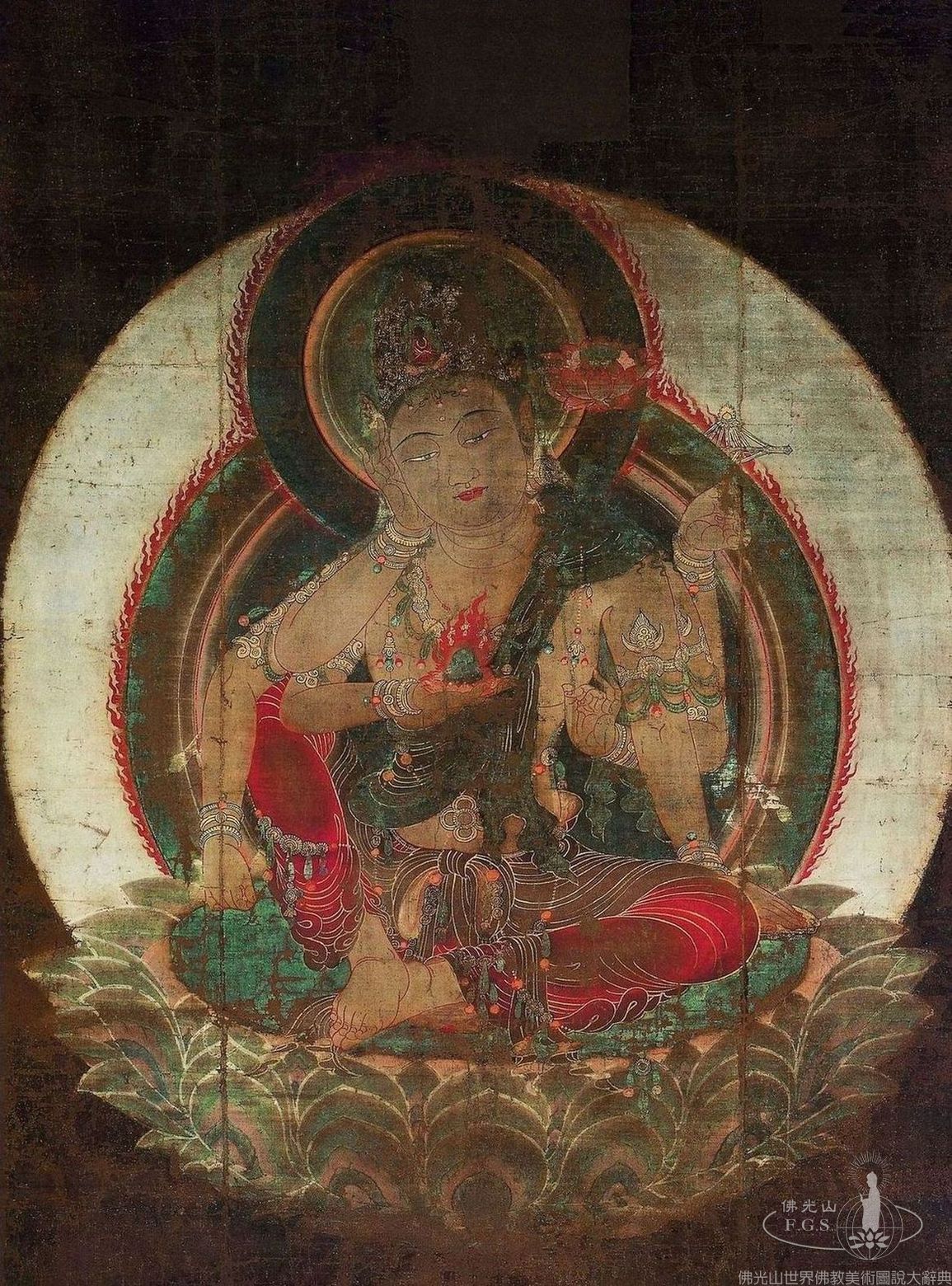
Hozoji Temple: Cintamanicakra Avalokitesvara
|
| |
|
Hozoji Temple: Cintamanicakra Avalokitesvara
JAPAN, Shiga, Koka; Kamakura period (1185-1333); Ink and color on silk; 123.9 x 91.7 cm
This painting, listed as an Important Cultural Property in 1900, depicts Cintamanicakra, a form of Avalokitesvara Bodhisattva. According to the Cintamanicakra Avalokitesvara Yoga, Cintamanicakra has a golden body with six arms, and sits in royal ease posture holding a wish-fulfilling jewel. The painting builds upon this description. Cintamanicakra wears a tall headdress with a Buddha image in the center. The body is adorned with a golden necklace, bracelets, and armlets. The Bodhisattva sits on a lotus throne with the right arms resting on the raised right knee. One of the right hands supports the head, while the other two hold a wish-fulfilling jewel and prayer beads. The upper left hand holds up the Mountain of Bright Light, and the two other left hands hold a long-stemmed lotus and a treasure wheel.
The nimbus and aureole are decorated with flame patterns, and are surrounded by a white mandorla. Fine gold lines are used to depict the folds of the dhoti. The petals of the lotus throne are lightly shaded to give a sense of depth. Although this image was painted during the early Kamakura period (1185-1333), it has the dark, solemn appearance of Heian period (794-1185) artworks. |