 |
Vajrasattva Bodhisattva
|
| |
|
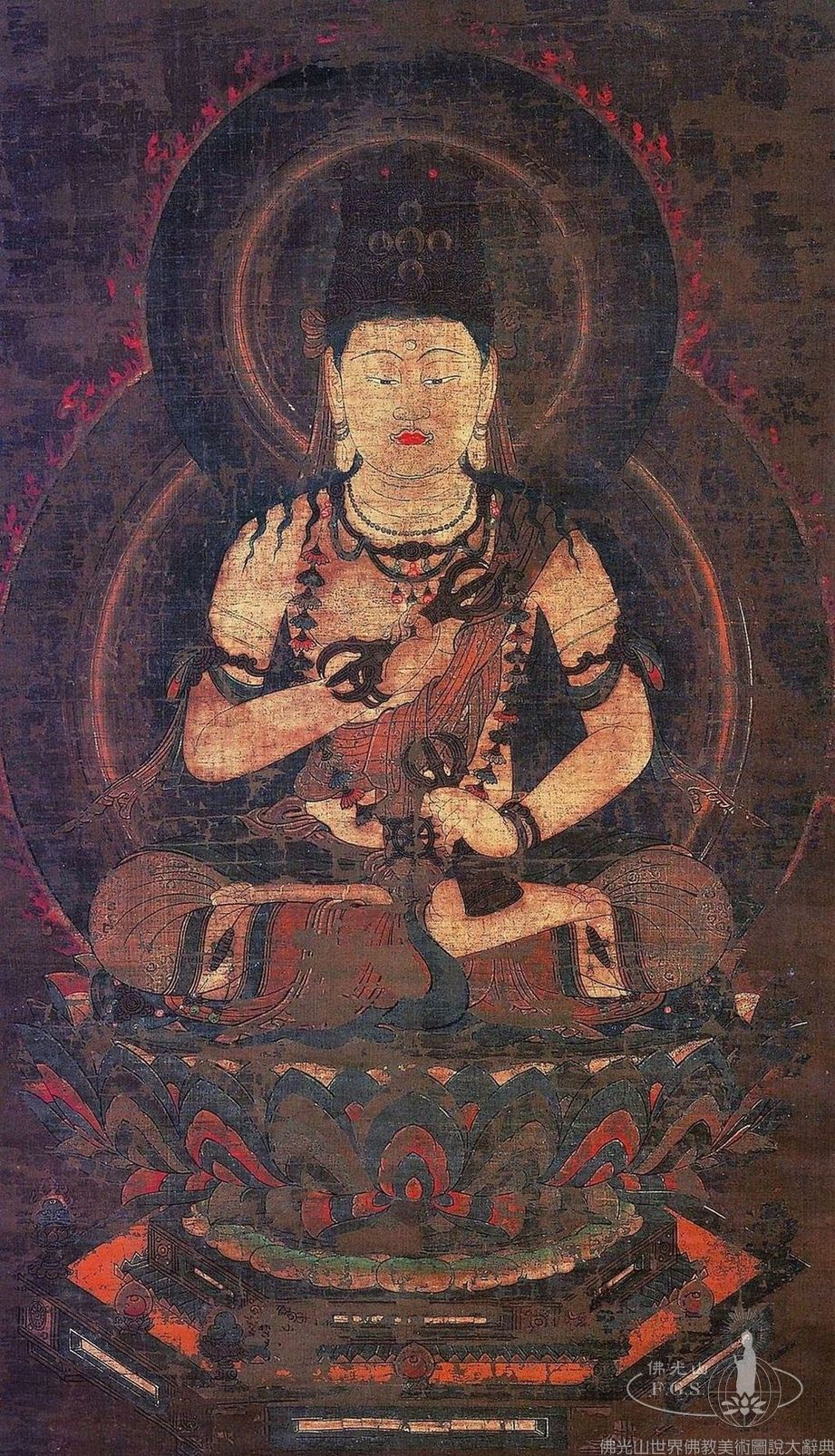
Vajrasattva Bodhisattva
JAPAN; Kamakura period (1185–1333); Ink and color on silk; 108.5 x 64.5 cm; Nezu Museum, Tokyo, Japan
Vajrasattva, a manifestation of Vairocana Buddha associated with an unshakable Bodhi mind, is an important figure in the Vajrayana Buddhist tradition. Known as Kongoshu Bosatsu in Japan, Vajrasattva is rarely featured as the central figure in paintings, making this a unique and precious artwork. The painting style suggests that it was made during the late Kamakura period.
Vajrasattva has hair that falls in ringlets over the shoulders and wears a headdress, a necklace, floral ornaments, stoles, and a dhoti. Sitting in full lotus position on a double-layered lotus throne, Vajrasattva holds a vajra and a bell. The nimbus and the aureole are decorated with flame patterns. Black ink is used to trace the headdress, ornaments, bell, vajra, and other gold instruments. The petals and pedestal of the lotus throne are painted with copper green, ultramarine blue, and vermilion. The gilding on the painting has worn away. |