 |
Mendut Temple
|
| |
|
Mendut Temple
INDONESIA, Central Java, Magelang
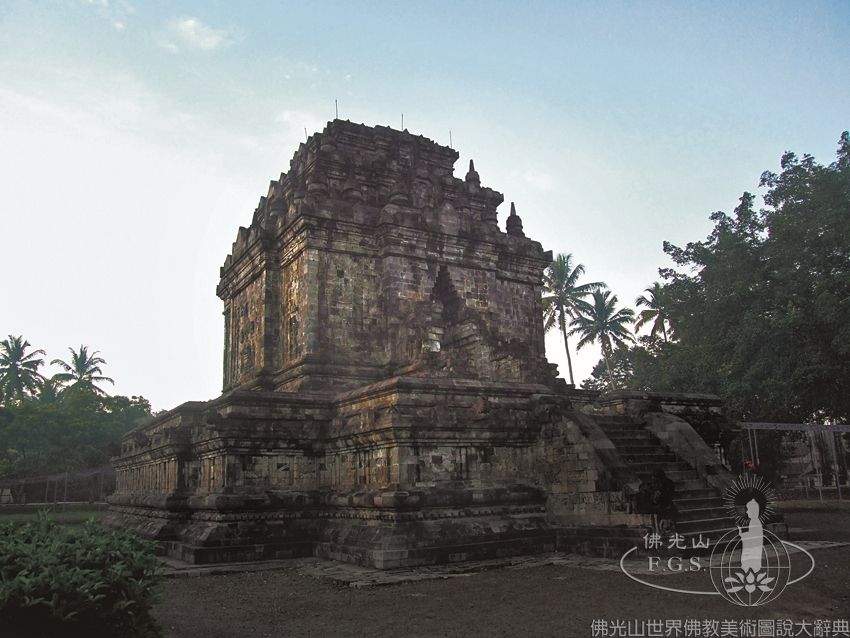
Mendut Temple derives its name from Venuvana, a Sanskrit term meaning Bamboo Grove. It is located approximately 2 km east of Borobudur, and was built in the late 8th century during the Sailendra dynasty (circa 750–850) using limestone. The temple was later replaced by a sturdier material, andesite stone, during restoration work in the early 20th century. Together with Pawon Temple and Borobudur, they form Three Major Buddhist Pilgrimage Sites that are located in a straight line. During the annual Vesak Day, Buddhists celebrate by walking from Mendut Temple, passing through Pawon Temple, and ending at Borobudur.
The two-story Mendut Temple faces northwest and has a square plan with multiple corners. The roof is decorated with 48 small stupas. On the lower floor there is a statue of Sakyamuni Buddha approximately 3 m high, flanked by statues of Avalokitesvara Bodhisattva on the left and Vajrapani Bodhisattva on the right. There are six small niches in front of the Buddha, possibly used as candleholders. On the upper story there are relief carvings of Indian deities, Buddhist Dharma protectors, and trees.
On the exterior walls there are high reliefs of Tara, Avalokitesvara, and Manjusri Bodhisattvas. The walls around the terrace are decorated with reliefs depicting Jataka tales and karma stories, as well as stories of daily life. They are carved sequentially, forming a narrative. |