|
Mogao Cave 17: Seated Buddha
|
| |
 |
Mogao Cave 17: Seated Buddha
|
| |
 |
Mogao Cave 17: Seated Buddha
|
| |
 |
Mogao Cave 17: Seated Buddha
|
| |
 |
Mogao Cave 17: Seated Buddha
|
| |
 |
Mogao Cave 17: Seated Buddha
|
| |
 |
Mogao Cave 17: Seated Buddha
|
| |
 |
Mogao Cave 17: Seated Buddha
|
| |
 |
Mogao Cave 17: Seated Buddha
|
| |
|
Mogao Cave 17: Seated Buddha
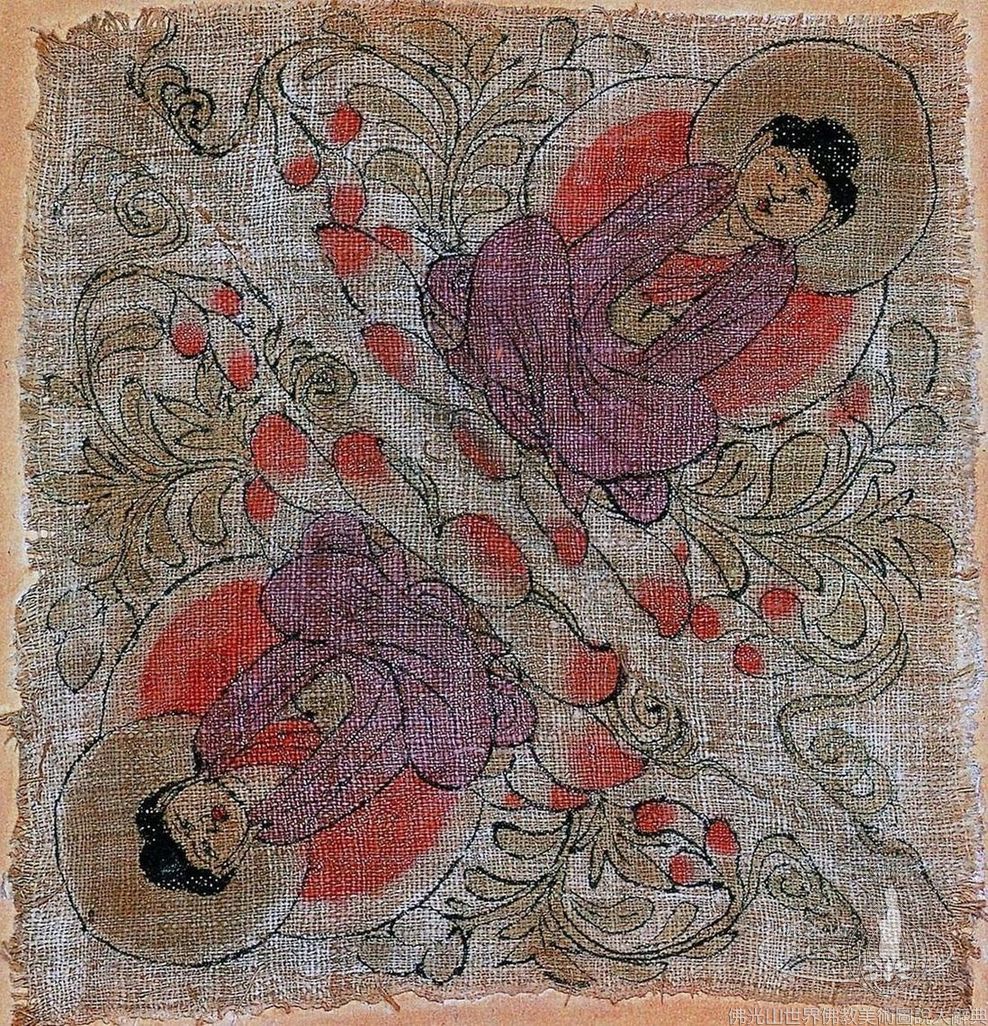
CHINA, Gansu, Dunhuang; Northern Song dynasty (960–1127); Ink and color on linen; 23.2 x 24.2 cm; Guimet Museum of Asian Art, Paris, France
This 10th century illustration was painted on linen. The square cloth is split along a diagonal axis and depicts two similar Buddha figures wearing purple monastic robes and sitting on lotus thrones. It was likely meant to be folded along the axis and used as the headpiece of a banner.
Banners were originally used on battlefields in ancient India to indicate leadership and communicate orders. The banner was adopted by Buddhism to symbolize the victories of the Buddhas and Bodhisattvas over Mara. Those who make banners are said to accumulate great merit, and are protected from evil and have their lives prolonged. Such merits are described in the Offering Banners to the Buddha " section of the Avadanasataka |