 |
Horyuji Temple Golden Hall: Four Heavenly Kings
|
| |
 |
Horyuji Temple Golden Hall: Four Heavenly Kings
|
| |
 |
Horyuji Temple Golden Hall: Four Heavenly Kings
|
| |
 |
Horyuji Temple Golden Hall: Four Heavenly Kings
|
| |
|
Horyuji Temple Golden Hall: Four Heavenly Kings
JAPAN, Nara, Ikoma; Asuka period (538–645); By Yamaguchi no Atai; Camphor wood
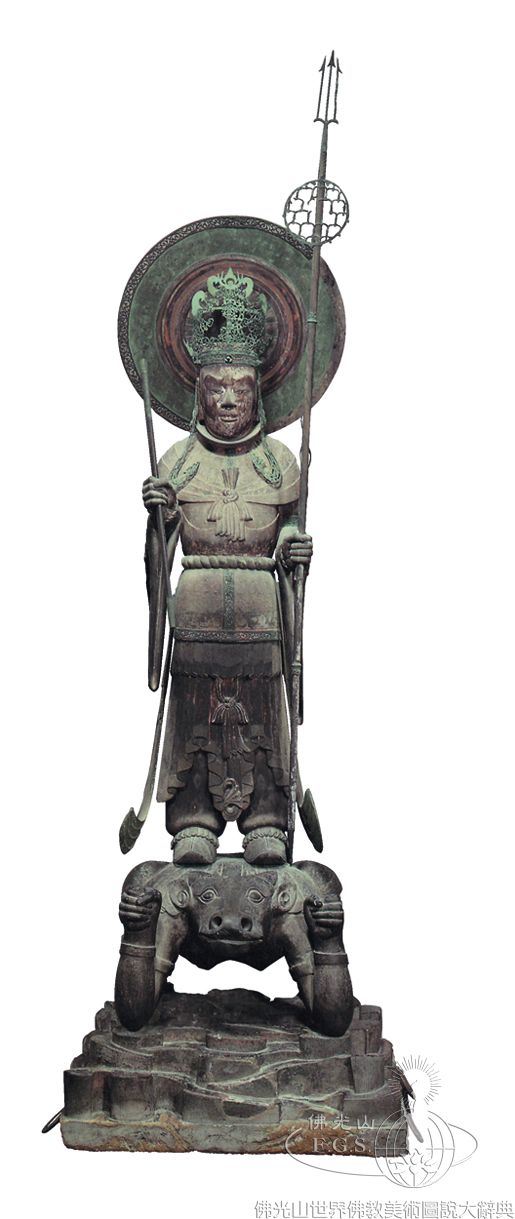
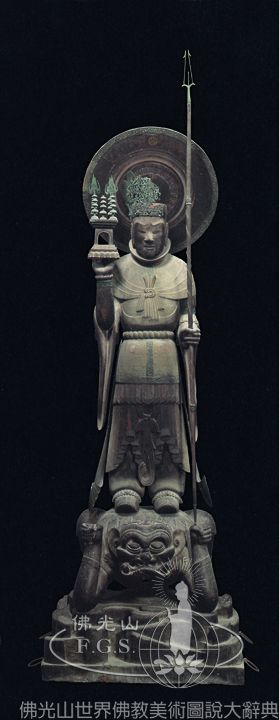
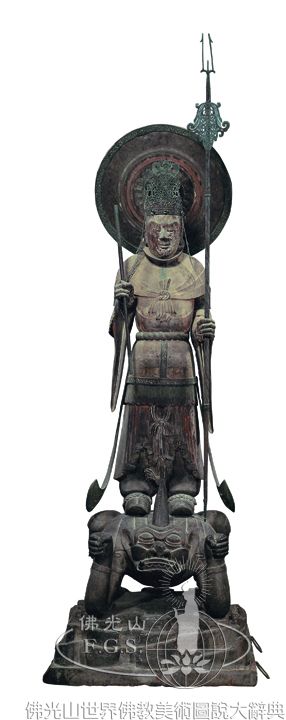
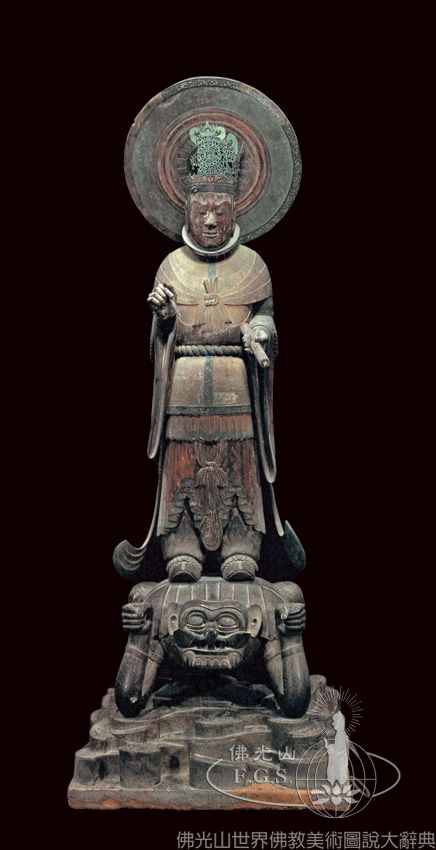
The statues stand at the four corners of the Golden Hall. The inscriptions found on the back of the nimbuses of Virupaksa and Vaisravana identify one of the sculptors as Yamaguchi no Atai. Written records from 650 in the Chronicles of Japan state that a certain Aya no Yamaguchi no Atai Oguchi carved some Buddhas under imperial order and it is thought that the two names refer to the same person, who was active in the late Asuka period. The sculptures are now the earliest surviving examples of the Four Heavenly King statues in Japan. They were listed as National Treasures in 1952.
The nimbus, the body of the Heavenly Kings, and evil spirits serving as pedestals were carved from single pieces of camphor wood and solid inside. The exterior still shows some of the original paint and gilding. The headdresses are made from copper with additions of the same metal to the nimbus and other accessories.
Dhrtarastra and Virudhaka both hold a sword and a trident, while Virupaksa carries a brush and a scroll. Vaisravana holds a pagoda and a trident. Each figure has a radiating nimbus with a vine-patterned outer rim. Their oval faces hold resolute expressions and they stand with elbows held close to the body. Their stoles hang down and the ends curl up in a stylistic fashion. The design of the clothing and their posture are characteristic of the Asuka period. |