 |
Zhenjue Temple Diamond Throne Pagoda
|
| |
 |
Zhenjue Temple Diamond Throne Pagoda
|
| |
|
Zhenjue Temple Diamond Throne Pagoda
CHINA, Beijing
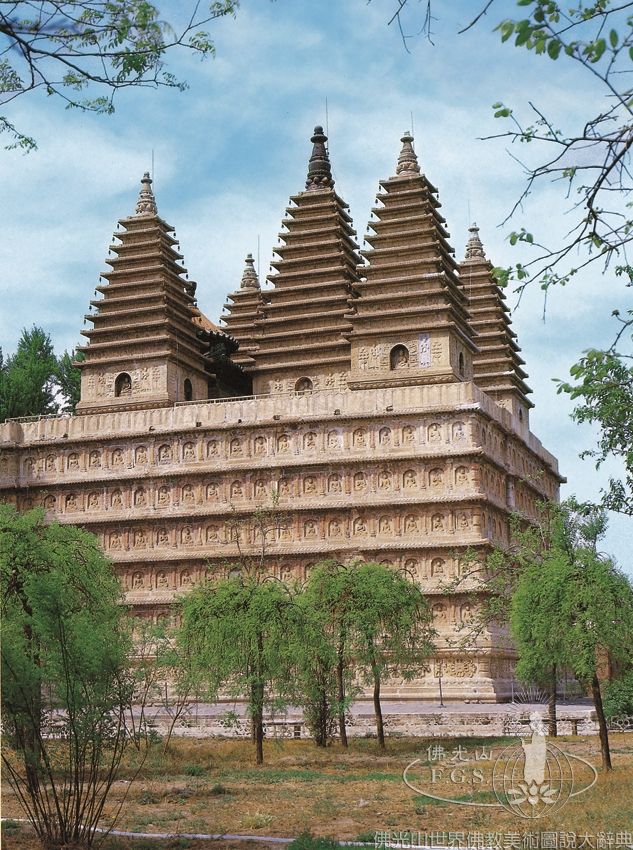
Zhenjue mean True Enlightenment. The pagoda was built by monk Bandida in 1473 during the Ming dynasty. The temple, also called Dazhenjue (Great True Enlightenment) Temple or Five Pagoda Temple, was destroyed with only the pagoda remaining. The pagoda was listed as a National Cultural Heritage Site in 1961.
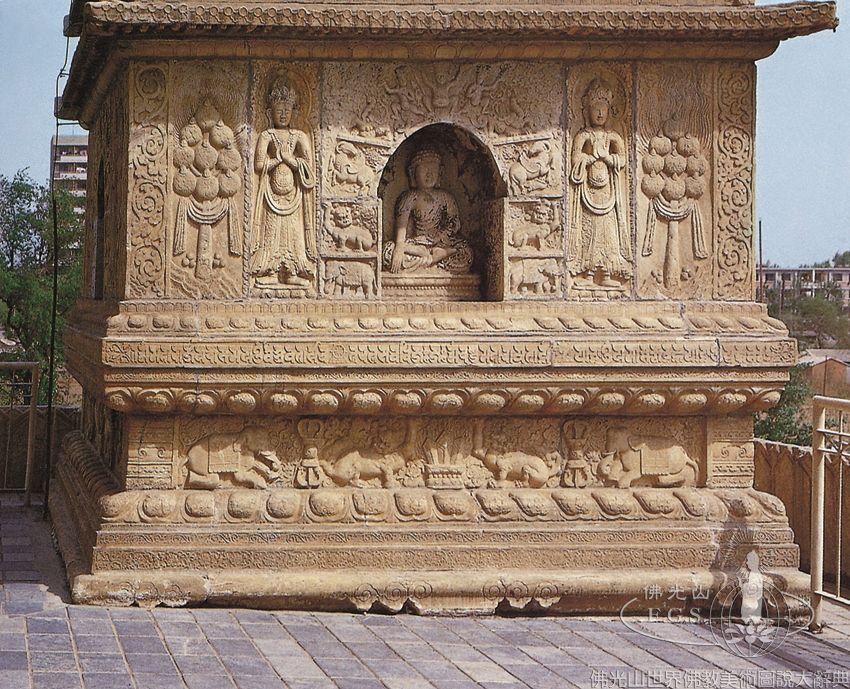
The diamond throne pagoda was constructed in brick with stone cladding. It consists of a high square base with five pagodas on top. The stone base has a tier representing Mount Sumeru followed by five tiers with miniature eaves separating each tier. Small Buddha niches completely encircle the exterior on the five tiers. An arched entrance is located on both the north and south sides. Just inside the entrance there is a square doorway with stone stairs leading to the roof of the base.
The pagoda in the center has 13 tiers and is 8 m high, while the pagodas in the corners are similar to the one in the center but are 7 m high and have 11 tiers . A small pavilion is erected in front of the central pagoda over the exit from the stairs. The five Buddha images enshrined within the pagodas are the same as those offered to the emperor by the monk Bandida. The carved decorations on the five stupas are the same as those found on the base. A pair of Buddha’s footprints can be found carved on the south side of the Sumeru base of the central pagoda.
The sculptures on the pagodas include Buddhas, the Eight Treasures, vajras, Four Heavenly Kings, and Arhats. The Five Dhyani Buddhas appear most frequently, totalling 1,561 Buddhas in all.
The structure followed the plans brought by Bandida and its appearance is similar to the Mahabodhi Temple at Bodhgaya. Various architectural features, such as the eaves and bracket sets, are of Chinese design. |