 |
Lemyethna Temple
|
| |
 |
Lemyethna Temple
|
| |
|
Lemyethna Temple
MYANMAR, Mandalay, Bagan
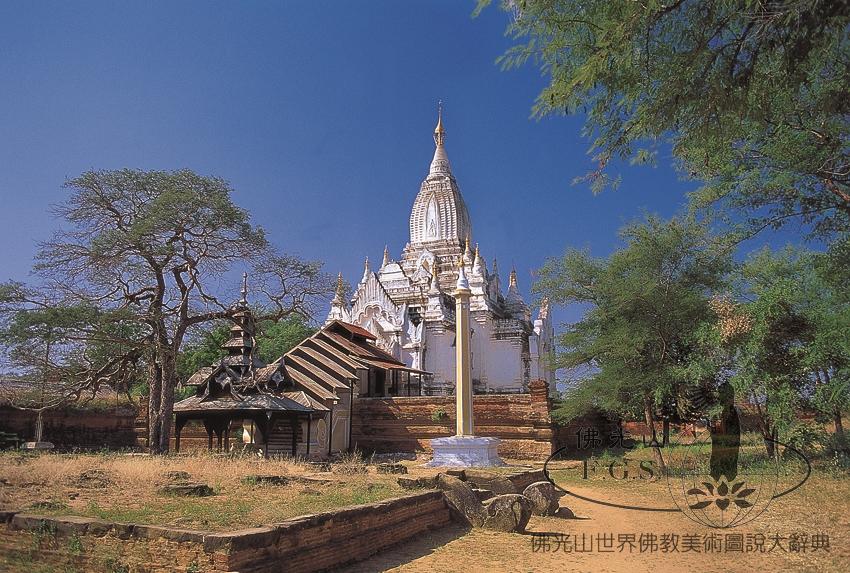
Lemyethna means Four Faces, and thus it is also known as the Temple of the Four Faces. It was built in 1222 by Anandathura, a prime minister during the rule of King Htilominlo (reigned 1210-1234), and his wife.
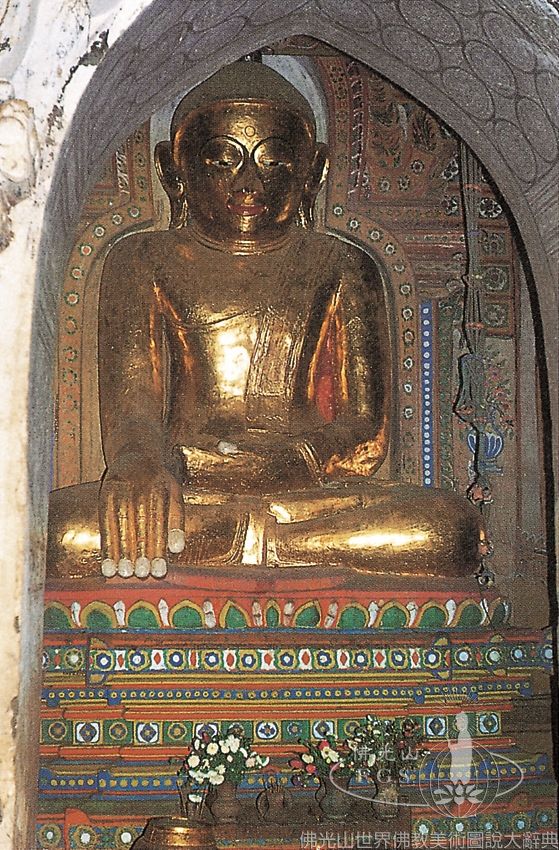
Resembling the nearby Ananda Temple, the white building stands on a platform made of red bricks. The temple is composed of two levels: the lower is a shrine, and the upper is a pagoda. The main shrine is square with multiple corners; there is a covered staircase leading up to the entrance, which is on the east side. There are porticos projecting on all four sides, each decorated with a huge flaming tympanum. The interior of the main shrine consists of a square central chamber surrounded by corridors. The chamber has arched doorways on each of the four walls and a square pillar at the center. On each side of the central pillar, there is a statue of Sakyamuni Buddha seated in full lotus position upon a lotus throne, with hands in the bhumisparsa (earth-touching) mudra. The walls of the inner chamber are covered with murals depicting scenes of the Twenty-Eight Past Buddhas, the Life of Sakyamuni Buddha, and Jataka tales.
The pagoda above the main shrine has a square base consisting of three terraces with ancillary pagodas at the corner of each terrace. The pagoda body has a tapered cuboid shape and is surmounted by a conical spire topped by a golden canopy and finial. Although this temple is not as big as the Ananda Temple, it is still considered to be an important Buddhist site in Bagan. |