 |
Mogao Cave 17: Ksitigarbha Bodhisattva and the Ten Kings of Hell
|
| |
 |
Mogao Cave 17: Ksitigarbha Bodhisattva and the Ten Kings of Hell
|
| |
 |
Mogao Cave 17: Ksitigarbha Bodhisattva and the Ten Kings of Hell
|
| |
|
Mogao Cave 17: Ksitigarbha Bodhisattva and the Ten Kings of Hell
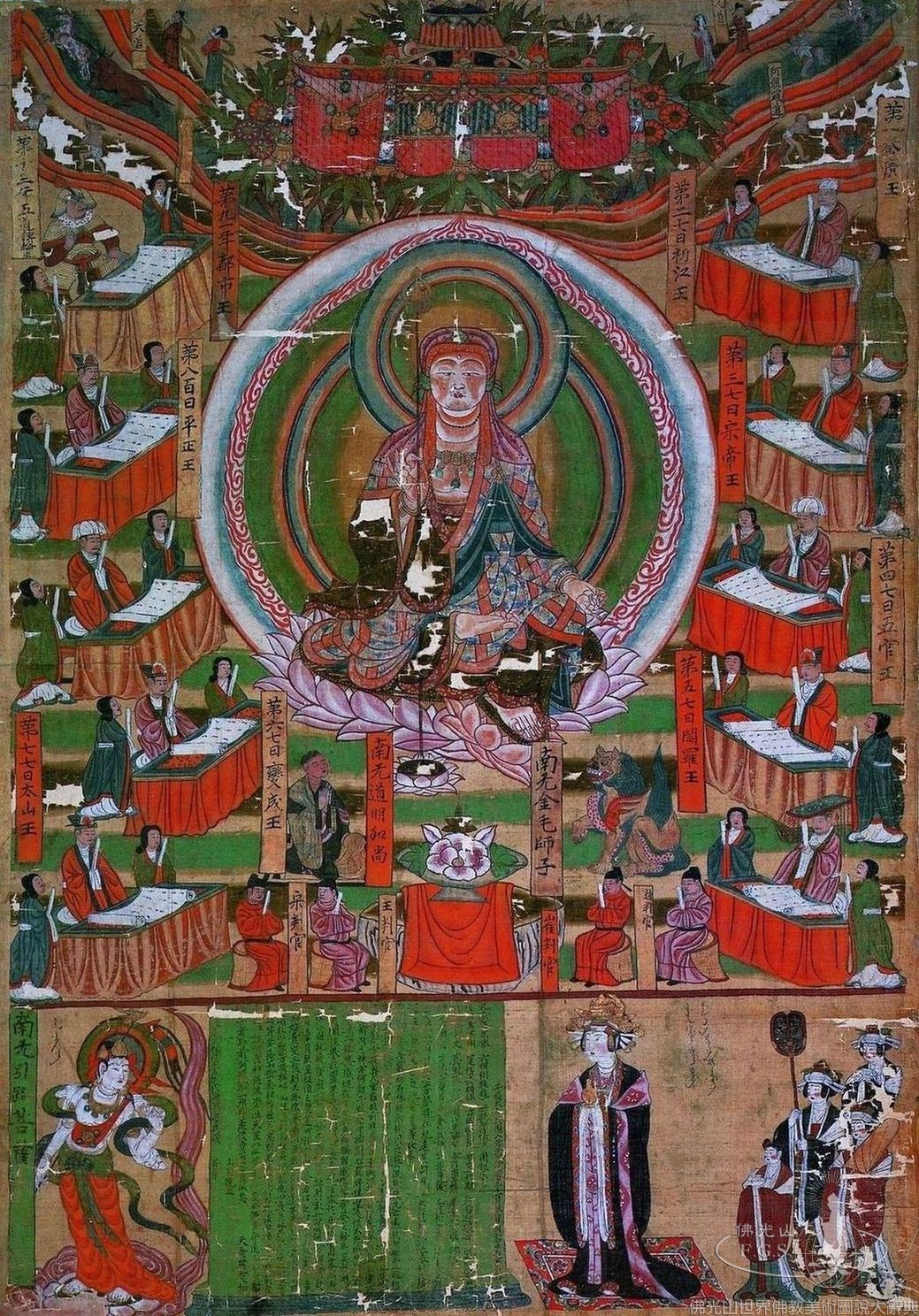
CHINA, Gansu, Dunhuang; Northern Song dynasty (960–1127), dated 983; Ink and color on silk; 229 x 160 cm; Guimet Museum of Asian Art, Paris, France
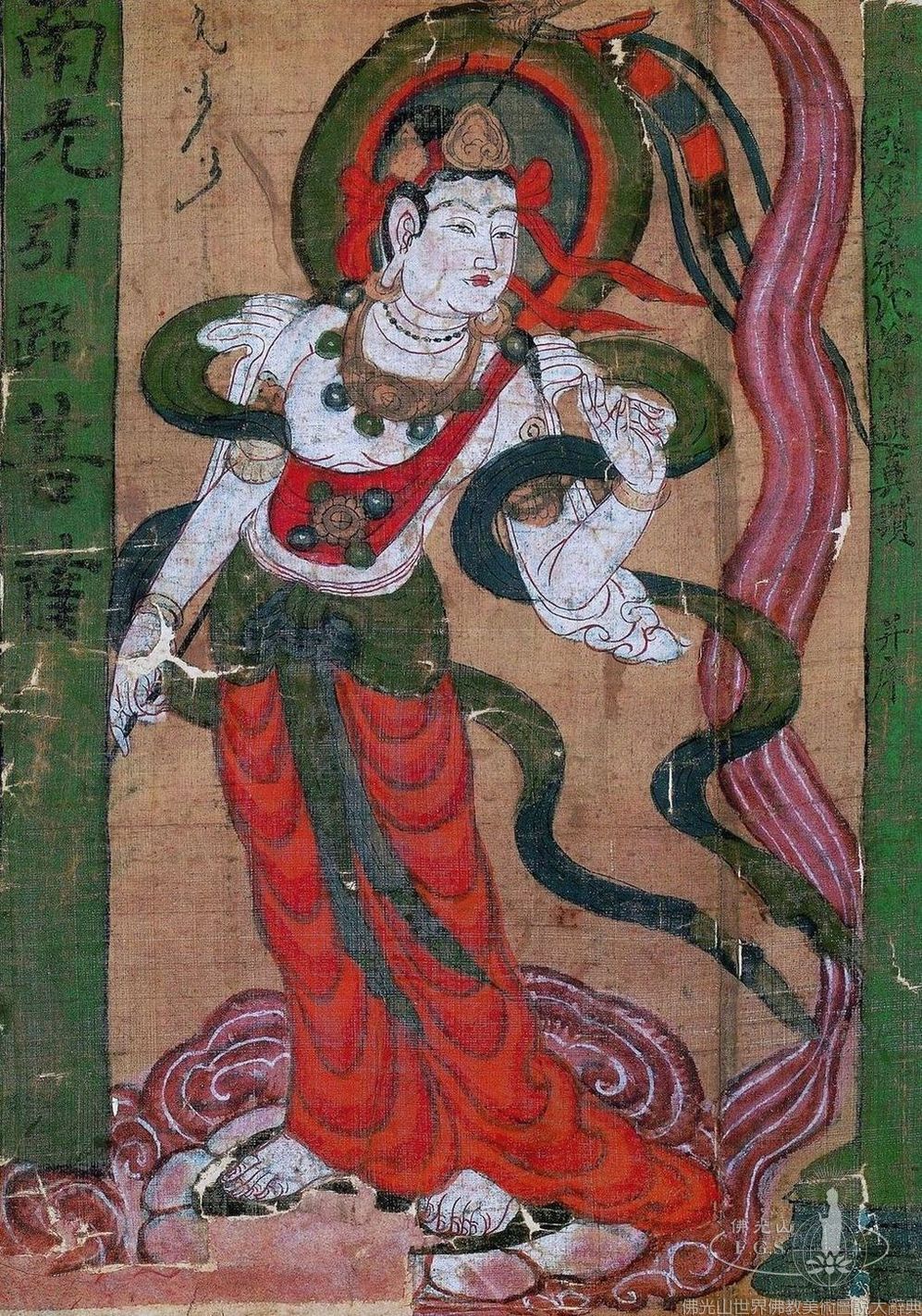
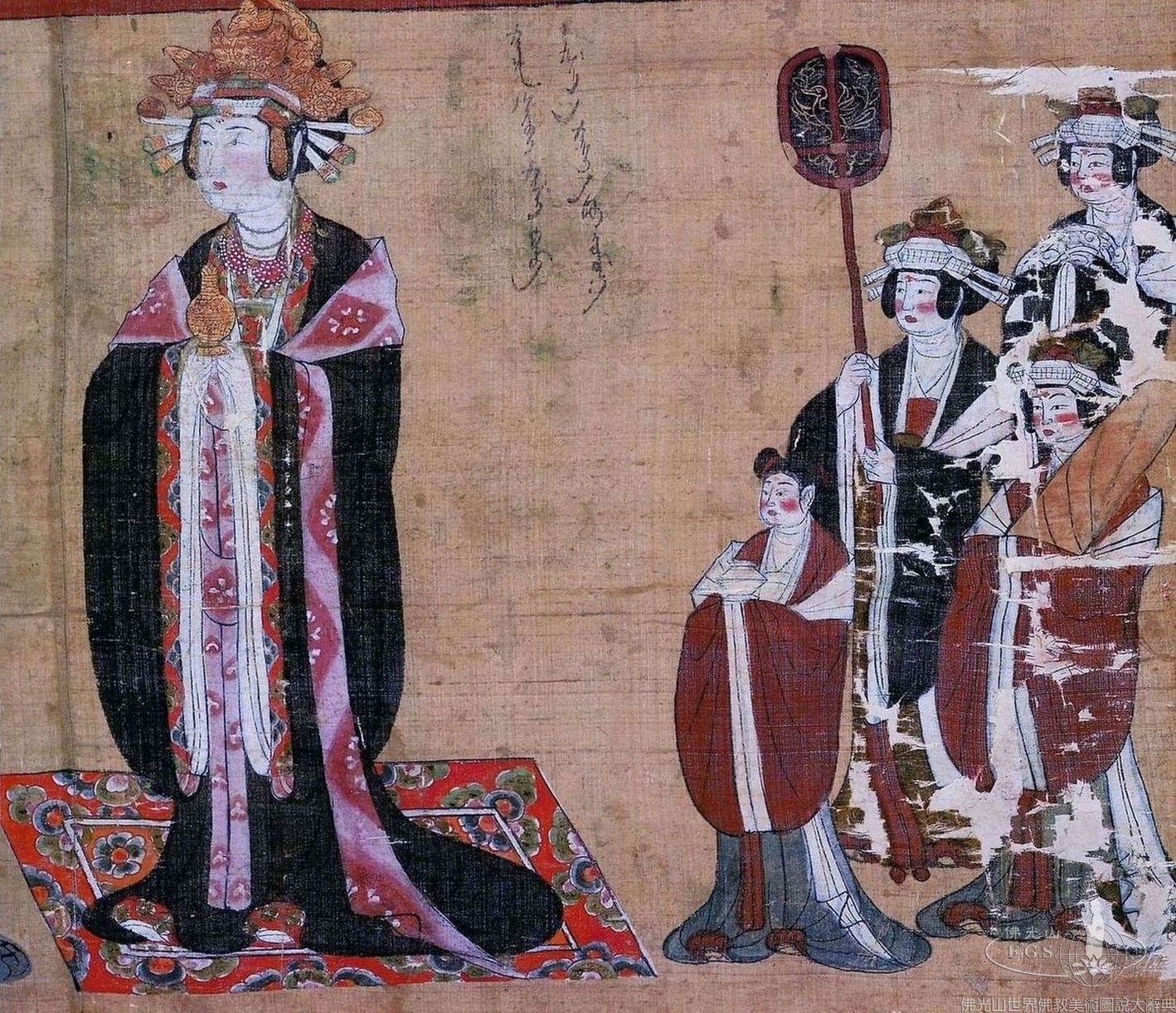
Ksitigarbha Bodhisattva sits on a lotus throne in the center of the picture, surrounded by a colorful nimbus, aureole, and mandorla. The Bodhisattva wears a headscarf, and a patched monastic robe. The right hand holds a monk's staff that is supported by a small lotus pedestal. Beams of light and a floral canopy fill the top of the picture. Ksitigarbha is flanked by the Ten Kings of Hell. Each king is named by an inscription within a cartouche, sits behind a table, and is accompanied by two attendants. A glass bowl filled with flower offerings on the rock below Ksitigarbha is flanked by officials carrying scepters. A lion and the monk Daoming, positioned above the officials to the sides of the glass bowl, are characters from the book Revival After Death, which describes the hell realm. The 22-line inscription in the lower register states that the painting dates from the year 983. A Bodhisattva as a Guide holding a banner is depicted to the left of the inscription. Uighur characters are written on the left beside the nimbus. To the right of the inscription there is an elegantly dressed woman with four maids. A short Uighur inscription is written beside her. |