|
Vairocana Buddha
|
| |
 |
Vairocana Buddha
|
| |
 |
Vairocana Buddha
|
| |
 |
Vairocana Buddha
|
| |
|
Vairocana Buddha
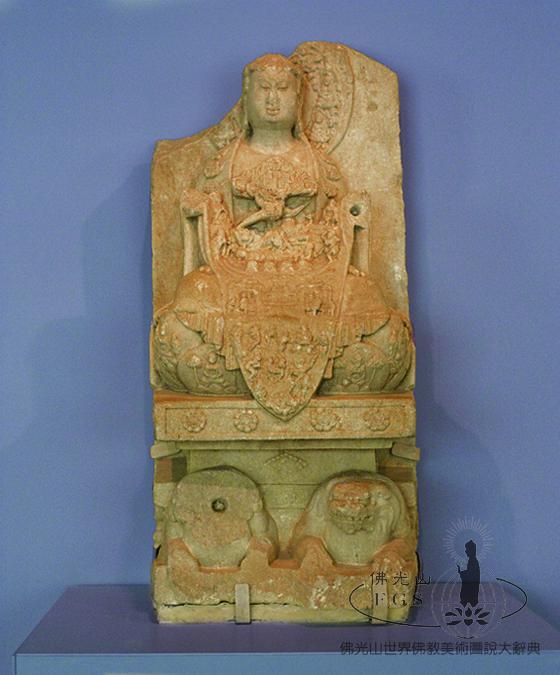
CHINA; Tang dynasty (618–907); Stone; H: 101.1 cm; Asian Art Museum of San Francisco, USA
This sculpture portrays Vairocana as he appears in the Avatamsaka Sutra. The figure incorporates depictions of phenomena within the Dharma realm, illustrating the concept that there is no form which does not coexist within all others.
The meditating Buddha wears a ceremonial garment over a monastic robe. A naga king is at the chest, supporting a triangular depiction of Mount Sumeru that symbolizes the center of the Dharma realm. The left side of the nimbus has damage, but a circular ring of seated Buddhas representing the Buddha realm is still visible. There are buildings adorning the shoulders, symbolizing the heavenly realm. The waist and thighs are decorated with depictions of incidents from Sakyamuni Buddha 's earthly life, such as the Buddha leaving through the four gates, and his passing into parinirvana while surrounded by weeping disciples. The elbows have carvings of Vimalakirti and Manjusri in debate, representing the human realm. The lower hem of the ceremonial garment is suspended in front of the lotus throne and carved with scenes of the King of Hell sentencing wrong doers and implementing their punishments.
The Buddha sits with legs crossed upon a lotus pedestal, supported by a Sumeru throne, and guarded by two lions, one of which is damaged. Sculpted on each of the lotus petals is an image of the Buddha sitting in meditation under the Bodhi tree, a representation based on a passage in the Brahmajala Sutra that states, Vairocana sits upon the lotus pedestal |