 |
Hevajra
|
| |
|
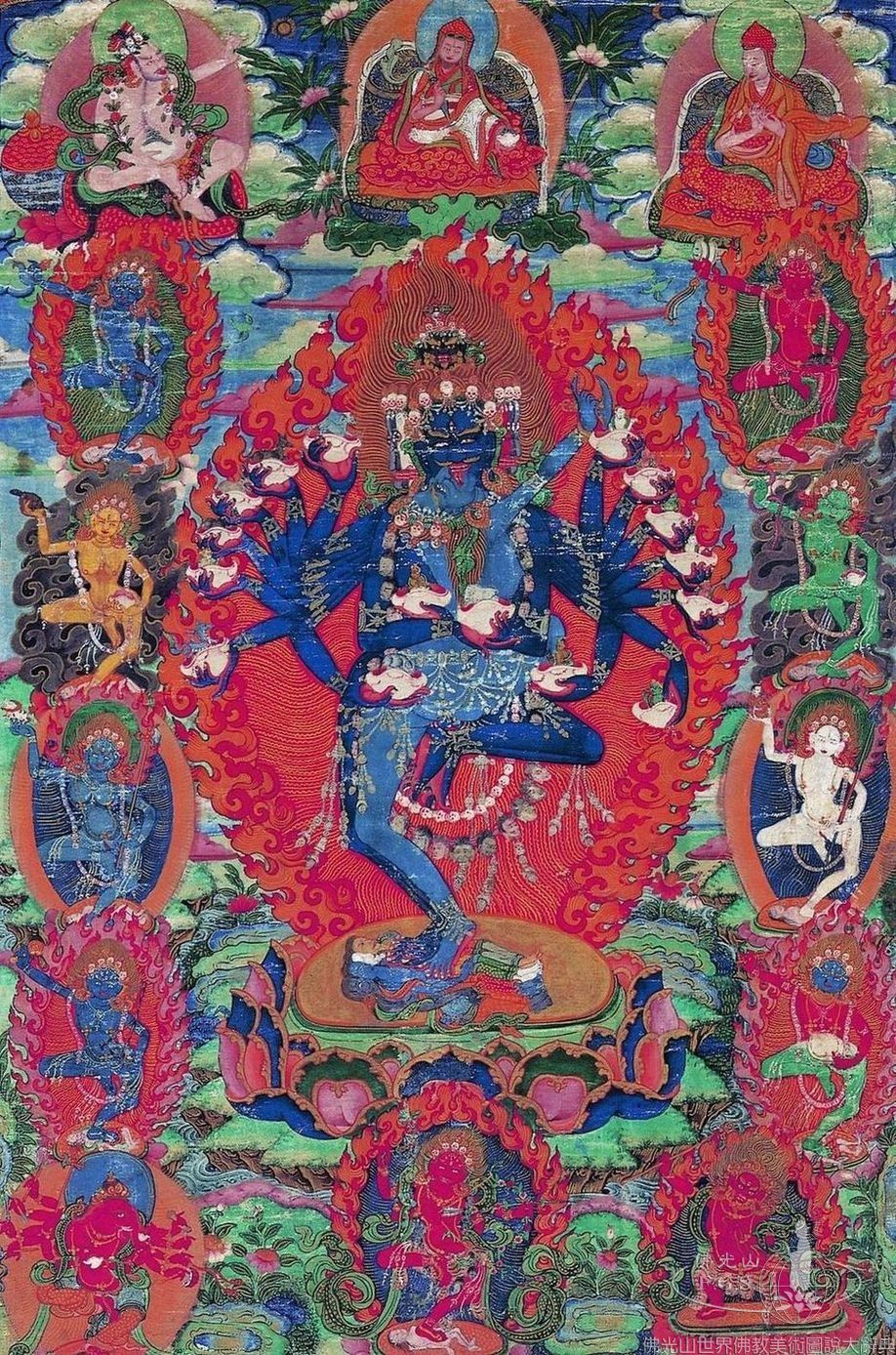
Hevajra
CHINA, Tibet; Qing dynasty (1644-1911), 19th century; Color on linen; 60 x 44 cm; National Museum of Ethnology, Suita, Japan
The central figure in this striking 19th century thangka is Hevajra, one of the main yidams or meditational deities in Tibetan Buddhism. Hevajra has a blue body, eight faces, 16 arms, and four legs. He wears a crown of skulls and a long necklace of human heads. His two prominent hands are crossed in front of his chest, embracing his consort, Nairatmya, and holding skull cups. The hands on the left side of the body hold skull cups containing animals and human beings, while the cups in the right hands hold deities. Hevajra's right legs stand upon four prone human figures, and his left legs are raised. He stands within an orange mandorla decorated with flame patterns. At the top of the painting, there are three seated mahasiddhas. Eight dakinis with colorful nimbuses and mandorlas are painted on the sides of the thangka. At the bottom, three red Dharma protectors are pictured. |