 |
Wanfo Temple Sculptures
|
| |
 |
Wanfo Temple Sculptures
|
| |
 |
Wanfo Temple Sculptures
|
| |
 |
Wanfo Temple Sculptures
|
| |
|
Wanfo Temple Sculptures
CHINA, Sichuan, Chengdu; Sandstone; Sichuan Museum, Chengdu, China
Wanfo Temple is said to be built during the reign of Emperor Huan (reigned 146–168) of the Eastern Han dynasty. Supervised excavation began in 1882 with more than 200 figures discovered at the site. It was reported that the heads and bodies of the statues were separated and none of the figures were complete. More excavated figures emerged over the years, dating from the Liu Song dynasty (420–479) to the Tang dynasty (618–907).
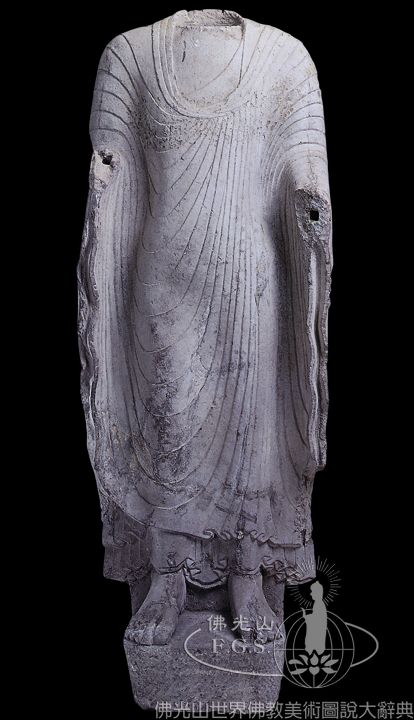
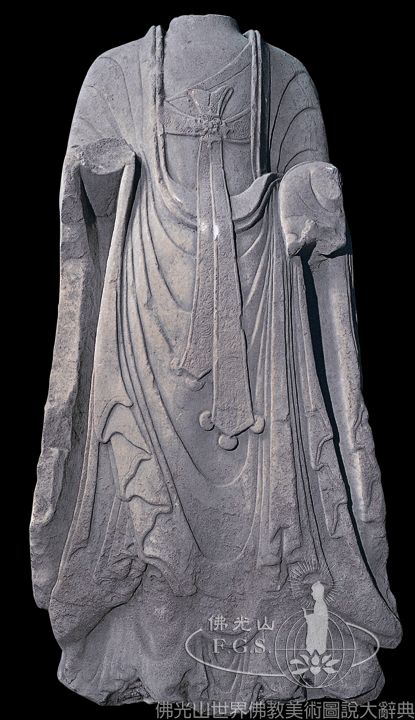
The two standing Buddhas depicted are from the Southern Liang dynasty (502–557) and show the diversity of style during that period. The statue from 529 has clearly been influenced by the Mathura style, both in the way the robe follows the contours of the body and how the right knee is bent with one foot advanced from the other. Though the collar opens slightly to show an inner robe, this is more apparent in the other figure, dated to 537. The wide sash tied to secure the inner robe and the more ample material of the outer robe are distinctly Chinese styles.
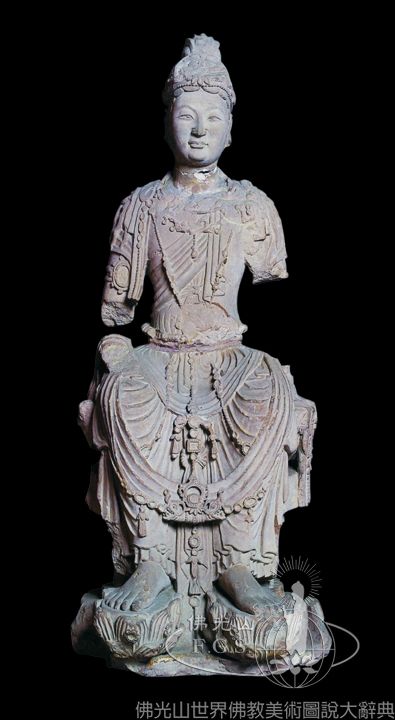
Another incomplete statue, the Vajrapanibalin from the Tang dynasty, wears robes of courtly sophistication that contrasts sharply with the door guardian 's muscular physique. An even greater contrast is presented by the more complete Bodhisattva, also from the Tang dynasty. The feet of the seated figure rests on imaginatively carved lotuses and the details of the robes and jewelry are intricately depicted. |