 |
Yongmunsa Temple: Life of the Buddha - Eight Great Events
|
| |
 |
Yongmunsa Temple: Life of the Buddha - Eight Great Events
|
| |
 |
Yongmunsa Temple: Life of the Buddha - Eight Great Events
|
| |
 |
Yongmunsa Temple: Life of the Buddha - Eight Great Events
|
| |
 |
Yongmunsa Temple: Life of the Buddha - Eight Great Events
|
| |
 |
Yongmunsa Temple: Life of the Buddha - Eight Great Events
|
| |
 |
Yongmunsa Temple: Life of the Buddha - Eight Great Events
|
| |
 |
Yongmunsa Temple: Life of the Buddha - Eight Great Events
|
| |
|
Yongmunsa Temple: Life of the Buddha - Eight Great Events
SOUTH KOREA, North Gyeongsang, Yecheon; Joseon dynasty (1392–1910), dated 1709; Ink and color on silk; 223 x 180 cm
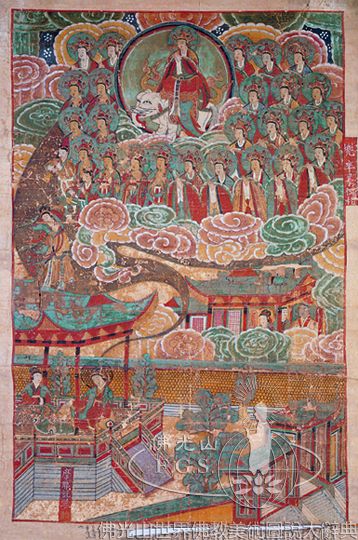
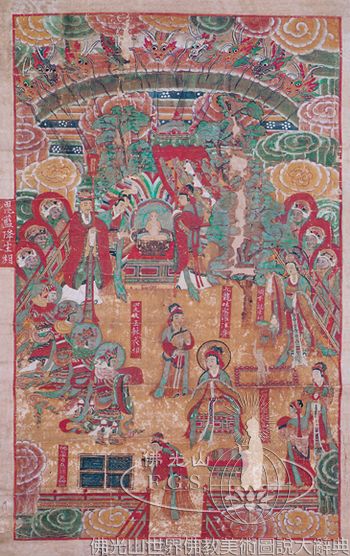
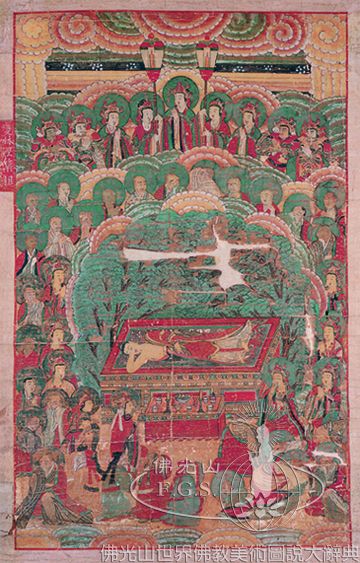
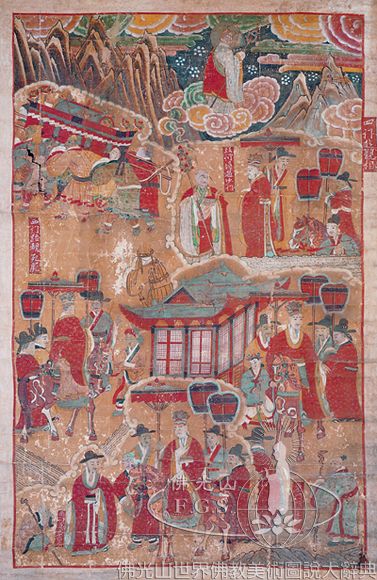
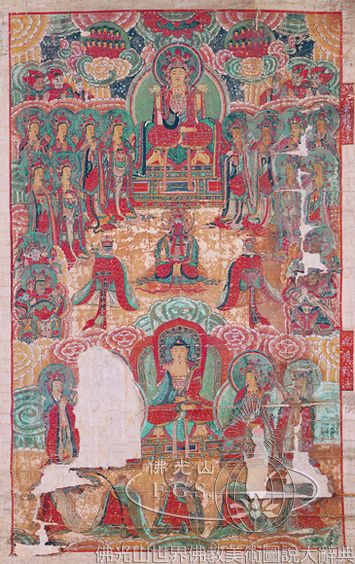
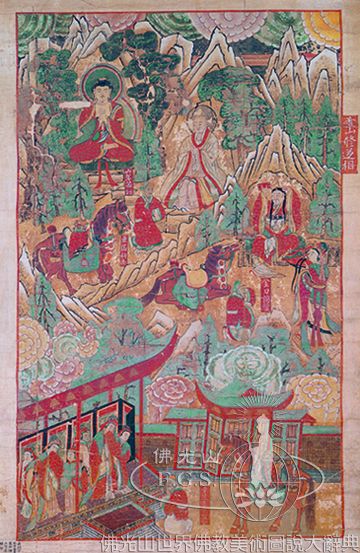
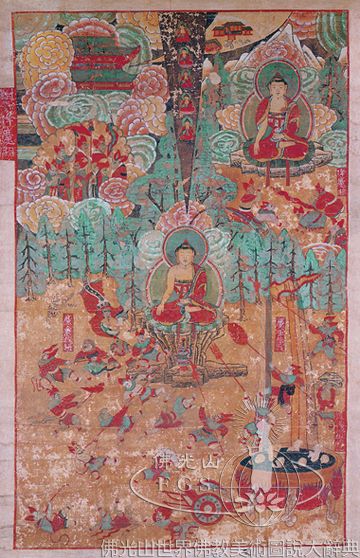
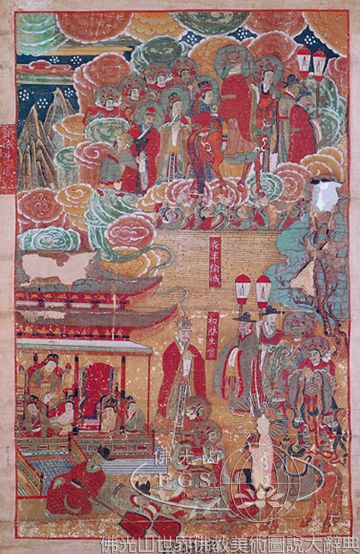
Kept in Yongmunsa Temple, these eight Korean paintings depict the Eight Great Events in the Life of the Buddha. Each piece is 223 cm in length and 180 cm in width, and is painted in the traditional style of the Cheontae school. The scenes of the Eight Great Events - Descent from Tusita Heaven, Birth of Prince Siddhartha, Four Encounters, Great Departure, Ascetic Practice in the Snowy Mountains, Defeat of Mara and Enlightenment, Avatamsaka Teaching and the First Turning of the Dharma Wheel, and Parinirvana - are named by inscriptions written in cartouches on the outer border. This set of paintings is the oldest among those with the same theme in Korea.
The Descent from Tusita Heaven shows the prince, in the form of a white elephant, appearing to his future mother, Queen Maya, in a dream. In Birth of Prince Siddhartha, the Four Heavenly Kings present clothes to the newborn prince, and he is bathed by nine serpents. The painting of the Four Encounters portrays the prince witnessing old age, sickness, death, and an ascetic. In the Great Departure, the prince leaves the palace at night to seek enlightenment. The Four Heavenly Kings are shown lifting the prince's horse over the palace wall. The painting of Ascetic Practice in the Snowy Mountains shows the prince cutting his hair and beginning his six years of ascetic practice. In the lower register, the loyal charioteer, Chandaka, can be seen informing the king that Prince Siddhartha has left for good. In Defeat of Mara and Enlightenment, the Buddha sits on a rocky pedestal and forms the bhumisparsa (earth-touching) mudra. A widening beam of light containing small Buddha images rises from his head. Below, Mara's army scatters in defeat. The Avatamsaka Teaching and the First Turning of the Dharma Wheel shows the resplendent Buddha sitting on a lotus throne, teaching the Dharma to Bodhisattvas, disciples, and Dharma protectors. Parinirvana depicts the Buddha's passing. |