 |
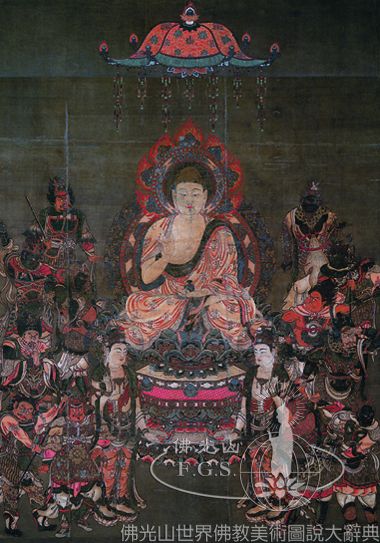
Yochiin Temple: Medicine Buddha and the Twelve Yaksa Generals
|
| |
|
Yochiin Temple: Medicine Buddha and the Twelve Yaksa Generals
JAPAN, Wakayama, Ito; Kamakura period (1185–1333); Ink and color on silk; 166.1 x 120.9 cm
This elegant painting is believed to have been made during the early Kamakura period (1185-1333). It was listed as an Important Cultural Property of Japan in 1897. The Medicine Buddha sits on an ornate lotus throne in the center of the picture. The Buddha has long ears, small lips, and narrowed eyes that gaze straight at the viewer. A monastic robe is draped over the left shoulder. Uniquely, the folds in the robe are suggested by red coloring rather than depicted with black lines. The right hand is held up in front of the partially bare chest, and the left hand cradles a medicine bottle. The nimbus and the aureole are adorned with beautiful patterns. A magnificent canopy decorated with hanging ornaments and flaming jewels hangs above the Buddha. Suryaprabha and Candraprabha Bodhisattvas flank the base of the lotus throne. They both wear elegant clothing, hold long-stemmed lotuses, and stand on lotus pedestals. Transparent nimbuses surround their heads. The Twelve Yaksa Generals stand in dynamic poses on the sides of the picture. They have muscular bodies, wear decorative suits of armor, carry weapons, and each have a distinctive, intense facial expression.
The meticulously detailed, colorful figures stand out from the plain background. There are no gold fragments or even gold paint used in the artwork. This, along with the coloring of the Buddha's robe, the downwards-facing palms of the two Bodhisattvas, and the postures of the twelve generals, suggests that the painting was inspired by artworks made in Nanto (present day Nara) during the Nara period (710-794). As the early Kamakura period was a time of warfare and strife, the use of this style might suggest a desire to return to the traditions of a more peaceful time. |