 |
Restoration of the Swayambhunath Stupa
|
| |
|
Restoration of the Swayambhunath Stupa
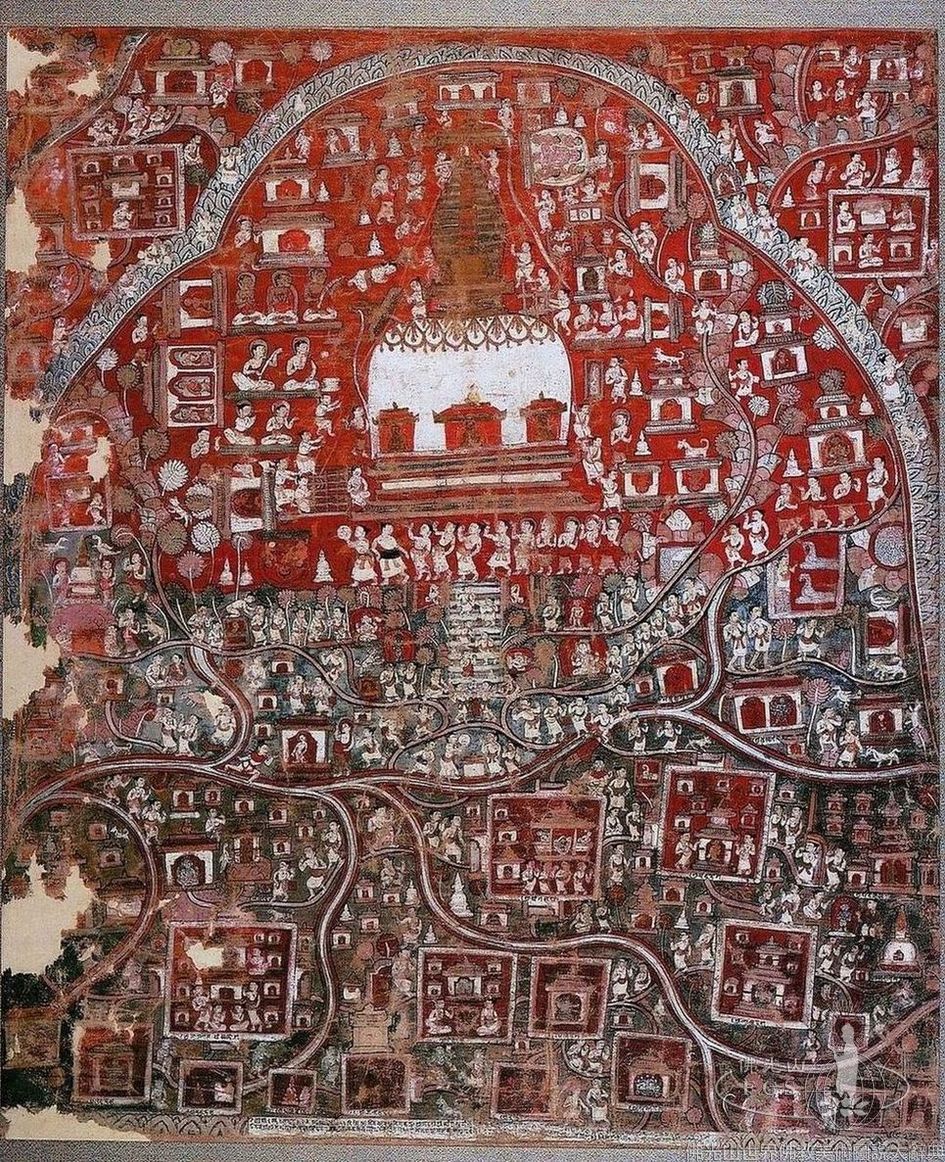
NEPAL; Malla dynasty (circa 1200–1768), dated 1565; Ink and color on cotton; 114 x 91 cm; Virginia Museum of Fine Arts, Richmond, USA
This Malla dynasty painting commemorates the renovation and re-consecration of Swayambhunath Stupa in 1565. Situated on the western outskirts of Kathmandu, it is considered to be the most important Buddhist stupa in Nepal. The white Swayambhunath Stupa is in the center of the upper register, set against an ocher red background and standing beneath an arch of rock representing Gopuccha (Ox Tail Mountain). On the bowl-shaped body of the stupa, there are three Buddha figures within niches. The Buddha eyes are faintly visible on the base of the finial. The spire is composed of stacked rings topped with a canopy.
On the lower left side of the stupa, a complex system of pulleys raises a new gilt canopy. A pair of white banners is being ceremonially removed; this marks the completion of the project. Around the stupa, there are rows of monastics, all with nimbuses and red robes, assisting in the re-consecration rituals. A vajracharya priest holding a vajra and bell performs a fire ceremony. In celebration of the occasion, a group of musicians and devotees circumambulate the base of the stupa. The entire middle register of the painting shows scenes of devotees flocking from far and near to witness the auspicious ceremony. There are depictions of the numerous shrines and towns around Kathmandu, arranged in a conceptual rather than strictly geographical orientation to Swayambhunath Stupa. Sacred rivers curl around these sites, dividing the painting into sections.
The re-consecration of the stupa seems to revitalize all the valley's scared spaces. The rich composition with little empty space is typical of Newari Buddhist art. Nepali and Tibetan textual sources do not contain any records of this refurbishment, so this painting stands as an important historical document. |