 |
Taramula Mahavihara: Illustrated Manuscript Covers of the Pancaraksa Sutra
|
| |
|
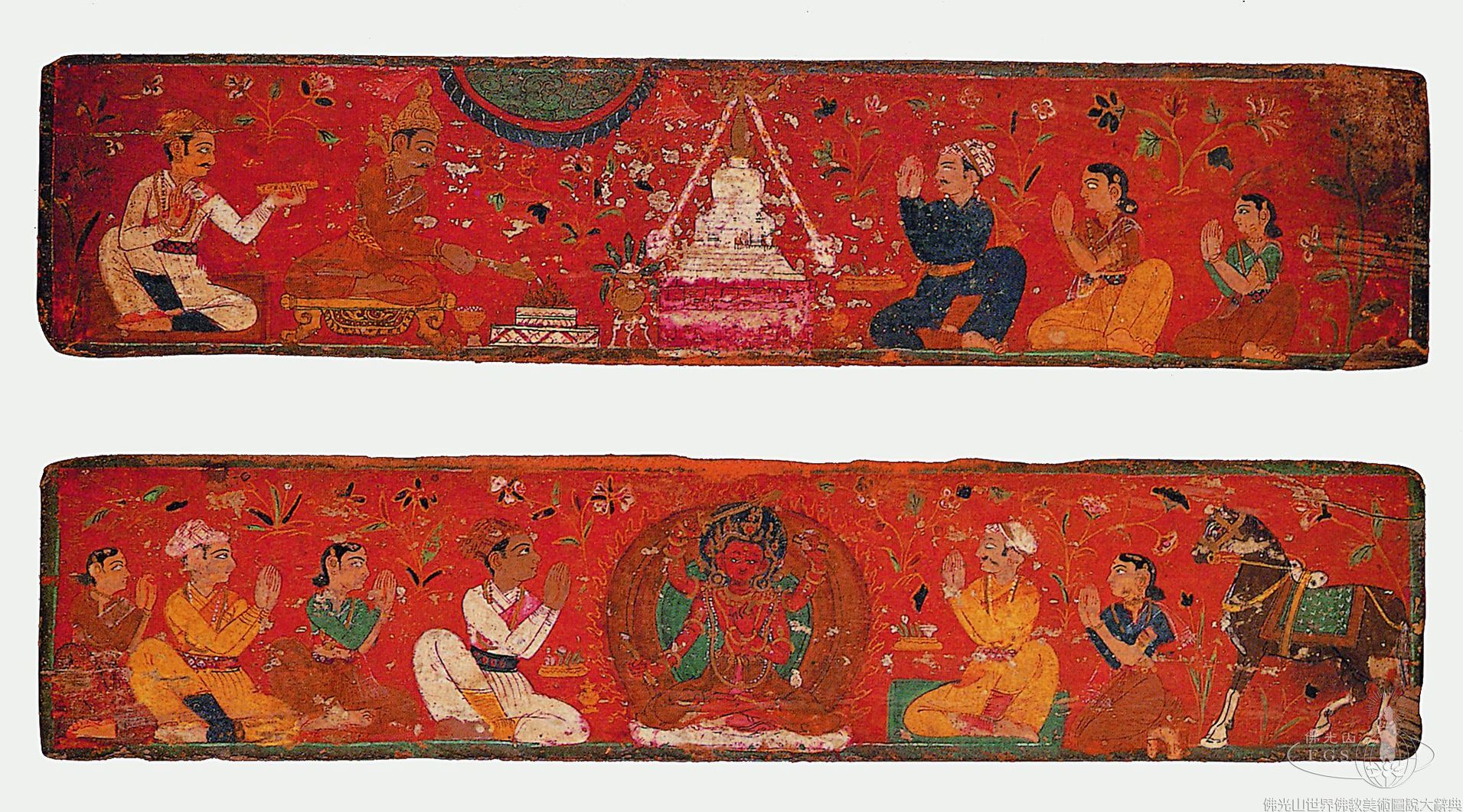
Taramula Mahavihara: Illustrated Manuscript Covers of the Pancaraksa Sutra
NEPAL, Kathmandu; Malla dynasty (circa 1200–1768), dated 1659; Ink and color on wood; 8 x 36 cm; British Library, London, United Kingdom
These pictures are painted on the wooden covers of a Malla dynasty palm leaf manuscript discovered in Tarumula Mahavihara in Kathmandu. The manuscript was transcribed in Sanskrit by Kusaladeva Vajracarya Mahapatra. It was commissioned by Sakyabhiksu Jakeraja, who later gave it to the Tarumula Mahavihara as an offering. The Pancaraksa Sutra is popular in Nepal, and it was common for families to invite masters to transcribe the sutra in the hope that it would bring good fortune. The sutra is composed of five dharanis which were later deified as the Pancaraksas; Mahapratisara, Mahasahasrapramardini, Mahamayuri, Mahasitavati, and Mahamantranusarini. Illustrations of the sutra commonly feature images of the Five Dhyani Buddhas and the Pancaraksas. By chanting the sutra, one can be protected from the calamities brought by earth, water, fire, wind, and space.
A white stupa is painted in the center of the top picture. Three figures, including a couple thought to be Sakyabhiksu Jakeraja and his wife, are shown on the right with their palms joined in reverence. On the left, a guru burns a homa stick over a gomadan altar, symbolizing the elimination of defilements with the fire of wisdom.
A Four-Armed Manjusri Bodhisattva is in the center of the bottom picture. The Bodhisattva has red skin and is covered with ornaments. The hands hold up a sword and a scripture. A blue nimbus, a green aureole, and an orange mandorla decorated with flame patterns surround Manjusri. Figures thought to be Sakyabhiksu Jakeraja and his family sit on either side of the Bodhisattva with their palms joined in reverence. The red background filled with decorative flowers is a common feature of Nepalese paintings. |