|
Stele of Xuanmi Pagoda
|
| |
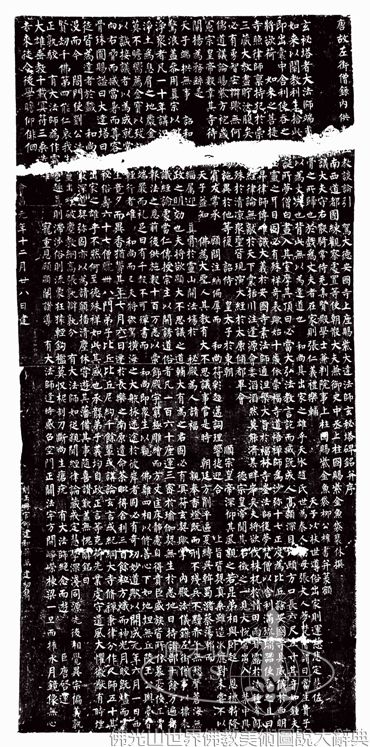 |
Stele of Xuanmi Pagoda
|
| |
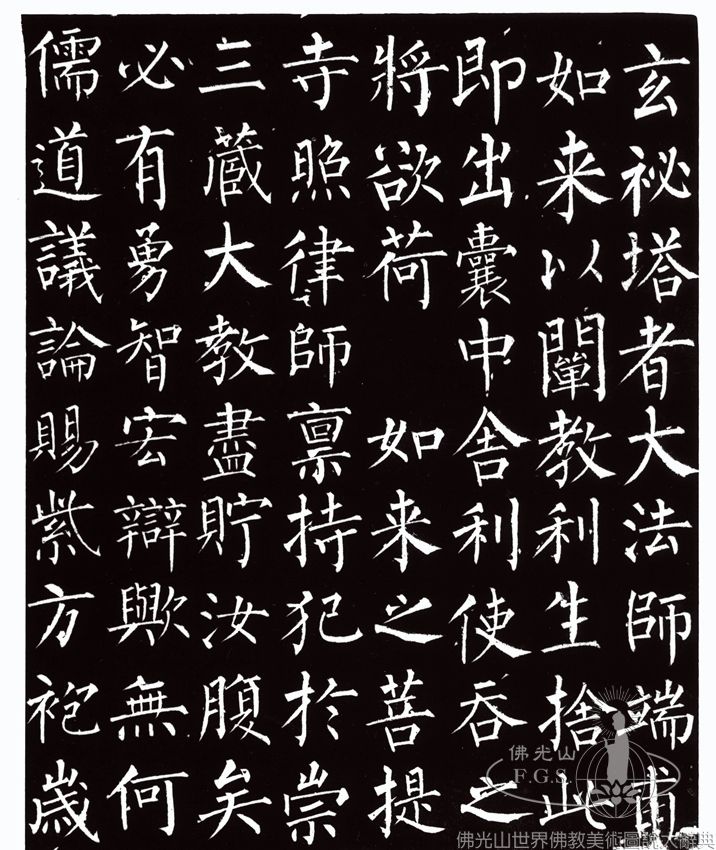 |
Stele of Xuanmi Pagoda
|
| |
|
Stele of Xuanmi Pagoda
CHINA; Tang dynasty (618–907), dated 841; By Liu Gongquan; Regular script; Rubbing; 350 x 170 cm; Xi'an Beilin Museum, Shaanxi, China
This stele, known in full as Stele of Master Dada's Xuanmi Pagoda, has an inscription that was composed by Pei Xiu, written by Liu Gongquan, and inscribed in stone by Shao Jianhe and Shao Jianchu. It consists of 28 lines, each containing 54 characters. The text is a biography of monk Duanfu, posthumously named Master Dada, who lived during the Tang dynasty (618-907). This stele documents his esteemed deeds and explains why his pagoda was named Xuanmi. Copies of this inscription were widely circulated and used as manuscripts by various calligraphers. The brushstrokes are strong and forceful with well-articulated bends. Characters are broad, angular, and majestic. This inscription is representative of Liu's later works.
Liu Gongquan, also known as Chengxuan, was a Tang dynasty calligrapher. His regular script is thin and firm, but is considerably emaciated when compared with Yan Zhenqing's writings. Both Liu and Yan are often mentioned in unison as Yanjin Liugu, which means Yan muscles and Liu bones |