 |
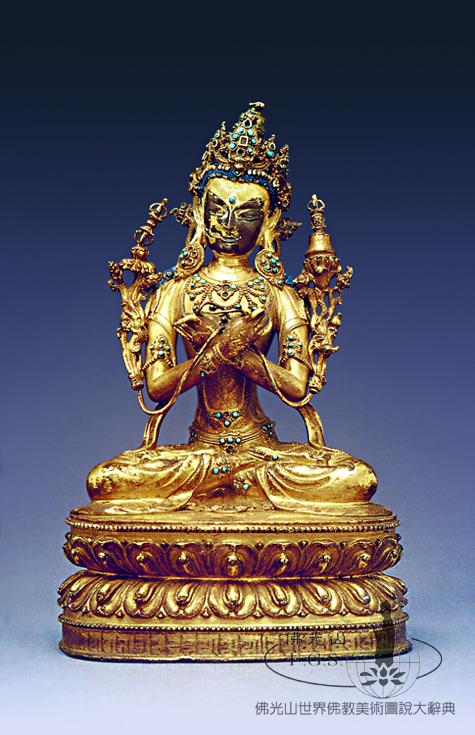
Vajradhara
|
| |
|
Vajradhara
CHINA; Ming dynasty (1368–1644); Brass; H: 22 cm; National Museum of China, Beijing
stead of holding a vajra and bell, they grasp the long stalks of lotuses that extend along the line of the bent arms to support the vajra and bell at shoulder level. The gesture indicates supreme enlightenment that transcends the phenomenal, as symbolized by the three lotus heads; budding, full, and withered, that represent the future, present, and past. The crown, heavy ear ornaments, and jewelry are studded with turquoises. The figure sits with legs crossed in full lotus position upon a double lotus throne. The base of the throne is incised with the syllables of a mantra. The sculpture is in Tibetan style, but may be the work of a Newar artist working in the Chinese imperial workshops during the reign of Emperor Yongle (reigned 1402–1424). |