 |
Bihar: Life of the Buddha
|
| |
|
Bihar: Life of the Buddha
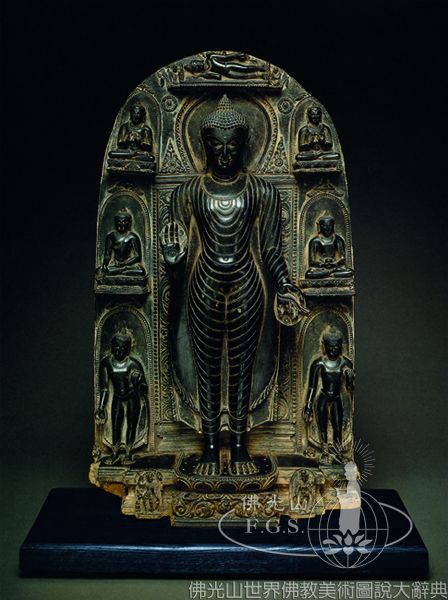
INDIA, Bihar; circa 10th century; Black chlorite; 76.2 x 44.5 cm; Art Institute of Chicago, USA
This sculpture was excavated in Bihar and dates to the Pala period (circa 8th-12th century). The main figure is Sakyamuni Buddha, presented in the Udayana Buddha style, stands on a lotus pedestal. With the right hand, the Buddha forms the abhaya (fearlessness) mudra while the left hand holds a corner of the robe. The central image, together with the surrounding Buddha images, depict the Eight Great Events of Sakyamuni Buddha's life. This type of composition was popular in Pala art.
The image at the top is the Buddha's parinirvana. In the upper register, the Buddha is sitting on either side and forming the Dharmacakra (Dharma wheel) mudra. The Buddha on the right, in the middle register, is sitting and forming the dhyana (meditation) mudra. While on the left holding a bowl, he is forming the bhumisparsa (earth-touching) mudra. The Buddhas in the lower register stand on either side in tribhanga position. Depicted on the right of the pedestal is the birth of Prince Siddhartha, while the figure of Tara is located on the left. The layout is symmetrical and does not follow the sequence of events, which are portrayed in symbolic form. |