 |
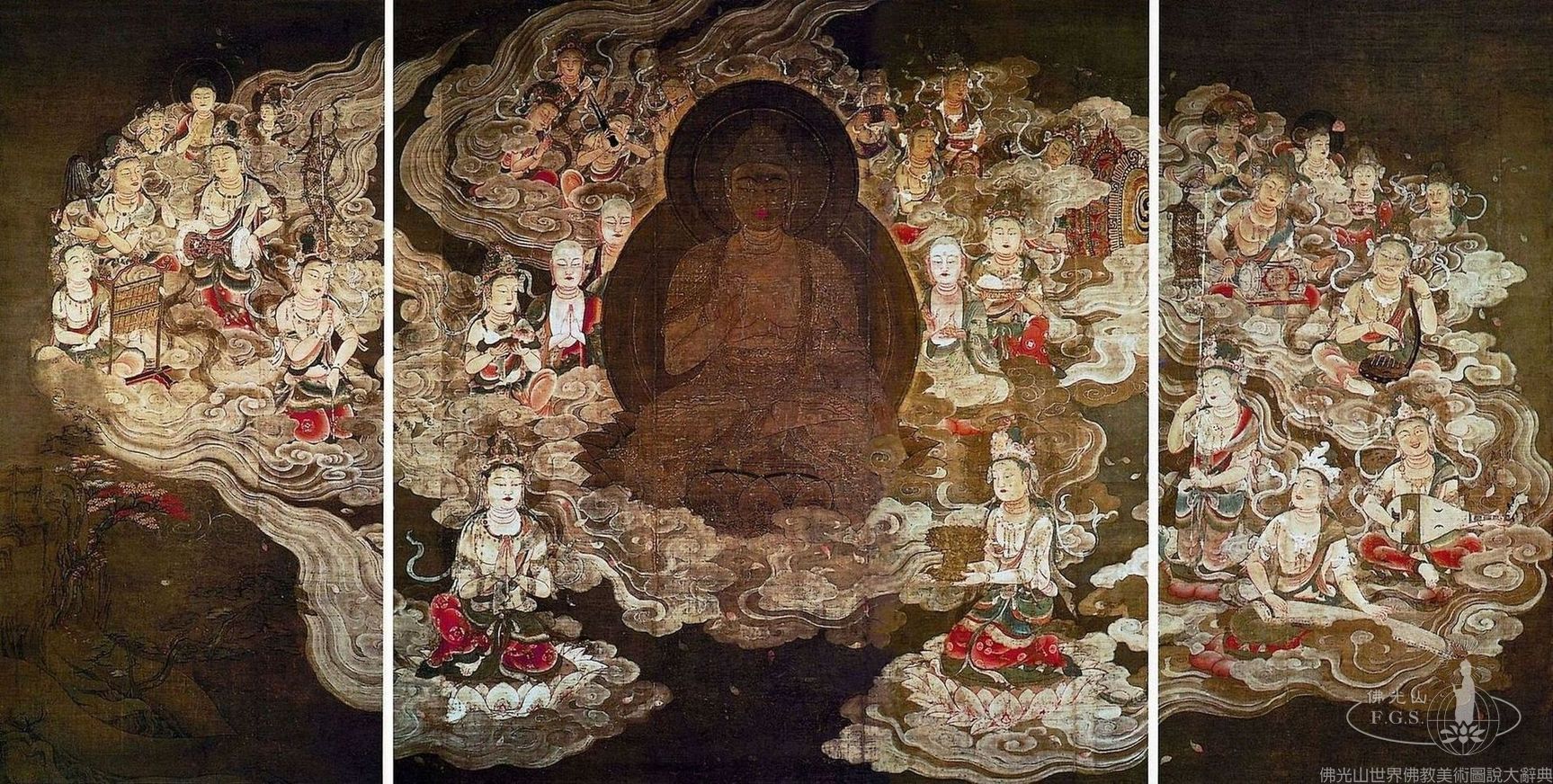
Yushi Hachimanko Juhakkain Temple: Amitabha Buddha and Bodhisattvas Welcoming the Deceased
|
| |
|
Yushi Hachimanko Juhakkain Temple: Amitabha Buddha and Bodhisattvas Welcoming the Deceased
JAPAN, Wakayama, Ito; Heian period (794–1185); Attributed to Genshin; Ink and color on silk; H: 210 cm
An excellent example of a raigo (welcoming approach) painting from the late Heian period (794-1185), this 12th century artwork is attributed to Master Genshin of the Tendai school, a strong believer in the visualization of Amitabha Buddha as a means to attain rebirth in the Pure Land. The painting consists of three panels. The central panel is 210 cm wide, while each of the side panels are 105.2 cm wide. Formerly the main object of veneration in Jogyo Zanmai Hall on Mount Hiei, the painting was relocated to Yushi Hachimanko Juhakkain Temple on Mount Wakayama in 1571. It was listed as a National Treasure in 1951.
Amitabha Buddha and his retinue appear to descend from a great height on a trail of streaming clouds. The golden Buddha sits on a lotus throne in the center of the painting. Below, the kneeling Avalokitesvara carries a lotus throne for a deceased being, and Mahasthamaprapta is shown on the left joining palms. The other Bodhisattvas carry offerings or play musical instrument such as the flute, panpipe, hand drum, pipa, harp, and moon-shaped lute. These joyful figures are wrapped in delicately painted tufts of cloud. In the lower left corner, a landscape is painted in Yamato painting style. |