 |
Double Vajra
|
| |
|
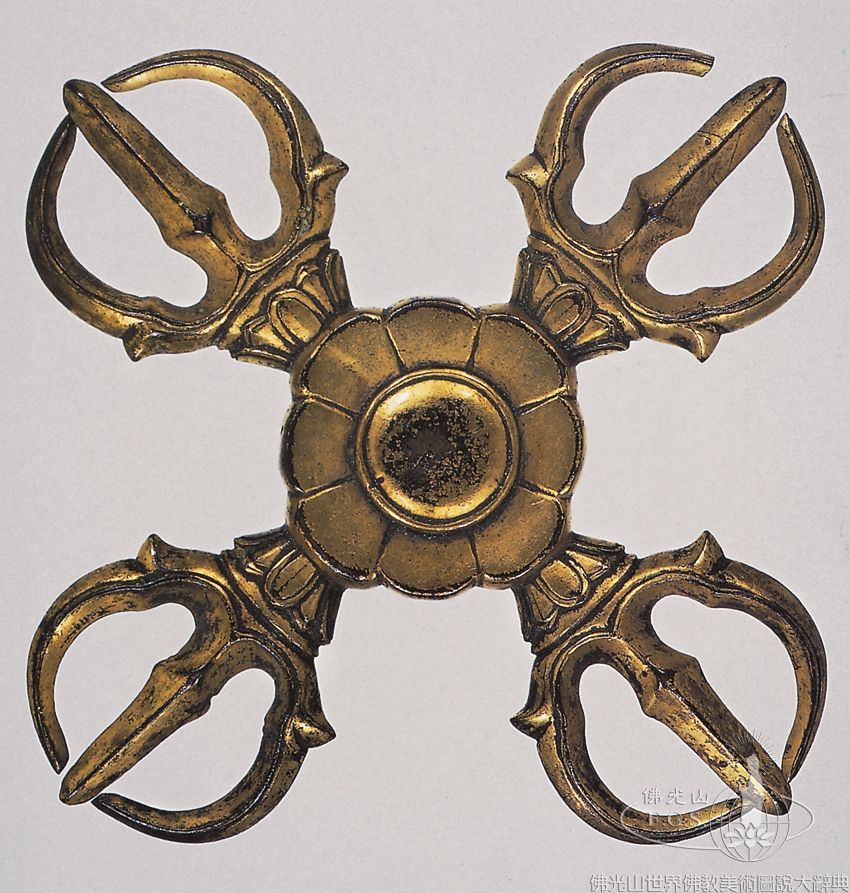
Double Vajra
JAPAN; Kamakura period (1185–1333), 13th century; Gilt copper alloy; Diameter: 11.9 cm; Nara National Museum, Japan
This double vajra is a 13th century Dharma implement of Vajrayana Buddhism. It is usually placed at each of the four corners of an altar, and represent the wisdom of all Buddhas. The four prongs pointing to all four directions symbolize breaking the cycle of the 12 links of dependent origination. Since it was a weapon in ancient India, it is made of a hardy material, and can be used to destroy almost anything. It is therefore called a vajra, which means a diamond that is indestructible.
The center of the double vajra is round and is surrounded by eight petals. Each vajra, supported by an upright lotus, extends from the center and points toward one of the four directions. |