 |
Wutaishan Foguang Temple Murals
|
| |
 |
Wutaishan Foguang Temple Murals
|
| |
 |
Wutaishan Foguang Temple Murals
|
| |
 |
Wutaishan Foguang Temple Murals
|
| |
 |
Wutaishan Foguang Temple Murals
|
| |
 |
Wutaishan Foguang Temple Murals
|
| |
|
Wutaishan Foguang Temple Murals
CHINA, Shanxi, Xinzhou; Tang dynasty (618–907)
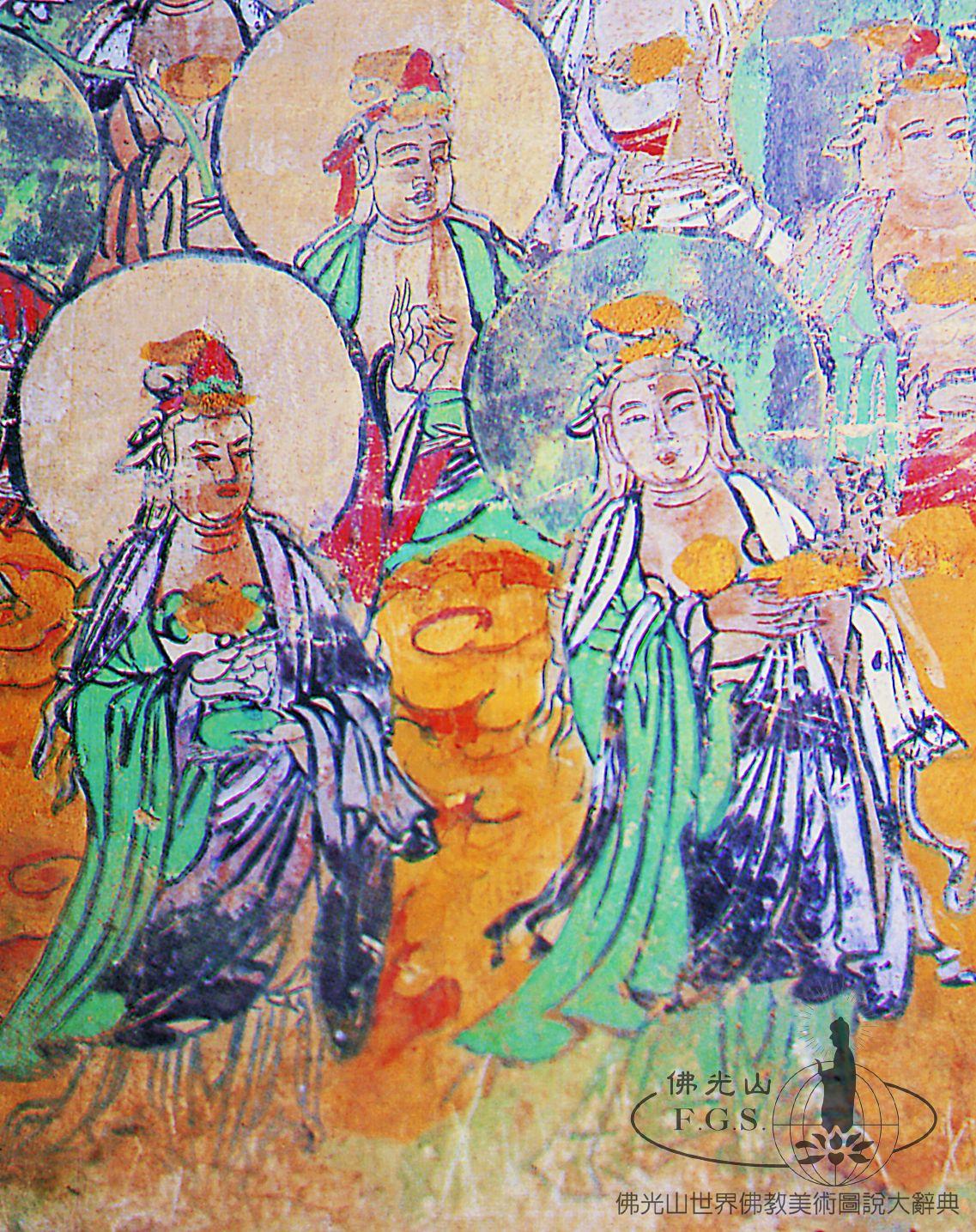
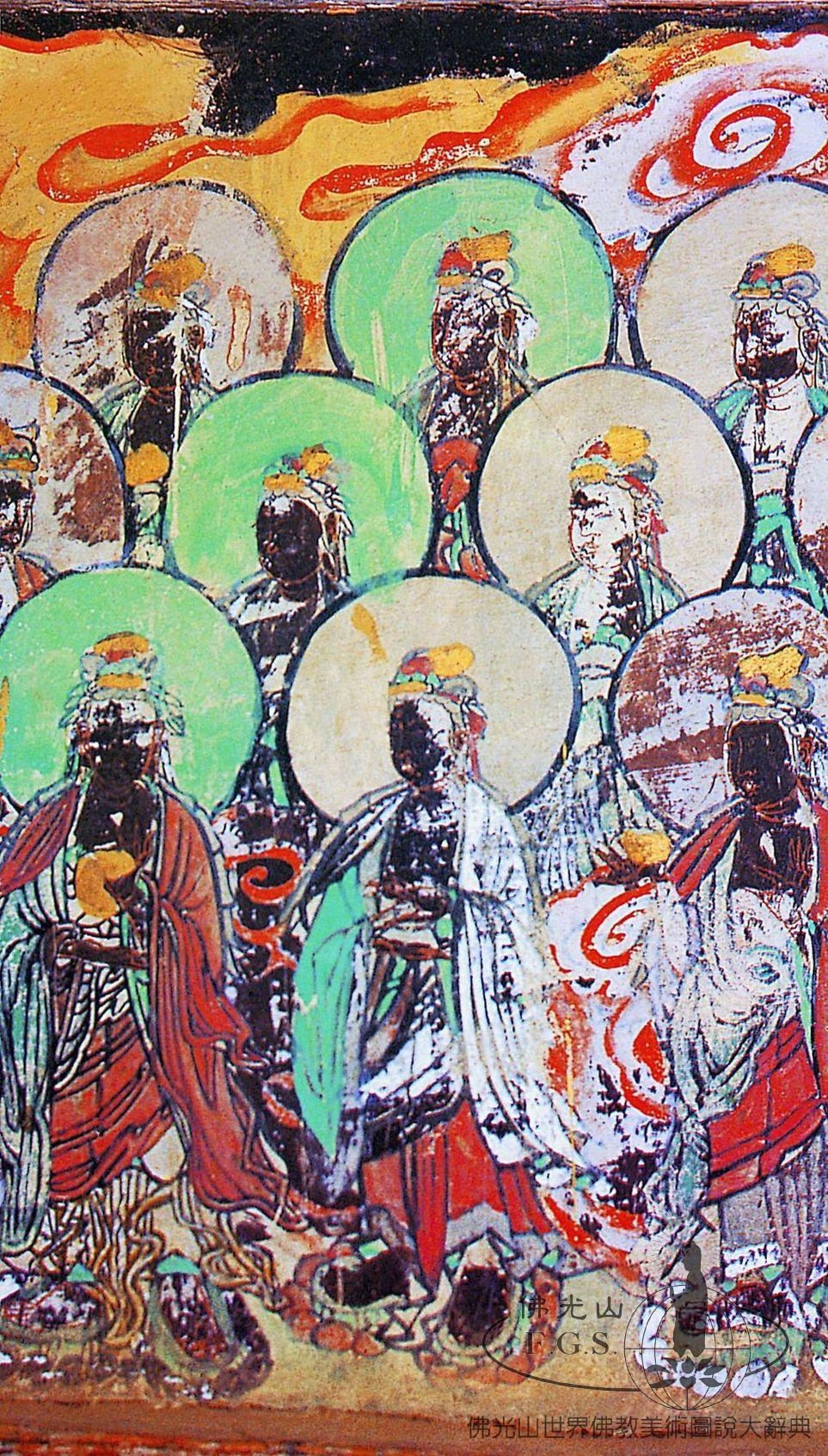
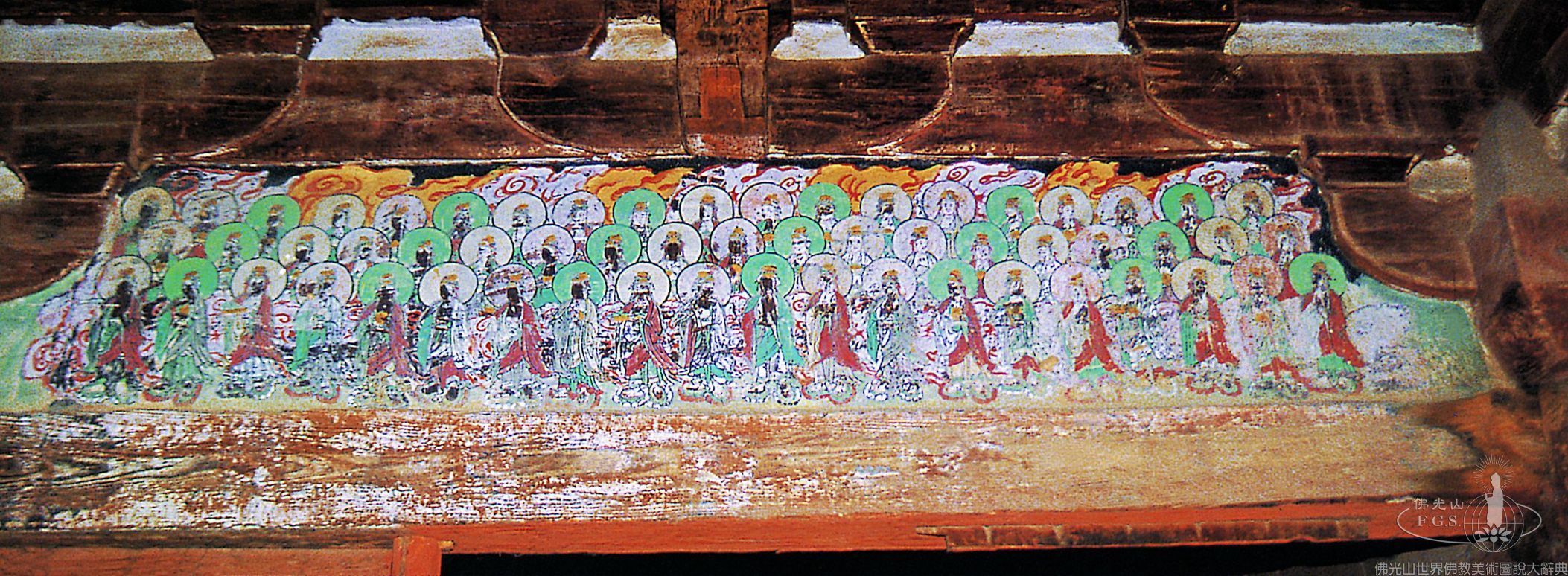
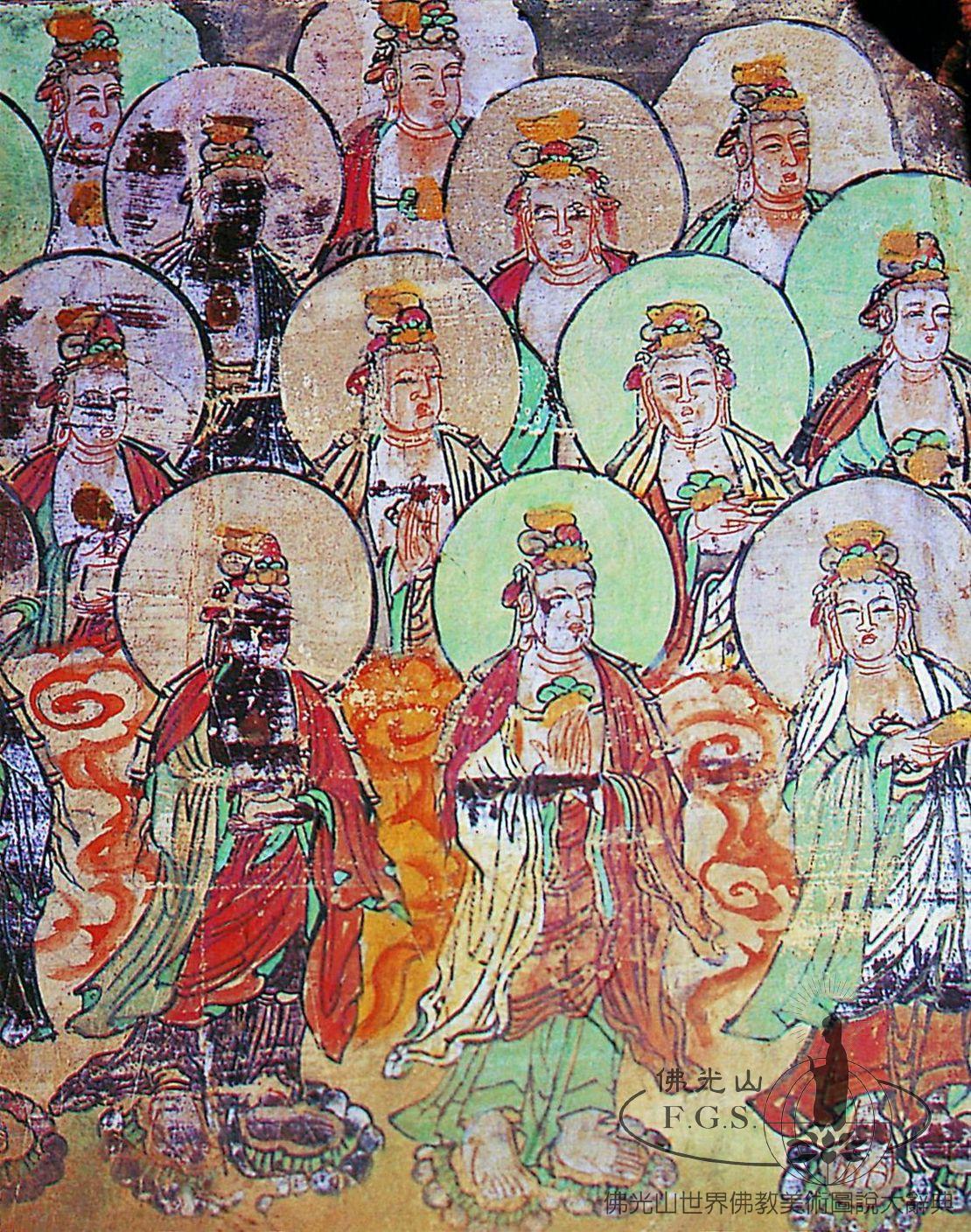
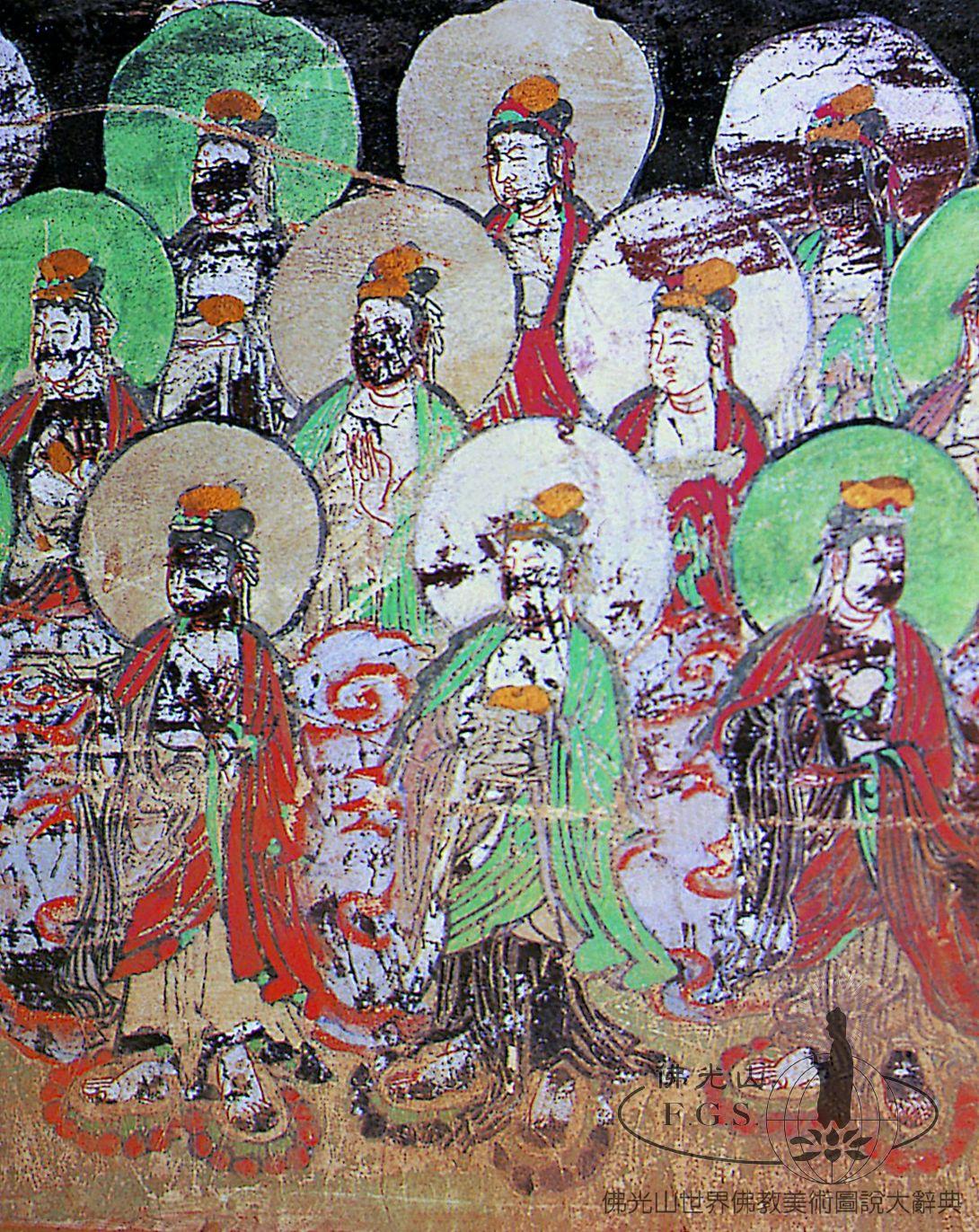
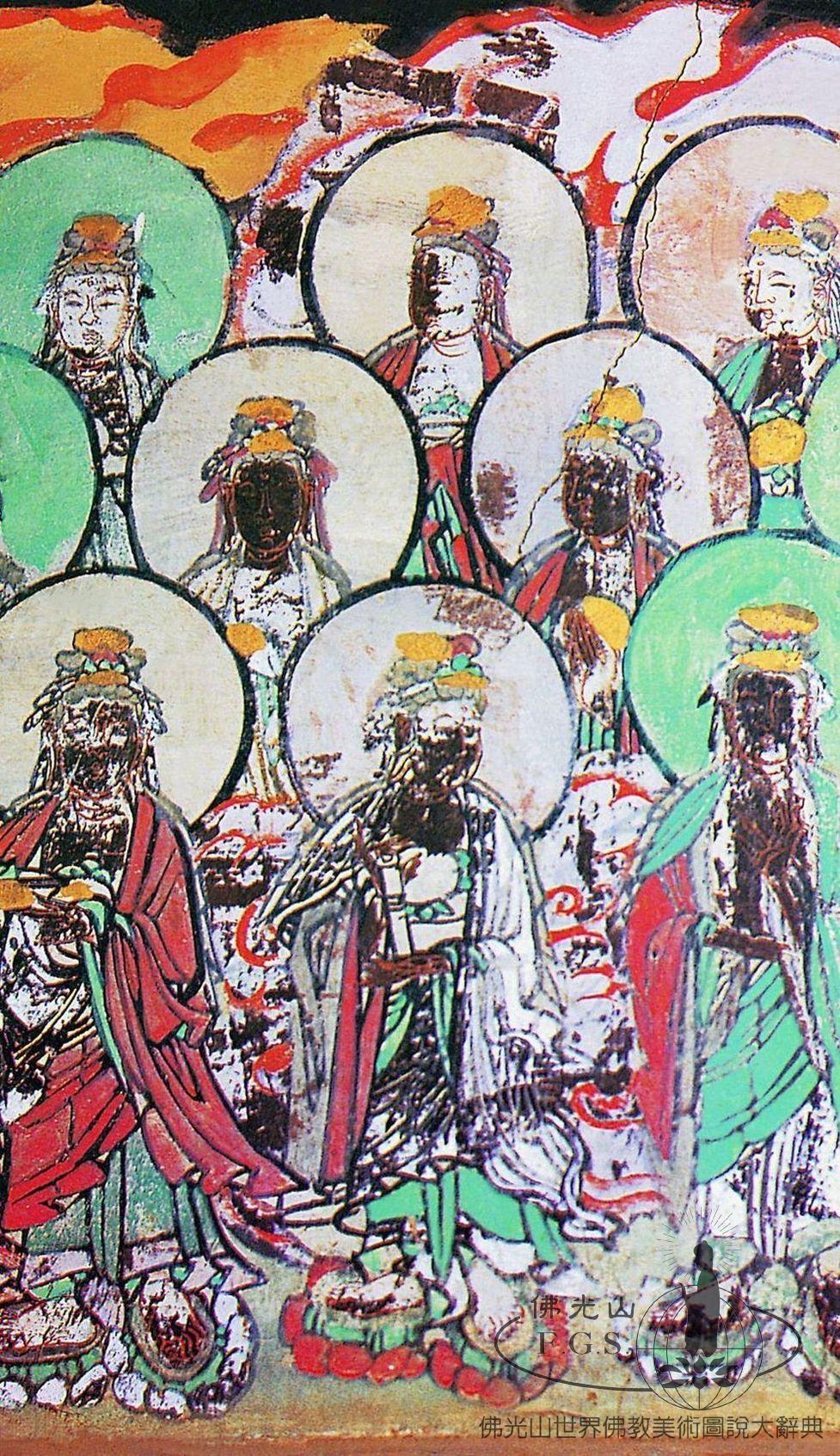
Most of the murals in Foguang Temple on Wutaishan (Five Plateau Mountain) are in the East Hall, which was built in 857, and the Manjusri Hall, built in 1137. The East Hall is one of the best examples of wooden structure from the Tang dynasty (618-907). There are a total of 22 distinct murals covering 61.68 sq m in surface area. With the exception of one illustration painted on the back of the Sumeru throne, the other murals are located at the top of the columns, on the boards onto which bracket sets adhere. They are the sole surviving example of Tang dynasty murals painted in a wooden temple structure in China.
The murals include depictions of Amitabha Buddha and an assembly, various Bodhisattvas and Buddhas, as well as blue and green colored scroll leaf patterns. There are images of 35 Buddha figures on the front bay of the outer eaves. Subdued demons are painted behind the Sumeru throne. Another mural shows a gathering of three rows of Bodhisattvas standing on lotus pedestals. Ranging from 33 cm to 35 cm in height, they wear headdresses, have green, red, or white nimbuses, and are adorned with ornaments. Some are shown in profile while others face the viewer. Their hands hold flowers, sutra scrolls, or alms bowls. The faces and skin of some of the Bodhisattvas have darkened due to sunlight and age.
The Manjusri Hall is the only remaining structure from the Jin dynasty (1115-1234) on Wutaishan. A statue of Manjusri is housed within the hall, while Ming dynasty (1368-1644) murals of the Five Hundred Arhats decorate the four walls. A total of 259 Arhats were painted in varying postures and expressions, holding different objects. Only 248 of the figures are preserved. This mural is a representative work of the Five Hundred Arhats from the Ming dynasty. |