 |
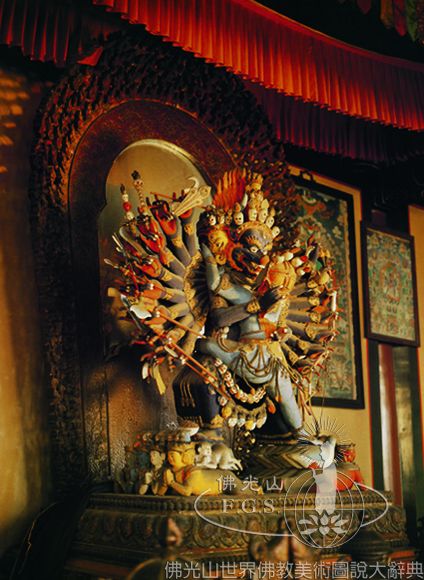
Yonghe Temple East Side Hall: Yamantaka
|
| |
|
Yonghe Temple East Side Hall: Yamantaka
CHINA, Beijing; Qing dynasty (1644–1911); Dry lacquer; H: 230 cm
The statue depicts Yamantaka, the conqueror of death, and is also known as Vajrabhairava. This wrathful manifestation of Manjusri is one of the deities of the Highest Yoga Tantra class in Buddhism. He overcomes all hindrances and subdues all forms of defilement. The figure is made of dry lacquer and consists of two bodies, nine faces, thirty-four arms, and sixteen feet. The buffalo head at the front has three eyes and wears a five-skull crown upon a head of flaming red hair. The front arms embrace the wisdom consort while the remaining arms hold an array of weapons and ritual instruments. Fifty human skulls are suspended at the waist, and the figure stands in the warrior stance, trampling birds and ghosts which are in turn mounted on prone human beings.
The dual practice of wisdom and compassion is symbolized in this sculpture, where the nine faces represent the nine sections of Mahayana scriptures. The 34 arms, added to body, speech and mind, symbolize the thirty-seven aids to enlightenment, and the 16 feet represents the sixteen forms of emptiness. The fiery red hair is a symbol of Nirvana, and the flames on the aureole represent the subduing of evil. |