 |
Standing Buddha
|
| |
|
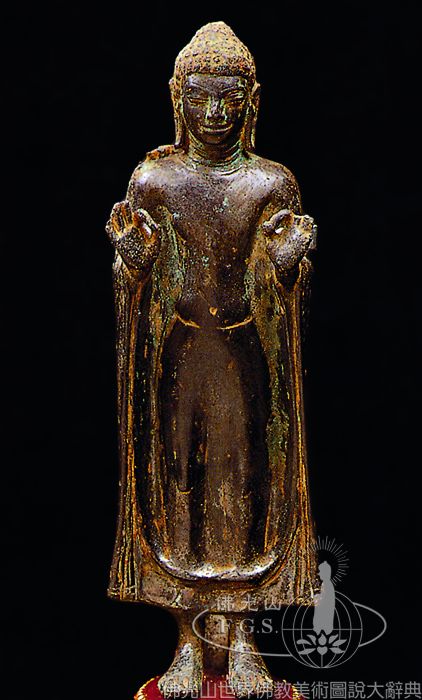
Standing Buddha
THAILAND; Dvaravati Kingdom (circa 6th–13th century), 7th–8th century; Bronze; Bangkok National Museum, Thailand
The sculpture incorporates a mudra developed during the Dvaravati period (circa 6th–13th century) in which the arms are bent at the elbows and both hands are held upward in vitarka (teaching) mudra. This gesture, not identified from traditional Indian artworks, was assumed by local experts to represent Sakyamuni Buddha 's return from the Trayastrimsa Heaven. The regional style is also present in the cap-like appearance of the curled hair. The usnisa, elongated earlobes, and three lines on the neck are all conventional signs of Buddhahood. The monastic robe covers both shoulders and clings to the contours of the body and navel in the wet-garment style from the Gupta period (circa 320–550). The way the garment hangs from the arms in a wide flare is, however, more typical of the Dvaravati period. |