 |
Borobudur
|
| |
 |
Borobudur
|
| |
 |
Borobudur
|
| |
 |
Borobudur
|
| |
|
Borobudur
INDONESIA, Central Java, Magelang
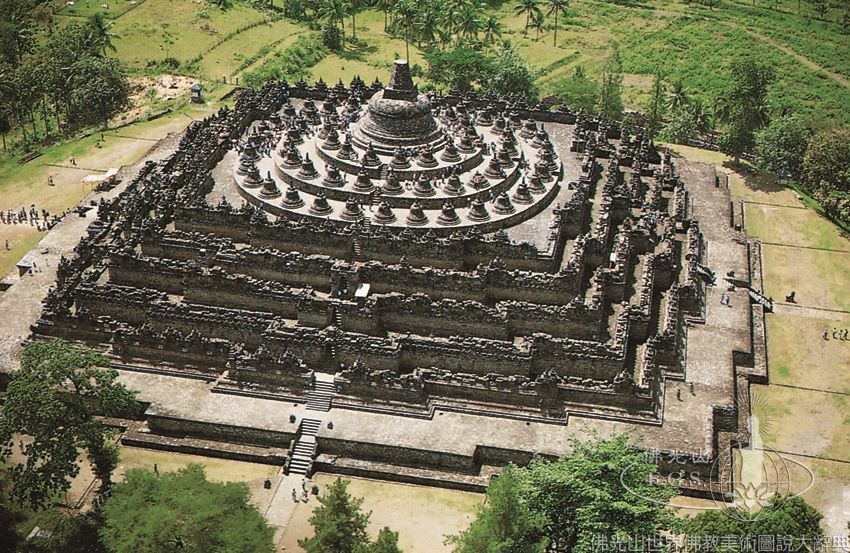
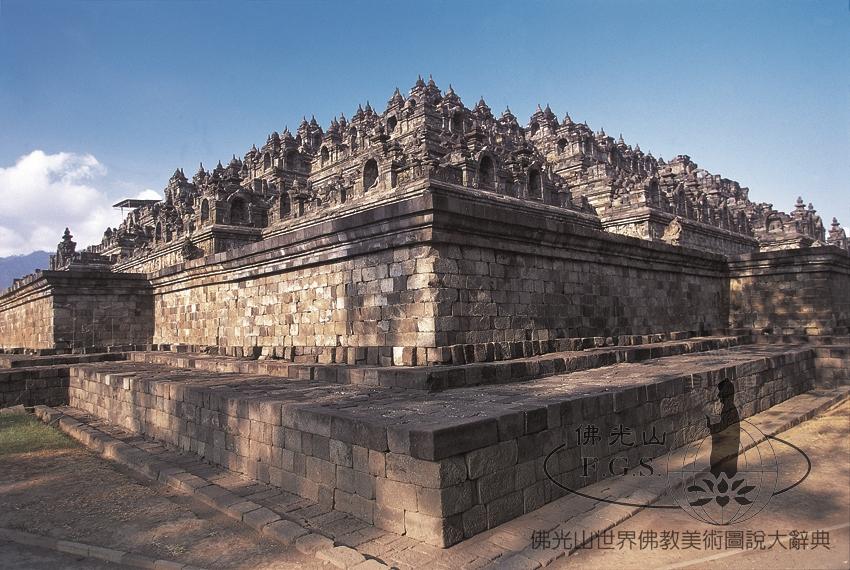
realms of Buddhist cosmology from the bottom up: Kamadhatu (Realm of Desire), Rupadhatu (Realm of Form), and Arupadhatu (Realm of Formlessness). The base platform, representing Kamadhatu, is laid with 160 stone relief panels. These are enclosed by a stone wall and are called the hidden foot. These reliefs, based on the Karmavibhanga Sutra, depict teachings that admonish defilements and encourage right action.
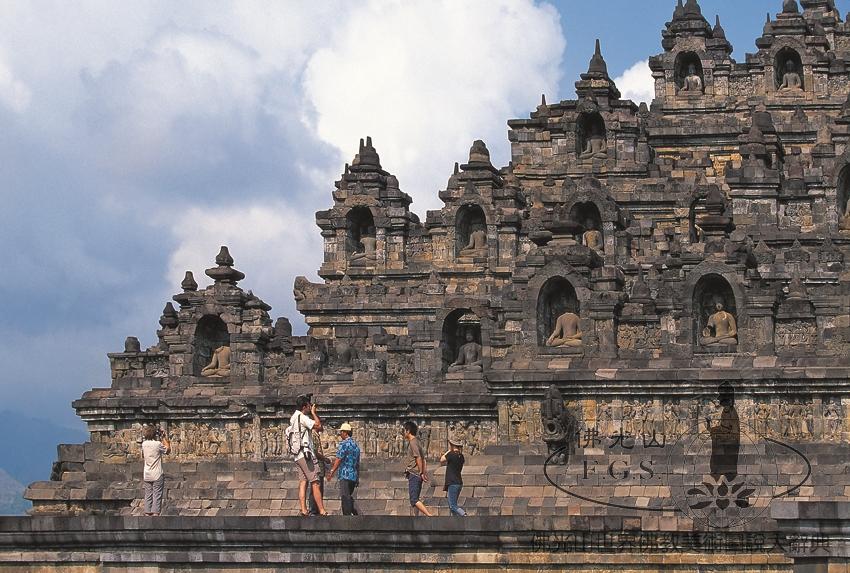
The next five square terraces, symbolizing Rupadhatu, are decorated with Buddha niches and relief panels. The themes for these narrative panels include the Life of the Buddha based on the Lalitavistara Sutra; the past lives of the Buddha and other Bodhisattvas from the Jatakas and Avadanas; and Sudhana’s Search for the Ultimate Truth according to the Sanskrit text Gandavyuha Sutra, which became the last chapter of the Avatamsaka Sutra. There are a total of 432 Buddha niches each containing a seated Buddha. They are elegant, with hands held in the bhumisparsa (earth-touching) mudra, the dhyana (meditation) mudra, or the vitarka (teaching) mudra.
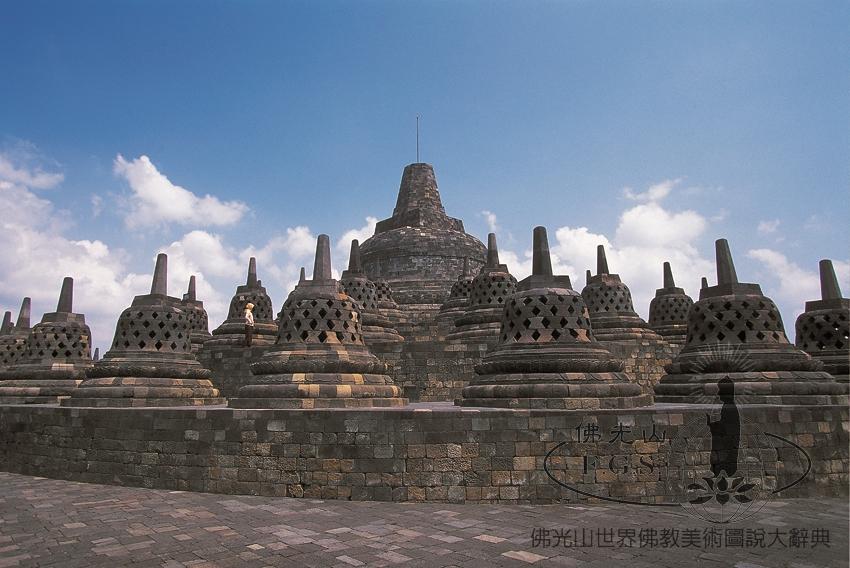
On the three circular terraces, representing Arupadhatu, there are 72 perforated, bell-shaped stupas. They are distributed in concentric rings on the circular terraces and each contain a seated Buddha statue. These stupas surround the central main stupa, which is in the shape of a huge dome with a spire. This culmination of the formless represents the highest state of cultivation, which is the enlightenment of a Buddha.
The reliefs and seated Buddha statues are delicately carved and vividly depicted, generally in the traditional Gupta style from India. Javanese influences can also be detected in the portrayal of the local costumes and accessories of figures on the reliefs. |