 |
Yushi Hachimanko Juhakkain Temple: Five Bodhisattvas of Great Strength
|
| |
 |
Yushi Hachimanko Juhakkain Temple: Five Bodhisattvas of Great Strength
|
| |
 |
Yushi Hachimanko Juhakkain Temple: Five Bodhisattvas of Great Strength
|
| |
|
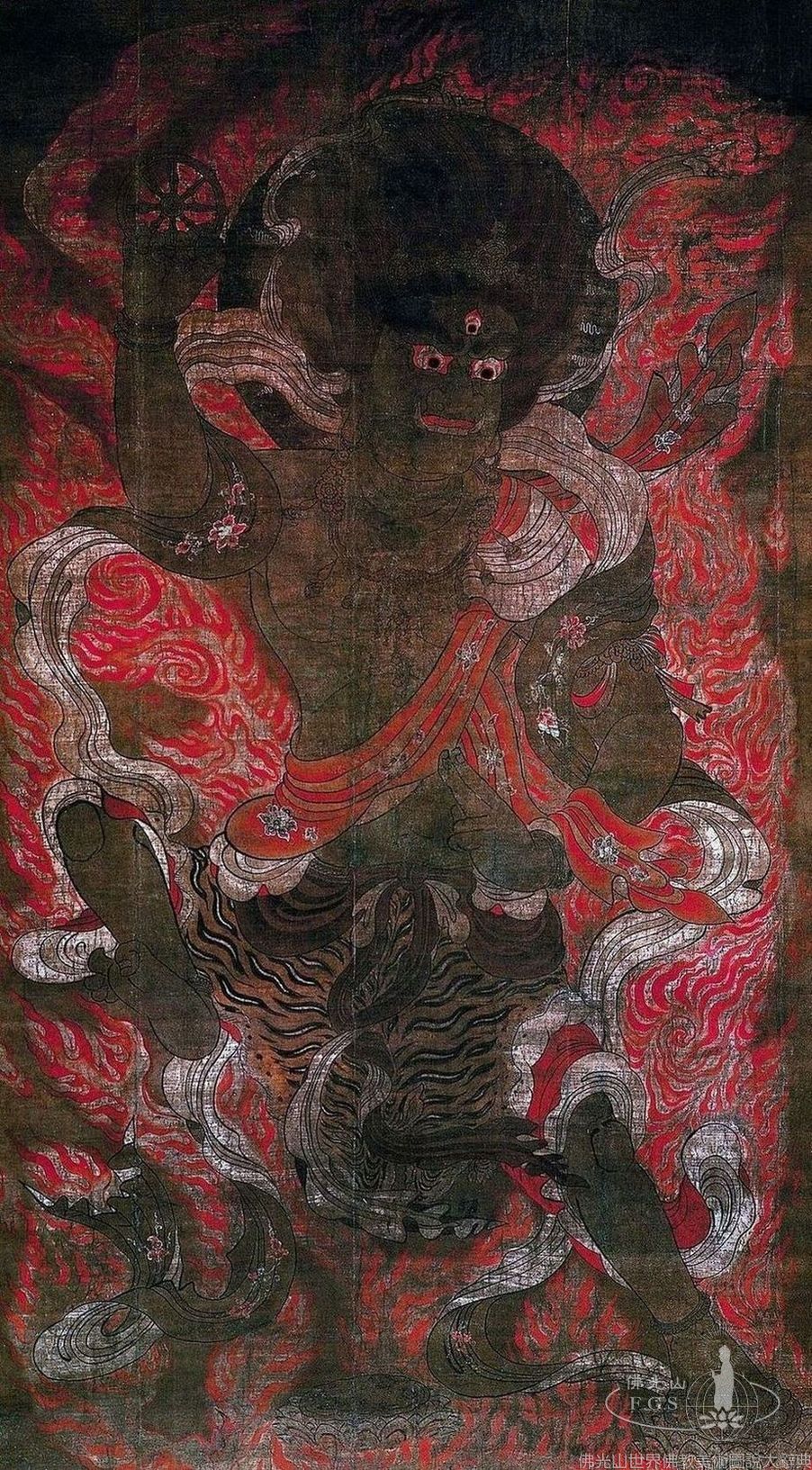
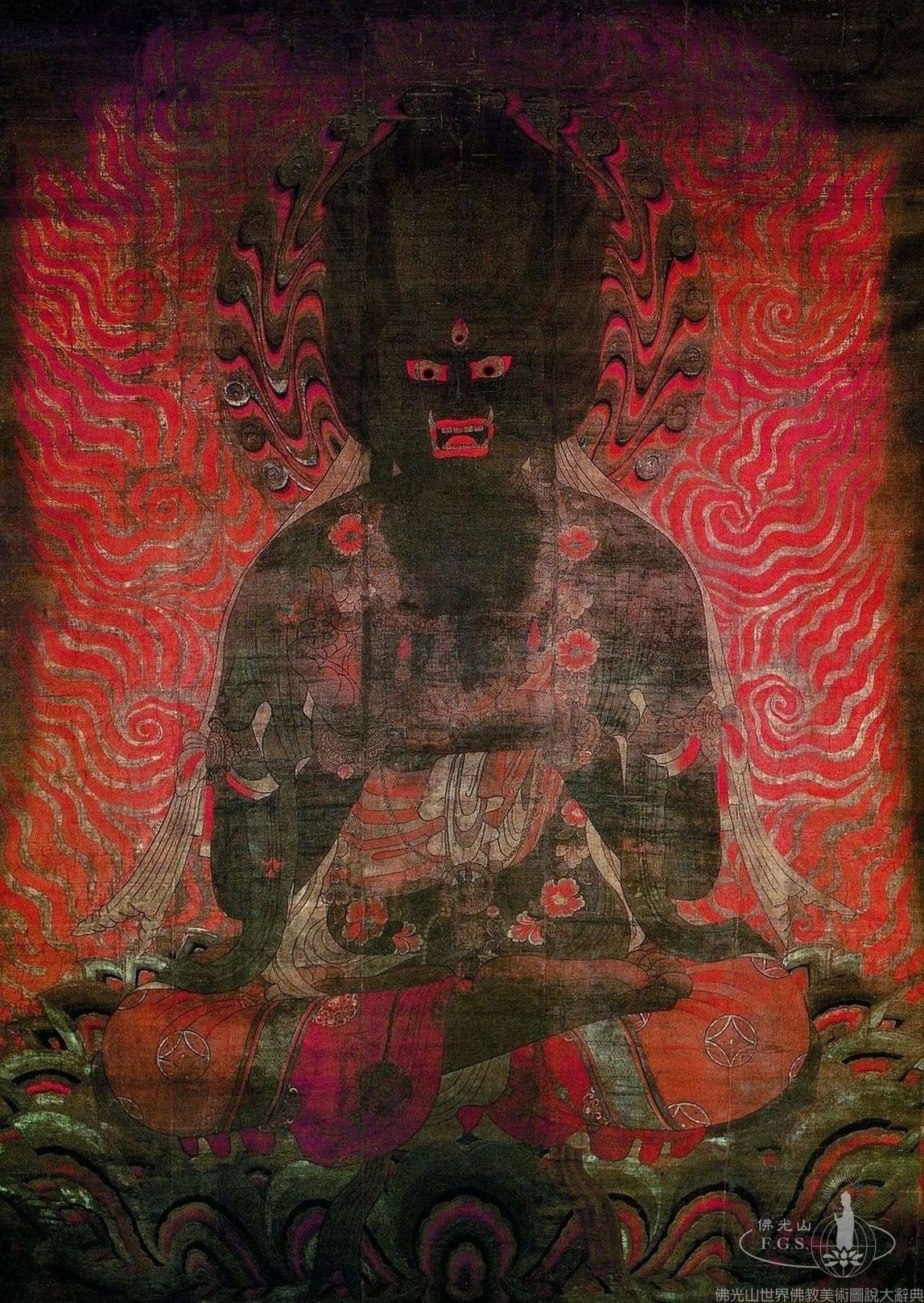
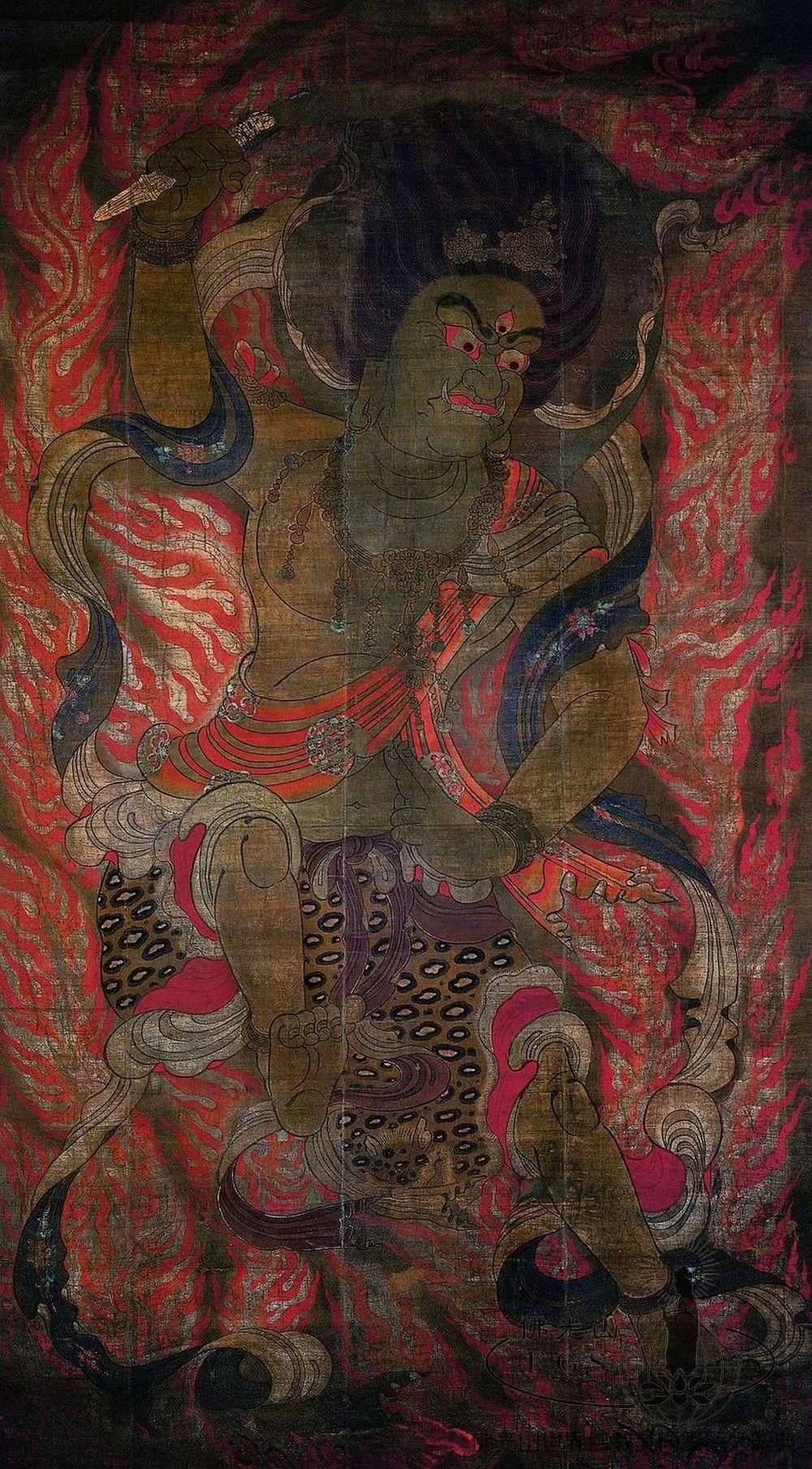
Yushi Hachimanko Juhakkain Temple: Five Bodhisattvas of Great Strength
JAPAN, Wakayama, Ito; Heian period (794–1185); Ink and color on silk
According to the Benevolent King Sutra, the Five Bodhisattvas of Great Strength protect the nation. These paintings, also known as the Five Powerful Roars, were made in the 11th century for use during Benevolent King Dharma assemblies. In 1888 of the Meiji period, two of the paintings were lost in a fire. When the remaining three artworks are displayed, the Bodhisattva of the Vajra Roar hangs in the center, flanked by the Bodhisattva of the Ten Fearless Powers Roar on the right and the Bodhisattva of the Naga King Roar on the left. The paintings were listed as a National Treasure in 1952.
The three figures all have three wide eyes, fangs, and wrathful expressions. Their dark bodies are engulfed by swirling red and white flames. The Bodhisattva of the Vajra Roar sits in full lotus position on a lotus throne. The left hand supports a Dharma wheel in front of the chest. The Bodhisattva of the Ten Fearless Powers Roar is yellow in color and holds a vajra in the right hand. The green Bodhisattva of the Naga King Roar raises a Dharma wheel with the right hand. Both figures stand in dynamic poses with their right leg bent and left leg extended. Fluttering stoles are draped around their shoulders and arms. The Bodhisattvas are painted with smooth, bold brushstrokes, and colorful dyes are applied to their skin and clothing, typical of the early Heian period (794-1185) style. |