 |
White Tara
|
| |
|
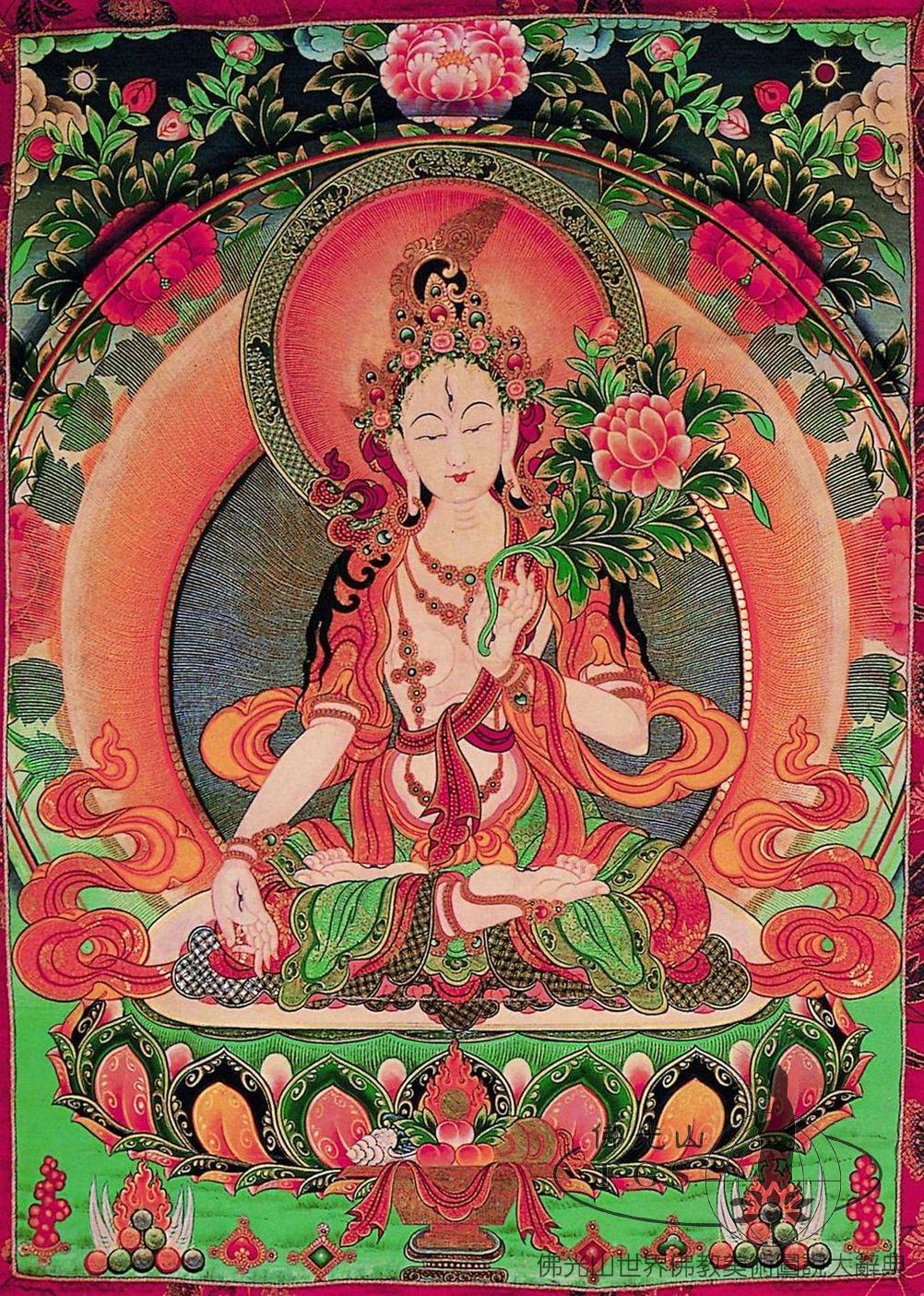
White Tara
CHINA; Qing dynasty (1644–1911); Color on cloth; 61.8 x 44.5 cm; Sichuan Museum, Chengdu, China
White Tara sits in full lotus position on a lotus throne, appearing to radiate fine lines of golden light. There are three eyes on the face, a pair on the palms, and a pair on the feet. Thus, this manifestation is also known as Seven-Eyed Tara. The figure has curly black hair that hangs over the shoulders and is coiled in a high topknot covered by a jeweled headdress. Necklaces, armlets, and bracelets adorn the body; an orange stole is draped over the arms and flutters up beside the feet. The right hand displays the varada (wish-granting) mudra, while the left hand holds a blooming flower. The blue mandorla is bordered by pearls. Floral patterns on a green background encircle the red nimbus. The mandorla is a thin line resembling a rainbow. Flaming jewels are piled in the lower register. Symmetrical flowers and clouds are painted above the figure. |