 |
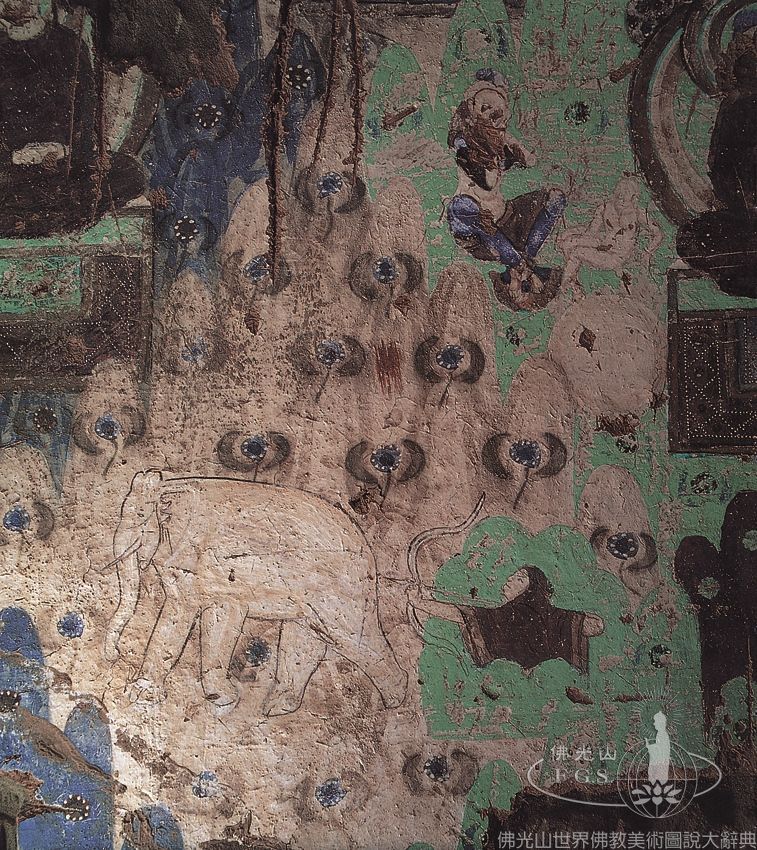
Kizil Cave 206: Saddanta Jataka
|
| |
|
Kizil Cave 206: Saddanta Jataka
CHINA, Xinjiang, Aksu; circa 6th–7th century; Museum of Asian Art, Berlin, Germany
This illustration from the Sutra on the Collection of the Six Perfections is on the inner wall of the right corridor. Saddanta, the name of the white elephant king in the story, means “six tusks.” According to the story, Saddanta had a deep respect for the Triple Gem: the Buddha, the Dharma, and the Sangha. He also had great compassion for all living beings. One of Saddanta’s two elephant queens, however, felt neglected and died in spite. Reborn as a princess of King Madda, she recalled Saddanta’s neglect in her previous life. She therefore sent a hunter to kill Saddanta and remove his tusks. The hunter disguised himself in monastic robes and shot Saddanta with a poison arrow. He then took the tusks to the princess. Upon seeing the tusks, the princess was instantaneously struck by lightning and died, thereupon descending into hell.
The main subject of the illustration is the elephant, Saddanta. A hunter hides in a shrub behind the elephant king with his arrow mounted and bow drawn. This suspenseful scene is skillfully illustrated in sparse, clear lines. |