 |
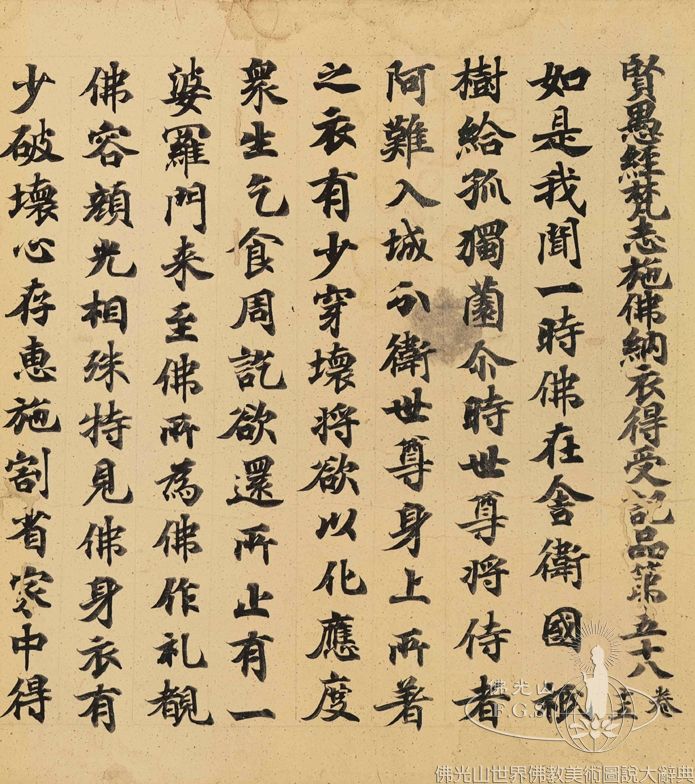
Todaiji Temple: Sutra of the Wise and the Foolish - Fascicle 15
|
| |
|
Todaiji Temple: Sutra of the Wise and the Foolish - Fascicle 15
JAPAN, Nara; Nara period (710–794); Attributed to Emperor Shomu; Regular script; Handscroll; Ink on paper; 27.2 x 1,245 cm
This calligraphy, attributed to Emperor Shomu (reigned 724-749) of the Nara period, was written in the 8th century. The Sutra of the Wise and the Foolish is a collection of parables and stories based on the theme of causality. Consisting of 467 lines, this manuscript was listed as a National Treasure in 1951.
Emperor Shomu was a keen learner of Wang Xizhi's calligraphic style. Although the authenticity of Shomu's calligraphy is unverified, the brushwork and turns are gracefully articulated in much the same way as seen in Master Zhiyong's Thousand Character Classic in Regular and Cursive Scripts, as well as Empress Komyo's rendition of Leyilun, also in Wang Xizhi's style. This scroll as an example of early Japanese manuscript work is rare in that it is written with strong, bold strokes.
Emperor Shomu was the 45th emperor of Japan and a devout Buddhist. Temples and statues were erected in both the palace and across the country during his reign, and sutra copying was a popular practice. The Nara art of calligraphy grew to its height during this period, which marked the peak of the development of Japanese Buddhist art. |