|
Wat Wiang: Buddha Protected by Mucalinda
|
| |
 |
Wat Wiang: Buddha Protected by Mucalinda
|
| |
|
Wat Wiang: Buddha Protected by Mucalinda
THAILAND, Surat Thani; Late 12th–early 13th century; Bronze; H: 156.8 cm; Bangkok National Museum, Thailand
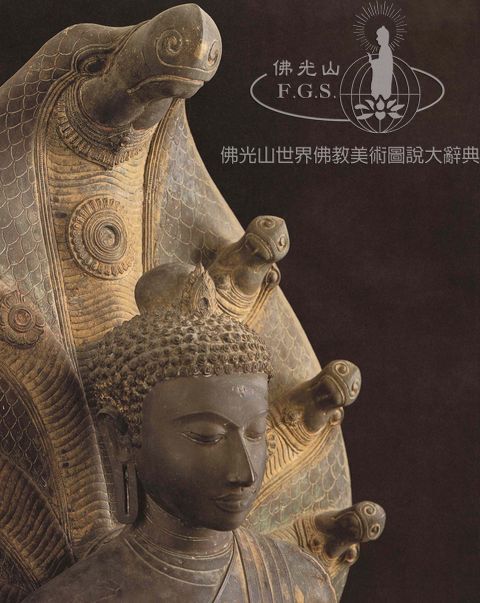
The statue was discovered at Wat Wiang and it depicts a seated Buddha being protected by Mucalinda, the Naga King. After the Buddha attained enlightenment, he was meditating under a tree when a storm arose. The Naga King used his body as a shelter for protection by spreading his hood over the meditating figure.
The Buddha 's usnisa is a plain outgrowth among the curls and is largely covered by a flame ornament. The monastic robe is worn in the Thai manner, leaving the right shoulder bare and with one edge neatly arranged over the left shoulder. The figure sits in half lotus position with the right hand in bhumisparsa (earth-touching) mudra, indicating recent enlightenment.
In place of the conventional lotus throne, the Buddha rests upon the coils of the naga 's body with a diamond-shaped lotus ornament between each coil. Incorporated into the petal-shaped nimbus, there are the seven blunt heads, with a floral necklace encircling each head.
The design of the statue was apparently influenced by Bayon with the exception of the bhumisparsa (earth-touching) mudra, which does not appear in any Cambodian sculpture from that period. On the contrary, seated Buddha statues from the Thai Dvaravati Kingdom (circa 6th–13th century) are commonly seen with this mudra. So the theory that the sculpture was a combination of different artistic styles is proven. An inscription in ancient Kampuchea on the base dates it to the end of the 12th and early 13th centuries. |