 |
Mogao Cave 17: Manjusri and Samantabhadra Bodhisattvas
|
| |
 |
Mogao Cave 17: Manjusri and Samantabhadra Bodhisattvas
|
| |
|
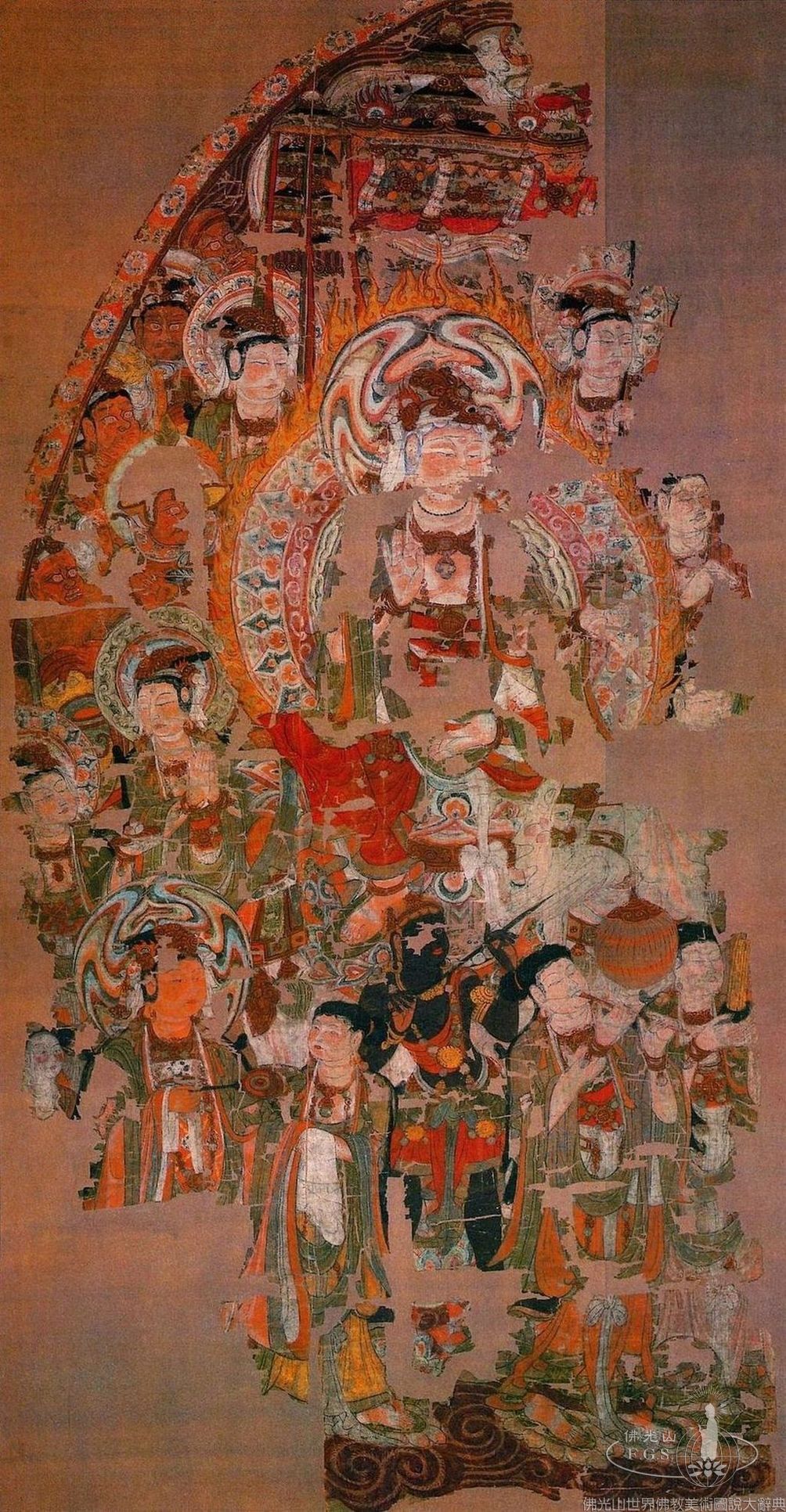
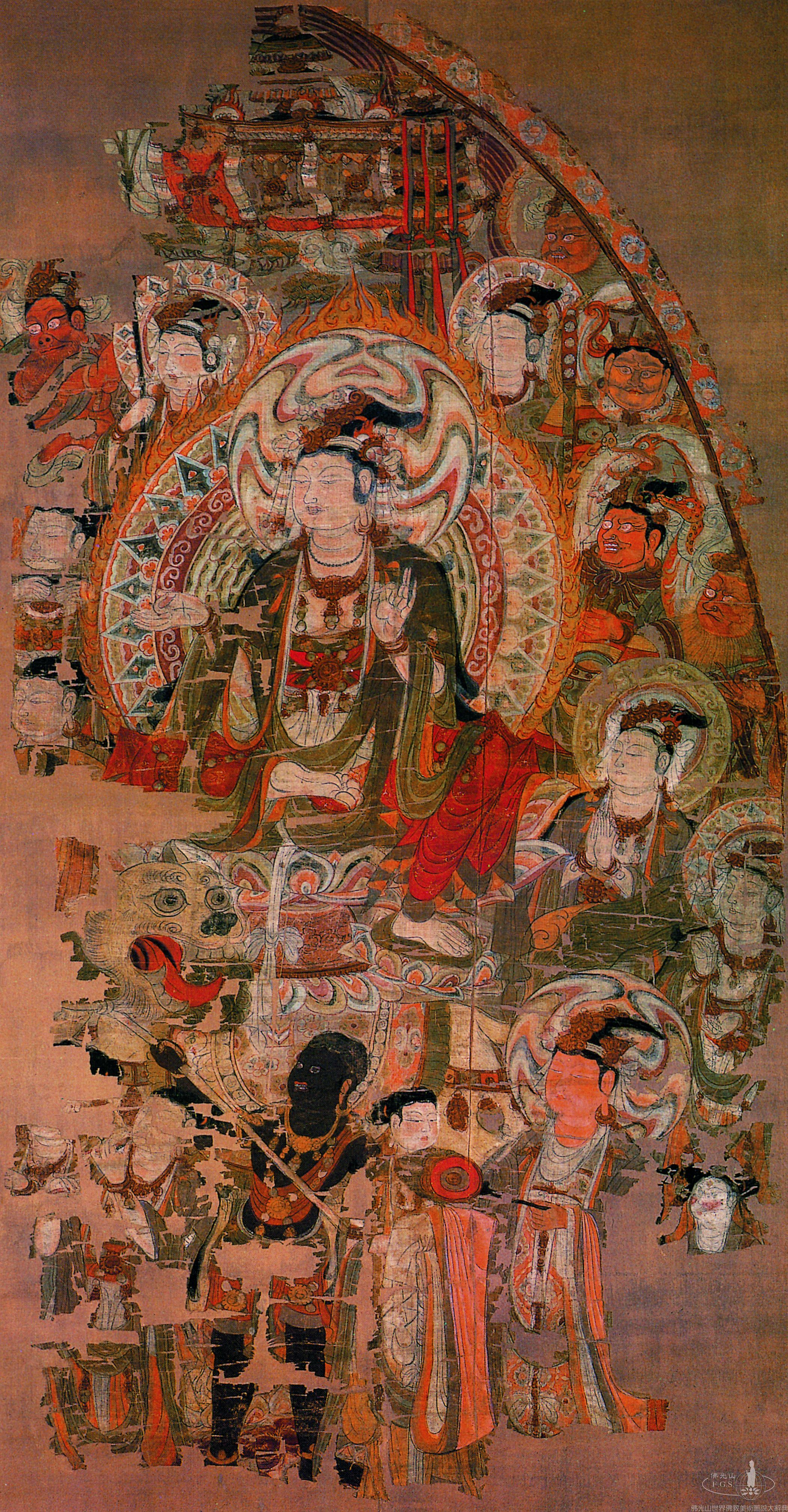
Mogao Cave 17: Manjusri and Samantabhadra Bodhisattvas
CHINA, Gansu, Dunhuang; Tang dynasty to Five Dynasties (618–960); Ink and color on silk; 219.4 x 115.2 cm; British Museum, London, United Kingdom
These two fragments have similar curved outlines and are thus believed to be parts of the same painting. The original painting probably featured Sakyamuni Buddha as the central figure. Illustrations of Manjusri and Samantabhadra Bodhisattvas flanking a central Buddha image are common among the artworks discovered in the Dunhuang caves.
The two Bodhisattvas, facing each other, are Samantabhadra, riding an elephant on the left, and Manjusri, sitting on a lion on the right. Both Bodhisattvas have nimbuses and bright aureoles decorated with flame motifs, are dressed in magnificent clothing, and are surrounded by Bodhisattvas, Dharma protectors, and heavenly musicians. The fragments are damaged in several places and the color pigments have eroded, revealing the drafting lines. The outlines of the faces, eyes, and lips suggest that this painting may have been completed after the Tibetan occupation of Dunhuang (781-847). |