 |
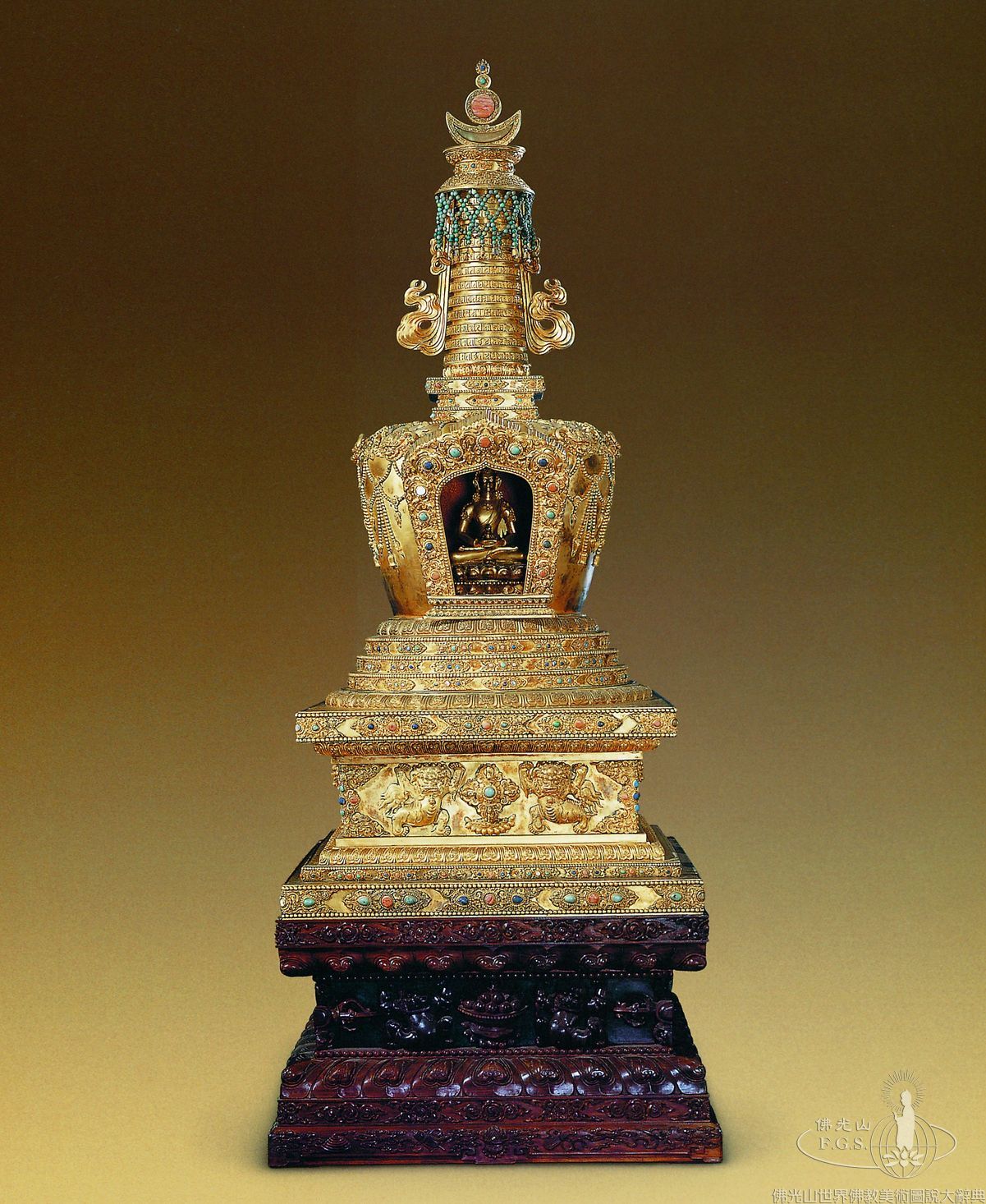
Qing Imperial Palace: Stupa
|
| |
|
Qing Imperial Palace: Stupa
CHINA, Beijing; Qing dynasty (1644–1911), dated 1777; Commissioned by Emperor Qianlong; Gold and wood; H: 147 cm; Palace Museum, Beijing, China
This stupa was created by the decree of Emperor Qianlong (reigned 1736-1795) of the Qing dynasty. It was made to store hair belonging to his deceased mother, Empress Dowager Xiaoshengxian, who was a devout Buddhist and follower of the Tibetan tradition.
The stupa is 147 cm high, 70 cm long on each side of the base, and has a weight of 107.5 kg. It consists of a base, body, and spire. The square Sumeru base is decorated with lotuses and other flowers. The concave section has a half vajra on each corner followed by a mythical creature on either side of an offering. On top of the base, there is a second Sumeru structure decorated with various gemstones and two mythical creatures on each side. Five round tiers lead up to the highly decorated inverted bowl shaped body. The exterior of the niche is decorated with gems and a scroll leaf pattern, and a gold seated Buddha is enshrined within. Also housed inside the niche is the hair of the empress.
The spire consists of a harmika and 13 stacked rings with Sanskrit inscriptions, followed by a canopy, from which hang ornaments made of pearls, turquoise, and gems. On either side of the spire, there are ribbons which curl upward. At the top, there is a horizontal crescent moon and a sun followed by a jeweled finial. |