 |
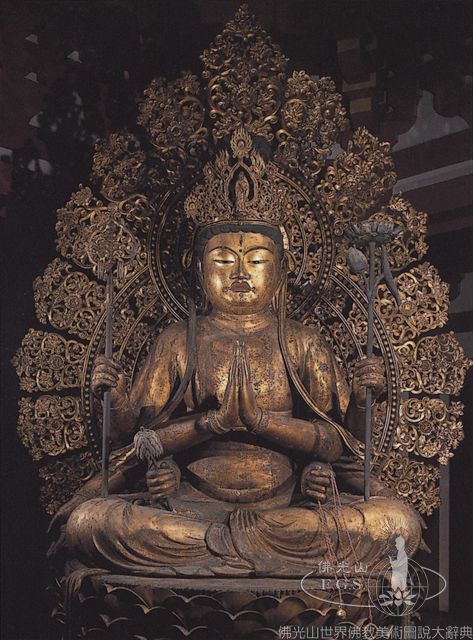
Kofukuji Temple South Octagonal Hall: Amoghapasa Avalokitesvara
|
| |
|
Kofukuji Temple South Octagonal Hall: Amoghapasa Avalokitesvara
JAPAN, Nara; Kamakura period (1185–1333), dated 1189; By Kokei; Cypress wood; H: 739 cm
The statue is sculpted by Kokei and his disciples and was listed as a National Treasure in 1952.
The eight-armed form of the Bodhisattva is portrayed with a pair of hands at the front joined in reverence, while those at the bottom are spread in varada (wish-granting) mudra. The other hands hold a monk’s staff, a lotus bud, a flowering lotus stalk, and the “unfailing noose” after which this form of Avalokitesvara is named. The main body is formed using braced wood blocks while the lower portion is formed by connecting horizontal pieces of wood at the front and back. Relics of the Buddha and sutras were found hidden inside.
The figure’s hair is coiled behind an intricate jeweled crown with a standing Buddha at the front. The eyes are inlaid with obsidian while the crystal inlay of the third eye was added much later. The interlocking circular aureole and nimbus with their floral patterns are framed by an open-work mandorla in the shape of a lotus petal.
Although produced in the early Kamakura period (1185–1333), the work inherits the style expressing solidity and mass that was characteristic of the Nara period (710–794). |