 |
Mountain Landscapes
|
| |
 |
Mountain Landscapes
|
| |
 |
Mountain Landscapes
|
| |
 |
Mountain Landscapes
|
| |
|
Mountain Landscapes
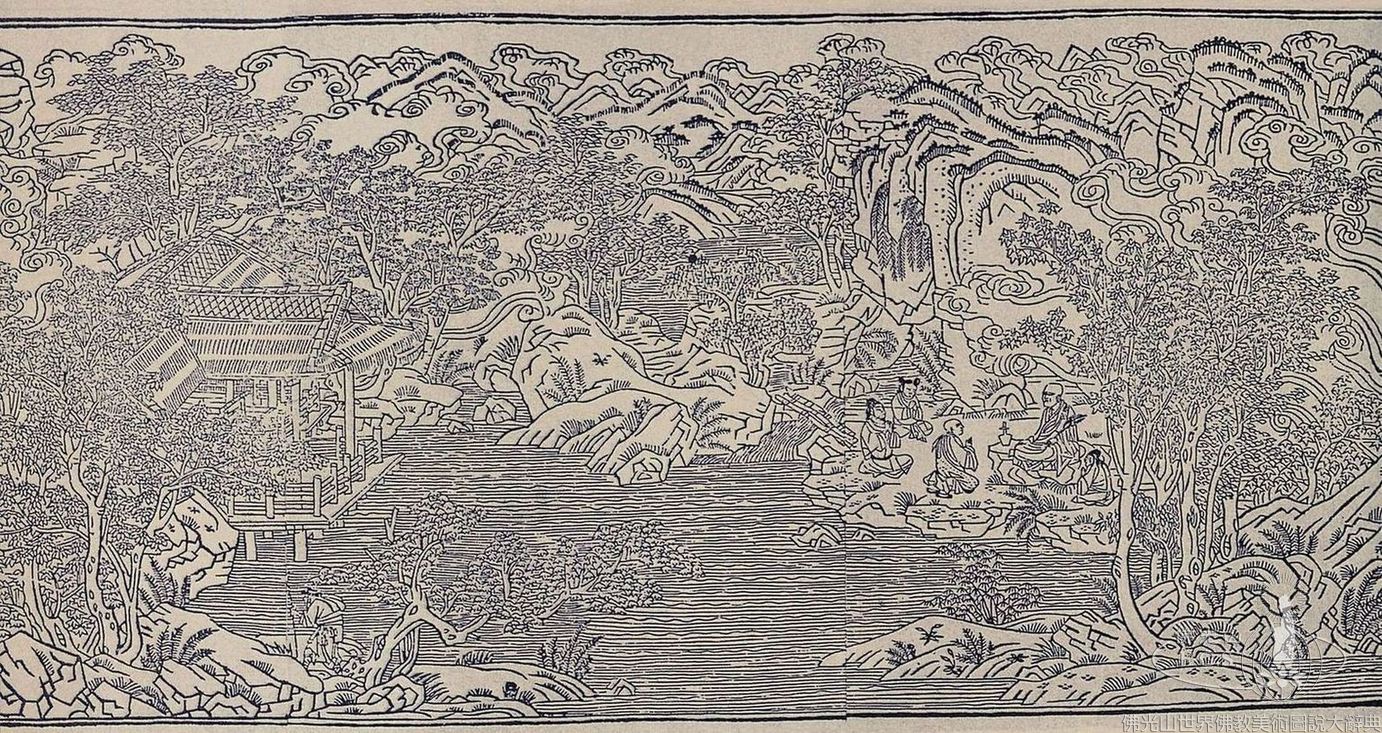
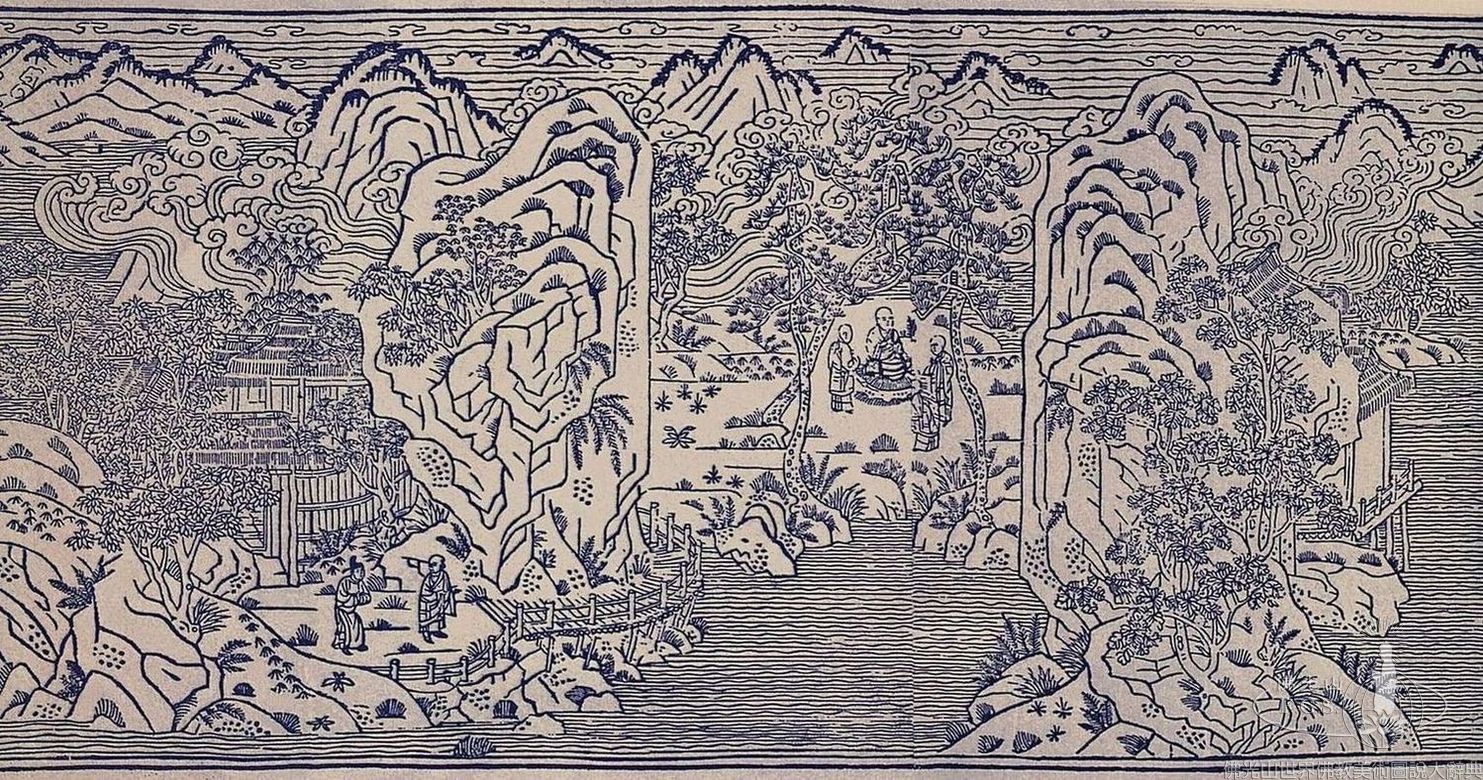
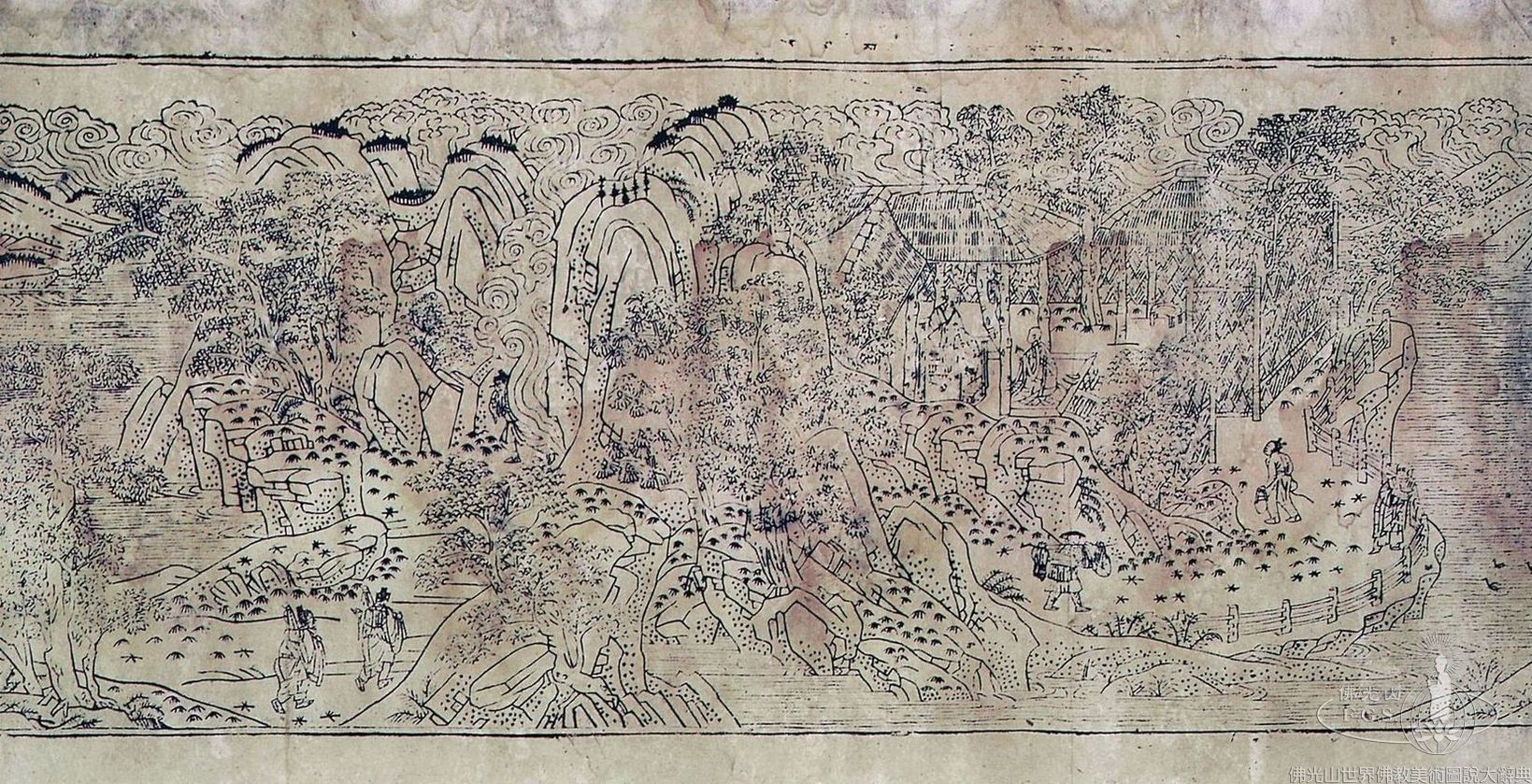
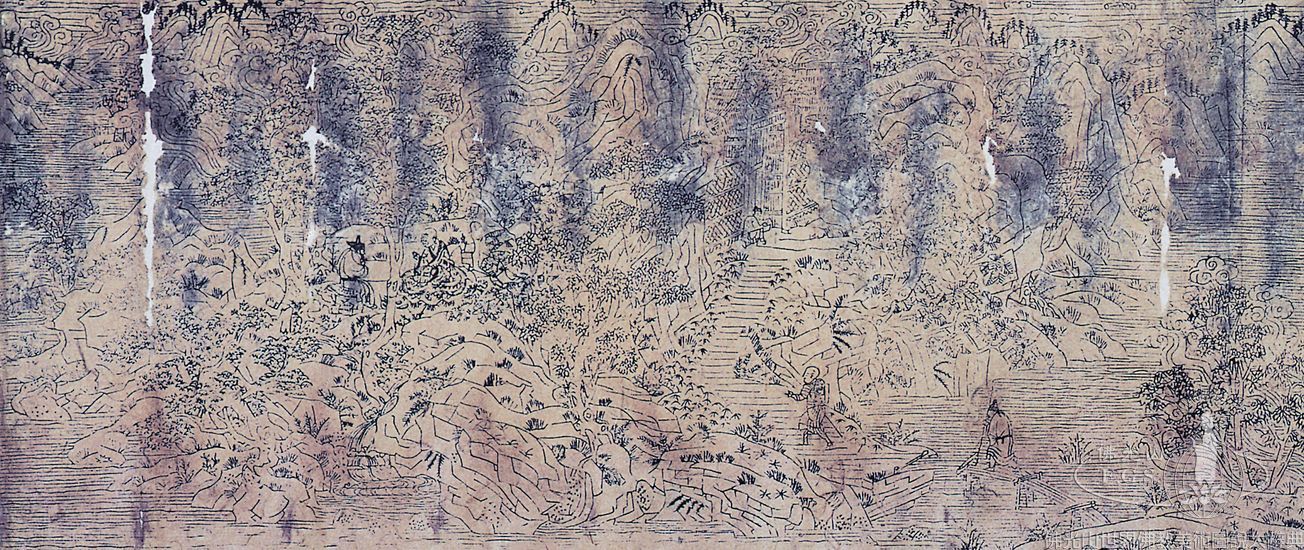
CHINA; Northern Song dynasty (960–1127), dated 1108; Print on paper; Harvard Art Museums, Cambridge, Massachusetts, USA
The Imperially Composed Explanation of the Secret Treasure was made on the order of Emperor Taizong (reigned 976-997) of the Northern Song dynasty. The 30-fascicle work describes the Buddhist teachings in 1,000 poetic verses. These mountain landscapes were inserts in the text when it was included in a printing of the Kaibao Tripitaka from carved woodblocks dated 1108. They are some of the oldest known Buddhist landscape woodblock prints.
A lake depicted with dense lines occupies the foreground of both prints. In the first picture, there is a building with a thatched roof on the left, partially hidden by trees. Two small figures stand beside a path that curves around the base of a towering stone. Between two of these peaks, a monk sits in the forest, appearing to teach the Dharma to three listeners. Swirling clouds and distant peaks fill the upper register.
On the left side of the second print, a figure holding a staff walks towards a building on the side of a lake. On the right, a monk sits upon a rock in a clearing by the water, surrounded by four figures who join their palms in reverence. Jagged mountains and trees cover the rest of the print. Both pictures are skillfully carved with lines of varying thicknesses and densities that portray the buildings, water, mountains, and trees, and result in a diverse composition. The figures in the prints are small, emphasizing the grandeur of the landscapes. |