 |
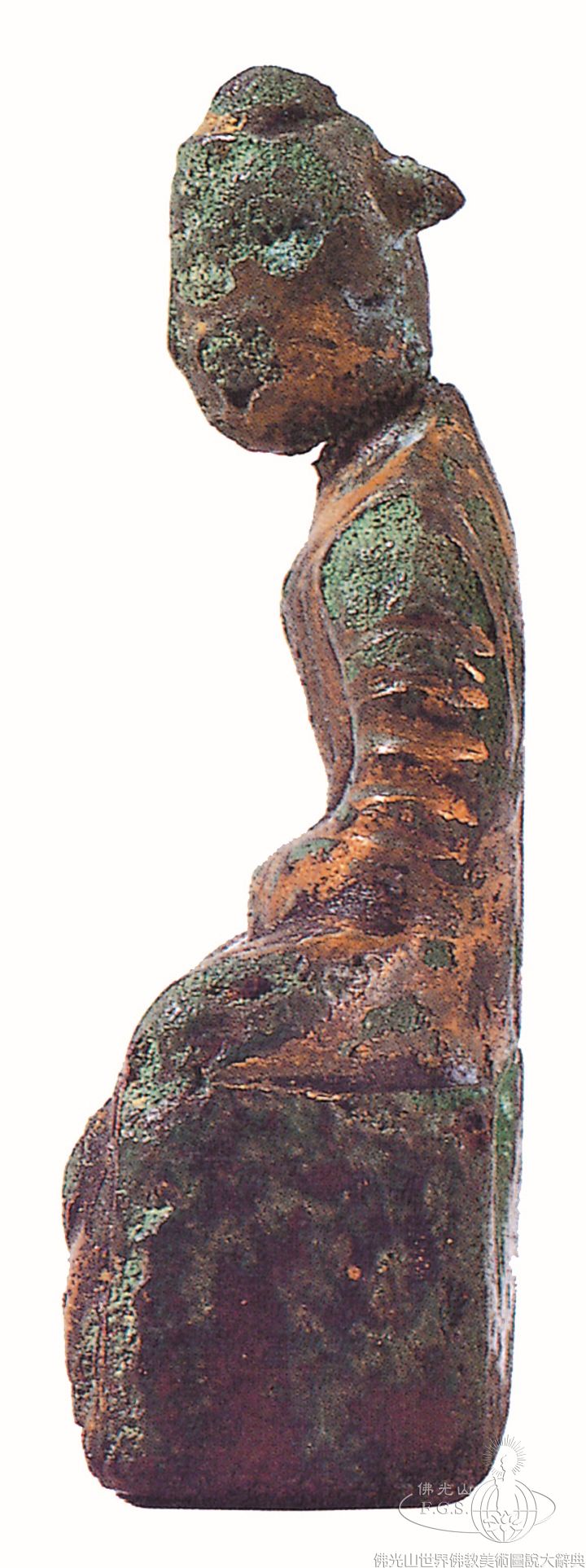
Ttukseom: Seated Buddha
|
| |
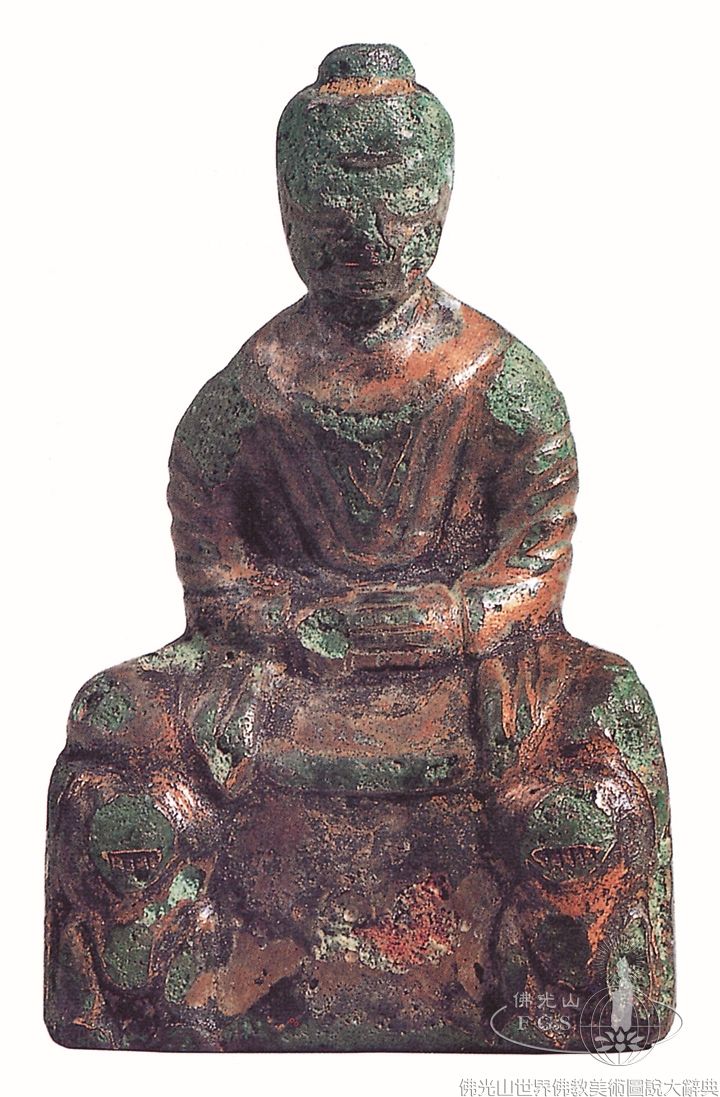 |
Ttukseom: Seated Buddha
|
| |
|
Ttukseom: Seated Buddha
SOUTH KOREA, Seoul; Three Kingdoms Period (57 BCE–668 CE); Gilt bronze; H: 5 cm; National Museum of Korea, Seoul, South Korea
The statue was discovered in Ttukseom in 1959 and is one of the oldest to be unearthed in Korea. Korean Buddhist art began during the Three Kingdoms period (57 BCE–668 CE). The badly corroded Buddha sits cross-legged with his body and head curved slightly forward on a throne guarded by lions. His hands are in a variation of the dhyana (meditation) mudra in which the palms face inwards instead of upwards in the lap. The style was popular in China during the Sixteen Kingdoms (303–439) period and probably introduced into Korea during the Goguryeo dynasty (37 BCE–668 CE) and passed on to the Baekje period (18 BCE–663 CE). |