 |
Zhang Jizhi (1186-1263)
|
| |
|
Zhang Jizhi (1186-1263)
CHINA, Anhui, Ma'anshan; Southern Song dynasty (1127–1279)
Zhang Jizhi, also known as Wenfu or Chuliao, was a calligrapher from Hezhou (present day Hexian, Ma'anshan). He became a devout Buddhist late in life and devoted himself to copying sutras in regular script.
When he began writing calligraphy, Zhang studied the regular script style of the Tang dynasty (618-907). During this time, he studied the styles of Ouyang Xun, Chu Suiliang, and Yan Zhenqing. Later, he switched to the styles of Mi Fu and Su Shi. Zhang infused the concept of Chan into his works and developed his own unique and creative style. He is regarded as one of the most famous calligrapher of the Southern Song dynasty (1127-1279).
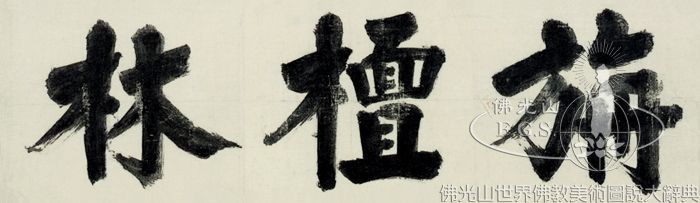
Zhang enjoyed creating large-sized calligraphy, such as stele calligraphy and horizontal inscribed boards. Many of his works spread to Japan and include the inscribed signboard on which he wrote the characters Abbot, Forest of Sandalwood, and Head Master, all of which are now located at Tofukuji Temple in Kyoto. In addition, his scripting of the Diamond Sutra is kept at Chishakuin Temple in Kyoto. Both of these works are listed as National Treasures of Japan. His other sutra copy, Sutra on the Buddha's Bequeathed Teaching, is still retained in China at the Palace Museum in Beijing. |